
Edward Tilley: Mayflower Passenger and Early Plymouth Settler
Edward Tilley, born in Henlow in 1588, was a Mayflower passenger who settled briefly in Plymouth Colony, signed the Mayflower Compact, and died in the colony's first winter.
Overview
Edward Tilley (baptized 27 May 1588) was an English cloth-worker and one of the passengers on the 1620 voyage of the Mayflower that established Plymouth Colony. He is known from parish records in Henlow and from colonial documents that record his participation in the voyage and his presence in early Plymouth. Like many of the earliest arrivals, his life in the New World was cut short by the harsh first winter.
Image gallery
2 Images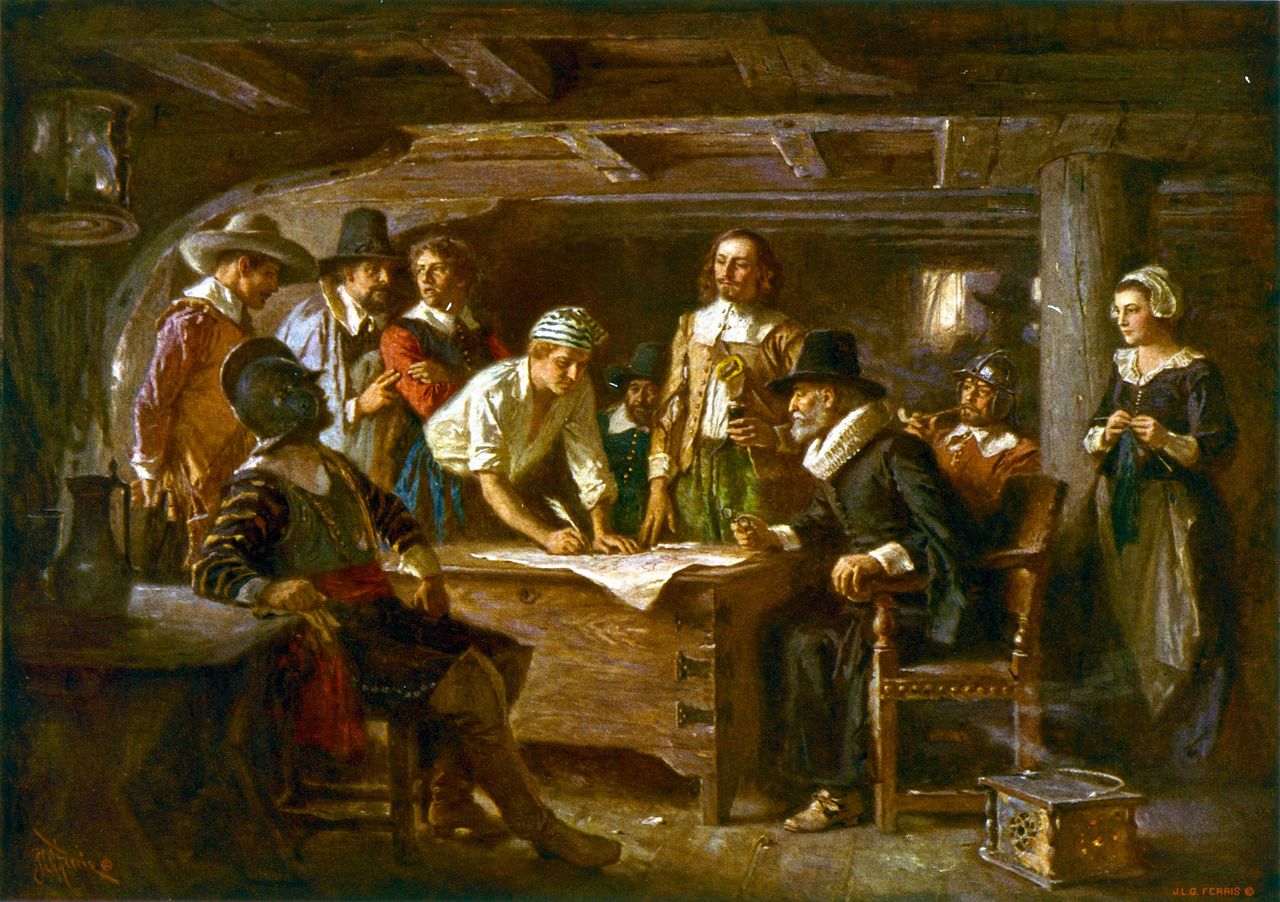

Early life and family
Edward was baptized in Henlow, Bedfordshire; parish registers record his birth and family ties, identifying him as a son of Robert and Elizabeth Tilley. He worked as a weaver by trade. On 20 June 1614 he married Ann (often recorded as Anne or Agnes) Cooper in Henlow. The couple later left England and spent time in the Dutch Republic before embarking for North America. You can find references to Henlow parish records in local history sources (Henlow parish) and the broader national context of England.
The Mayflower voyage and companions
Edward and his wife joined the group of Separatists and other passengers that crossed from Europe to the New World in 1620. They had been living in the Low Countries prior to departure, a common pattern for several Separatists who sought religious freedom in Holland. On the voyage Edward and Ann accompanied two young relatives of Ann’s: Henry Samson and Humility Cooper, who traveled under their care. The Mayflower carried both settlers bound for a colony in Virginia and settlers whose plans ultimately led them to anchor off Cape Cod instead.
Settlement, the Mayflower Compact, and public role
When the ship anchored in November 1620, the male passengers drafted and signed the compact that bound them into a civil body politic for governance and mutual cooperation. Edward Tilley was among the signatories of the Mayflower Compact, an early and frequently cited document in discussions of colonial self-government. The Compact served as a practical agreement to maintain order, allocate work, and defend the new settlement until formal charters could be arranged.
Life in Plymouth and death
Records indicate that Edward Tilley and his wife lived in the fledgling Plymouth community but succumbed to the epidemic disease and privation that claimed many early colonists. Both Edward and Ann died during the winter of 1620–1621, a season in which roughly half of the Mayflower passengers and crew perished. Their wards, Henry Samson and Humility Cooper, survived and remained part of the colony.
Legacy and notable facts
- Occupation: Weaver by trade.
- Marriage: Ann (Agnes) Cooper, 20 June 1614.
- Companions: Caretaker for two young relatives, Henry Samson and Humility Cooper.
- Historical importance: Signer of the Mayflower Compact, participant in the earliest phase of Plymouth Colony.
Edward Tilley represents one of many ordinary tradesmen whose personal stories contribute to the broader history of early English colonization in North America. While his individual life in the colony was brief, documentary traces—baptismal records, the marriage register, and colonial lists of passengers and compact signatories—help historians reconstruct his role in the founding events at Plymouth. For broader context on migration patterns and the Separatist movement in the Low Countries, consult local histories and specialized studies (New World migration).
Additional sources and records may be found in regional archives and genealogical collections that preserve parish registers, passenger lists and early colonial records (Henlow records, English records, Dutch exile records). Contemporary summaries and transcriptions help trace the lives of lesser-known Mayflower passengers like Tilley and illustrate the hardships faced by the colony’s founders.
Related articles
Author
AlegsaOnline.com Edward Tilley: Mayflower Passenger and Early Plymouth Settler Leandro Alegsa
URL: https://en.alegsaonline.com/art/30296