
Edward Winslow
Edward Winslow (1595–1655) was a Mayflower passenger, Pilgrim leader, colonial official, diplomat, and early chronicler of Plymouth Colony.
Edward Winslow (1595 – May 8, 1655) was an English settler who traveled to New England on the Mayflower. Motivated in part by a desire for religious freedom and by the wider movement of Separatists and reformers, he became one of the prominent members of the group later called the Pilgrims. Contemporary accounts portray him as energetic in planning and sustaining the voyage and early settlement; he is often described in histories of the landing and the first years at Plymouth as active in both civic and religious affairs. relating to religious motives
Image gallery
7 Images

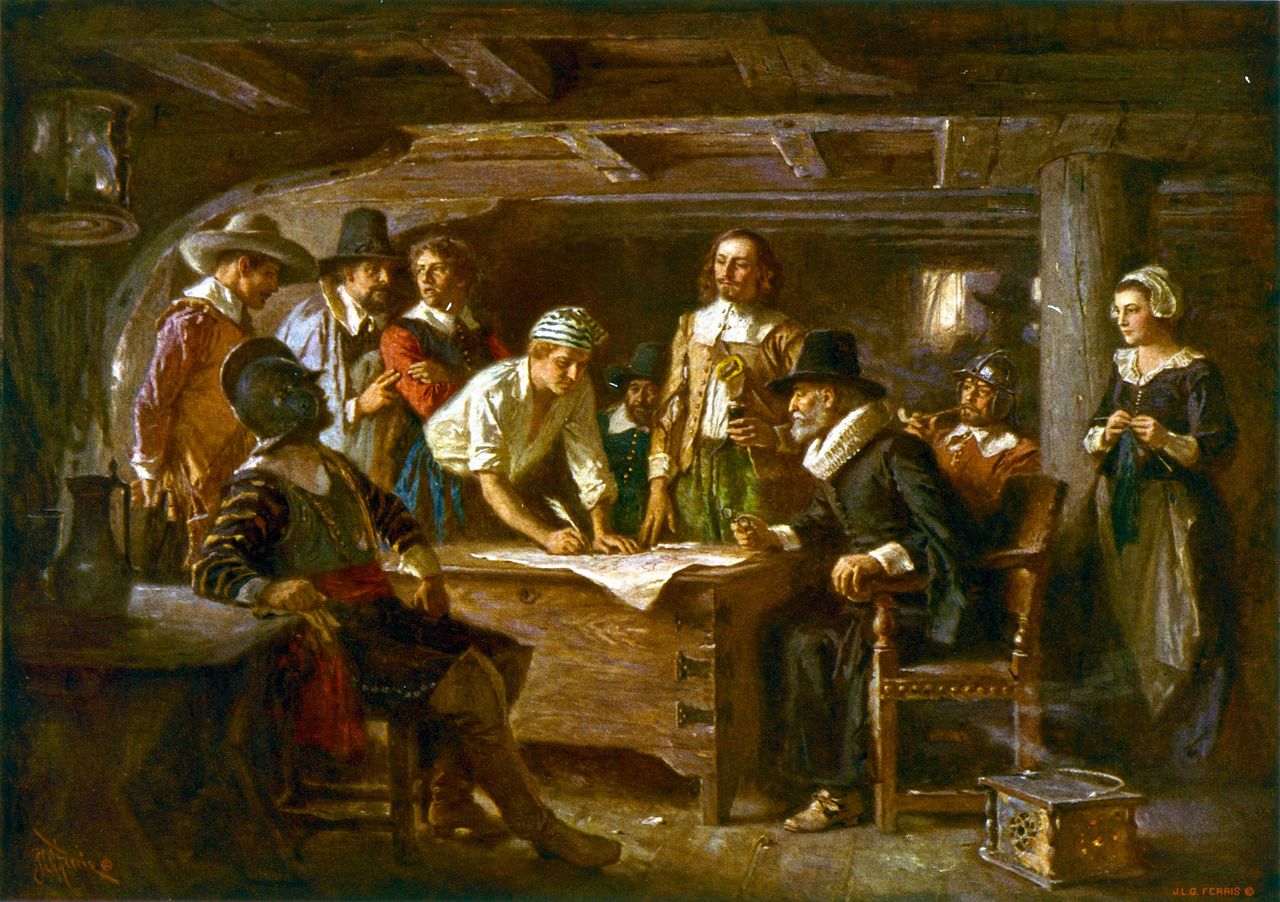


Role in the voyage and the compact
Winslow played a role in organizing the Mayflower expedition and was among those who signed the Mayflower Compact, the provisional agreement for self-government created aboard ship. The Compact is widely cited as an early example of colonial self-rule, and Winslow’s signature links him to that foundational moment. His name appears in lists and printed accounts prepared soon after the landing. organizing the voyage the Mayflower Compact
Leadership and public duties
At Plymouth, Winslow served repeatedly as a leading magistrate and is recorded as holding executive responsibilities, including several terms as governor and as an emissary for the colony. He helped negotiate and maintain relations with local Native American leaders, most notably participating in the treaty and sustained peace with the Wampanoag sachem Massasoit. His practical skills, diplomatic work, and administrative duties made him a central figure in the colony’s survival and development. leadership Plymouth Colony
Writings and diplomatic missions
Winslow contributed to early published accounts about New England that informed readers in England and helped shape the colony’s public image. He traveled to England on business for Plymouth and acted as an agent for the colony, seeking supplies, legal recognition, and support. On these missions he carried letters and reports, and he later undertook official travels abroad that combined diplomacy and commercial aims.
Later life and legacy
In the later years of his life Winslow continued public service for the colony and for related English interests. He died in 1655 while on a mission away from Plymouth. Historians remember him for his combination of practical leadership, early printed accounts that document the settlement’s first decades, and his role in diplomacy between colonists and Indigenous peoples. His activities are frequently cited in studies of the Mayflower passengers, early New England governance, and cross-cultural relations in the seventeenth century.
Notable facts
- Signer of the Mayflower Compact and participant in the colony’s first government.
- Worked both as a colonial official and as an agent who represented Plymouth in England.
- Authored or helped compile some of the earliest printed narratives about New England settlement.
For more detailed primary and secondary sources, see contemporary letters and printed reports that document the colony’s founding and early decades. Background on motives, voyage planning, leadership roles, Plymouth records, and the Mayflower Compact offer entry points for further research.
Questions and answers
Q: Who was Edward Winslow?
A: Edward Winslow was a person who traveled on the Mayflower in 1620 so he could practice his own religion which was not allowed in England.
Q: What did Edward Winslow do to help with the voyage to the New World?
A: Edward Winslow helped to organize the voyage to the New World.
Q: What was the Mayflower Compact?
A: The Mayflower Compact was a document that was signed by Edward Winslow and other pilgrims when they arrived at Plymouth Colony. It was an agreement for self-government.
Q: Was Edward Winslow a leader in Plymouth Colony?
A: Yes, Edward Winslow was a leader at Plymouth Colony.
Q: When was Edward Winslow born?
A: Edward Winslow was born in 1595.
Q: When did Edward Winslow die?
A: Edward Winslow died on May 8, 1655.
Q: Why did Edward Winslow travel on the Mayflower?
A: Edward Winslow traveled on the Mayflower so he could practice his own religion which was not allowed in England.
Related articles
Author
AlegsaOnline.com Edward Winslow Leandro Alegsa
URL: https://en.alegsaonline.com/art/30300