
Edible frog (Pelophylax kl. esculentus)
A European hybrid frog commonly called the edible, water, or green frog; notable for its hybrid reproductive system, widespread wetland habitat, and use as a culinary ingredient in parts of Europe.
The edible frog (Pelophylax kl. esculentus) is a widespread European water frog known in English as the edible, water, or green frog. Its scientific name includes 'kl.' to indicate a klepton — a hybrid origin. It is familiar at ponds, ditches and slow-moving waters across much of Europe and has been historically harvested for food in some countries.
Image gallery
10 Images


Appearance and identifying features
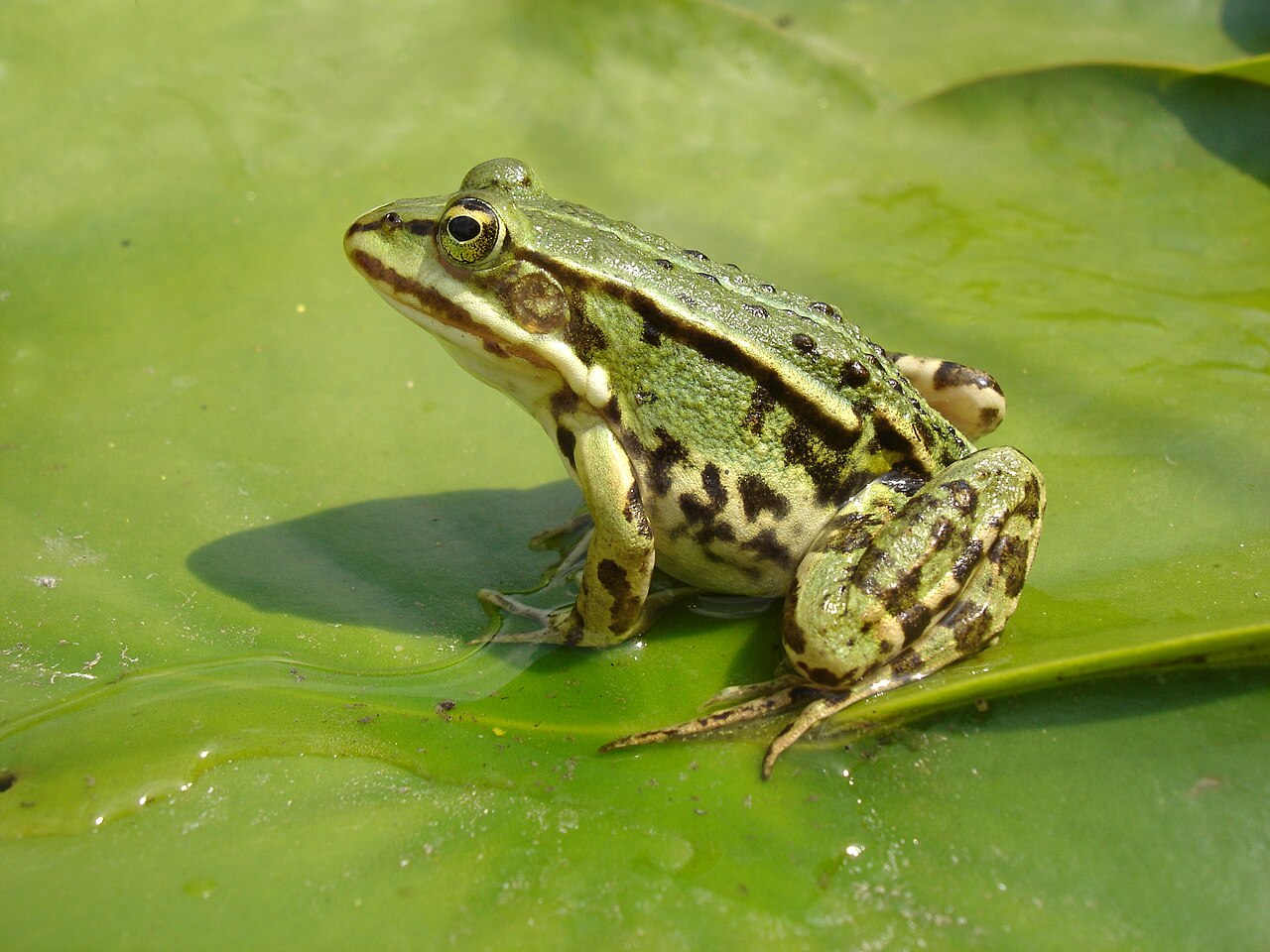
This is a medium-sized frog with a generally greenish to brownish dorsal coloration, often marked with darker spots or patches and a pale belly. Key characteristics include a smooth, moist skin, relatively long hind limbs suited for swimming and leaping, and a pronounced tympanum (ear disc) visible behind the eye. Adult size and exact coloration vary with local populations and environmental conditions.

Reproduction and genetics
The edible frog is unusual in its reproductive biology: it is a hybrid between the pool frog (Pelophylax lessonae) and the marsh frog (Pelophylax ridibundus). Rather than following a standard sexual reproduction pattern, many populations reproduce by hybridogenesis, a process in which one parental genome is discarded during gamete formation and the remaining genome is transmitted intact to offspring. This gives the group distinctive genetic and ecological dynamics compared with non-hybrid species. For an overview of its taxonomic status see species information.

Habitat, diet and distribution
Edible frogs favor still or slow-moving freshwater habitats with abundant vegetation: ponds, marshes, canals and flooded meadows. They are carnivorous, feeding on invertebrates such as insects, worms and small aquatic animals, and occasionally small vertebrates. Their distribution covers much of temperate Europe, often where the parental species overlap; regional maps and occurrence data can be found via European herpetofauna resources.

Human uses and cultural role
Because of their size and abundance in some regions, these frogs have been collected for food — most famously for frog legs, a culinary item in parts of France and elsewhere in Europe. Sustainable harvest and local regulations vary by country; background on culinary and cultural uses can be consulted at regional food or conservation guides.

Notable facts and conservation
- Hybrid origin: the klepton status makes the edible frog an interesting subject for studies of hybridization and genome transmission.
- Behavior: they are primarily active in warm months and use vocal calls for mating; aggressive interactions and occasional cannibalism have been observed in amphibians under high-density or food-stress conditions.
- Conservation: population trends are regionally variable. Loss of wetland habitat, pollution and inappropriate collection can threaten local populations; conservation measures focus on protecting breeding habitats and water quality.

Related articles
Author
AlegsaOnline.com Edible frog (Pelophylax kl. esculentus) Leandro Alegsa
URL: https://en.alegsaonline.com/art/30131