
Alpha Phi Alpha — First Intercollegiate Black Greek‑Letter Fraternity
Alpha Phi Alpha, founded at Cornell University in 1906, is the first intercollegiate Black Greek‑letter fraternity in the United States, known for leadership, scholarship, public service and a global chapter network.
Alpha Phi Alpha is regarded as the first Black, intercollegiate Greek‑letter fraternity in the United States. Founded on December 4, 1906, at Cornell University in Ithaca, New York, it was created by a small group of students who sought mutual support, academic encouragement and leadership development at a time when African American enrollment at predominantly white institutions was limited. The organization is commonly described as an intercollegiate organization and is formally classified as a fraternity.
Image gallery
9 Images


History and founding
The fraternity began with a core group of student founders who are traditionally referred to as the "Seven Jewels." Their early efforts focused on improving scholastic standards, providing fellowship, and promoting the social and intellectual advancement of Black students. Within a year the fraternity expanded beyond Cornell: chapters were chartered in 1907 at institutions including Howard University and Virginia Union University, marking the start of a national presence. The group developed rituals, symbols and publications that helped sustain membership and identity as it grew through the 20th century.
Symbols, motto and aims
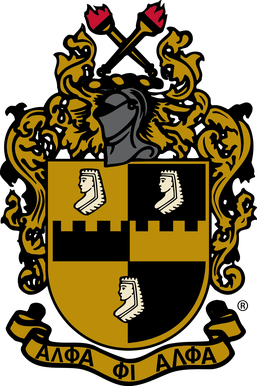
Alpha Phi Alpha uses ancient‑Egyptian imagery in its symbolic repertoire; the Sphinx is closely associated with the fraternity and appears in many ceremonial and commemorative contexts. The emblematic reference to the Sphinx and related iconography evokes values the fraternity associates with wisdom and endurance. The stated aims emphasize "manly deeds, scholarship, and love for all mankind," and the motto often given is "First of All, Servants of All, We Shall Transcend All." These elements guide ritual life and public presentation and are referenced in official materials and educational programs.
Organization, membership and reach
Alpha Phi Alpha maintains undergraduate chapters on college campuses and alumni (graduate) chapters in cities and regions. Over the decades the fraternity has reported large and active membership: public accounts commonly cite more than 290,000 members and several hundred chapters globally. Since 1940 the fraternity has been officially open to men of all races, a change reflecting broader developments in American civic and collegiate organizations; discussions of that policy appear in historical summaries and in the fraternity's own documentation on membership policy. Chapter records and charters are preserved in a variety of archival collections and institutional repositories.
Programs, public service and impact
Alpha Phi Alpha conducts programs in education, mentorship, civic engagement and health awareness. Signature initiatives typically include scholarship funds, youth mentoring, tutoring and leadership workshops that encourage secondary school completion and college matriculation. The fraternity has also promoted voter education, civic participation and public‑awareness campaigns on issues affecting African American communities. National offices and local chapters coordinate service projects, partnerships with schools and nonprofits, and alumni mentoring networks that support professional development.
- Academic support and scholarship programs
- Youth mentoring and leadership development
- Voter education and civic engagement initiatives
- Community service and public‑health outreach
Archives, membership and legacy
Historical materials, chapter lists and institutional records for Alpha Phi Alpha are held in university and research repositories, including collections that document African‑American organizational history and the fraternity's own archives; these sources are useful for researchers tracing local chapter development and national programs. For primary materials and chapter histories consult published chapter records and institutional summaries as well as archival finding aids, such as those described under chapter records and symbol resources. Commentary on the fraternity's role in American history often highlights its early leadership in higher education, its contribution to civic life, and the public service commitments expressed through its programs.
Alpha Phi Alpha's membership has included individuals who became prominent in public life, law, education and the arts; many members have cited their fraternity experience as formative for careers in leadership and advocacy. For an organizational overview, official communications and historical statements consult the fraternity's publications and national materials, which describe aims, programs and ongoing activities in greater detail: see the statements of aims, emblem descriptions such as the Great Sphinx emblem, and additional institutional summaries available through university archives and research centers.
Readers seeking current chapter directories, official statements or national program descriptions can refer to the fraternity's informational outlets and published materials for the most up‑to‑date information on membership, events and local activity; these resources include organizational overviews and national publications referenced as part of broader historical and civic studies.
Questions and answers
Q: When was Alpha Phi Alpha founded?
A: Alpha Phi Alpha was founded on December 4, 1906.
Q: Where was Alpha Phi Alpha founded?
A: Alpha Phi Alpha was founded at Cornell University in Ithaca, New York.
Q: What is the symbol of Alpha Phi Alpha?
A: The symbol of Alpha Phi Alpha is the Great Sphinx of Giza from ancient Egypt.
Q: What are the aims of Alpha Phi Alpha?
A: The aims of Alpha Phi Alpha are "manly deeds, scholarship, and love for all mankind."
Q: What is the motto of Alpha Phi Alpha?
A: The motto of Alpha Phi Alpha is "First of All, Servants of All, We Shall Transcend All."
Q: Where are the archives of Alpha Phi Alpha preserved?
A: The archives of Alpha Phi Alpha are preserved at the Moorland-Spingarn Research Center.
Q: When did Alpha Phi Alpha become open to men of all races?
A: Alpha Phi Alpha became open to men of all races since 1940.
Related articles
Author
AlegsaOnline.com Alpha Phi Alpha — First Intercollegiate Black Greek‑Letter Fraternity Leandro Alegsa
URL: https://en.alegsaonline.com/art/2965
Sources
- ww2.odu.edu : "The History of Alpha Phi Alpha, Inc"
- thecharlottepost.com : "Local"
- commons.wikimedia.org : Alpha Phi Alpha