
East Coast (train operating company)
East Coast was a government-owned British train operator running high-speed passenger services on the East Coast Main Line from 2009 to 2015, taking over after a franchise default and later returning to private operation.
Overview
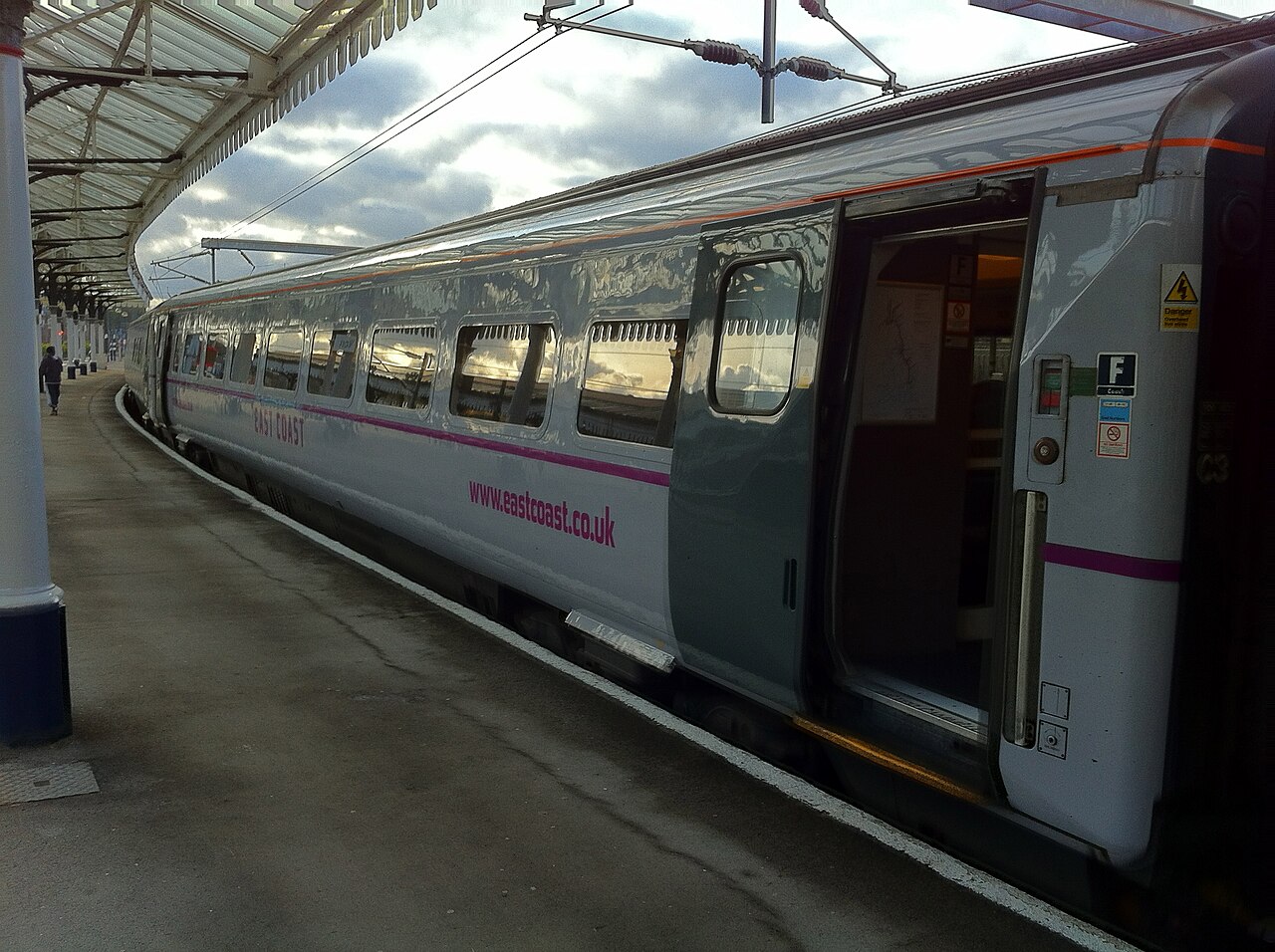
East Coast was the trading name used by a government-owned company that operated long-distance passenger trains on the East Coast Main Line in the United Kingdom. It provided inter-city services linking major population and economic centres including London, Yorkshire, the North East and Scotland. The business began operations on 14 November 2009 after the private franchise holder defaulted, and it ceased to trade on 28 February 2015 when the franchise was returned to private-sector management.
Image gallery
6 Images



Key facts
- Start of operations: 14 November 2009.
- End of operations: 28 February 2015.
- Rolling stock: fleet included 45 locomotives and several high-speed train sets.
- Stations: served 53 stations and directly operated 12 of them.
History and reason for government operation
The government stepped in after National Express East Coast was unable to meet the financial commitments of its franchise agreement. The state-run provider was established to keep services running without interruption while a longer-term solution was sought. This kind of intervention is uncommon but has been used in the UK rail sector to stabilise important inter-city routes when a private operator fails to deliver the agreed franchise payments or service standards.
Network, services and customer experience
East Coast operated high-speed inter-city services along the electrified East Coast Main Line, a principal artery linking London with northern England and Scotland. Typical services included daytime expresses between the capital and cities such as York, Leeds, Newcastle and Edinburgh. The timetable mix balanced fast long-distance expresses with a selection of stopping services that called at intermediate regional stations. Customer-facing changes tended to focus on maintaining punctuality, cleanliness and continuity of through services while the government organisation managed the franchise.
Rolling stock, depots and staffing
The operator ran a mixed fleet of express locomotives and fixed-formation high-speed sets. Much of the traction was recognisable from the long-standing InterCity fleet used on the route, and these trains were maintained at depots along the route. Staff such as drivers, on-board crew and station teams continued in their roles during the period of public ownership, with the government operator inheriting employees from the previous franchise holder and managing day-to-day operations.
Financial performance, transition and legacy
Although the government-owned company was set up as an emergency measure, it returned revenue to the public purse and, by some measures, delivered a stable service during its tenure. There were public and political discussions about whether the state should retain direct control of profitable inter-city routes, particularly because the operator contributed payments to the Treasury. Ultimately, the franchise was re-let to the private sector and awarded to Virgin Trains East Coast, marking a return to franchised private operation. The episode remains notable as an example of a temporary public-sector stewardship of a major UK rail franchise and is often cited in debates over rail franchising, risk allocation and the role of government in managing essential transport links.
Notable points
- East Coast was a short-term, government-run operator created to maintain continuity of service.
- It served a crucial inter-city corridor connecting England and Scotland.
- Its operation highlighted tensions between franchising risks and public interest in reliable rail services.
Related articles
Author
AlegsaOnline.com East Coast (train operating company) Leandro Alegsa
URL: https://en.alegsaonline.com/art/29631
Sources
- news.bbc.co.uk : "East Coast rail change confirmed"
- theguardian.com : "First Virgin Trains East Coast service leaves London"