
Edsel — Ford Motor Company automobile marque (1958–1960)
Edsel was an automobile marque launched by Ford in 1957 and sold 1958–1960. Known for distinctive styling and a high-profile commercial failure, it produced several models and left lessons for marketing and design.
Overview
Edsel was a car marque introduced by the Ford Motor Company in a widely publicized unveiling on "E‑Day", 4 September 1957. The brand took its name from Edsel Ford, the son of Henry Ford, and was positioned between Ford's mainstream models and the upscale Lincoln line. Public expectations were high, but sales declined quickly and production ended with the 1960 model year (1960). The Edsel is frequently cited in business history as an example of a major product launch that failed to meet consumer demand.
Image gallery
9 Images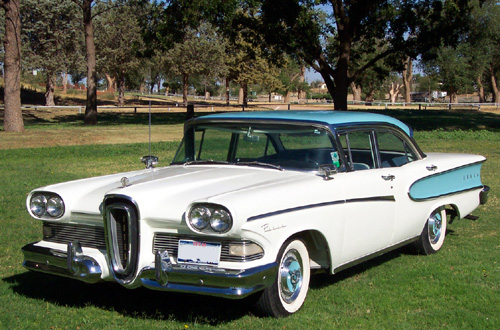


Design, features and models
Development began in 1955 under the internal name "E‑car" (for "Experimental car"). For the 1958 model year (1958) Edsel offered four principal lines: the large Citation and Corsair, and the smaller Pacer and Ranger. These lines covered a range of body styles and price points intended to appeal to different buyers.
- Citation: available as two‑door hardtop, four‑door sedan and two‑door convertible (see convertible).
- Corsair: similar to the Citation but without a factory convertible.
- Pacer: smaller, simpler models targeted at buyers seeking a more affordable option.
- Ranger: the entry‑level series in several body forms.
Station wagon variants—named Bermuda, Villager and Roundup—were built on the smaller Edsel platforms and closely resembled contemporary Ford wagons (station wagons).
Production, market performance and decline
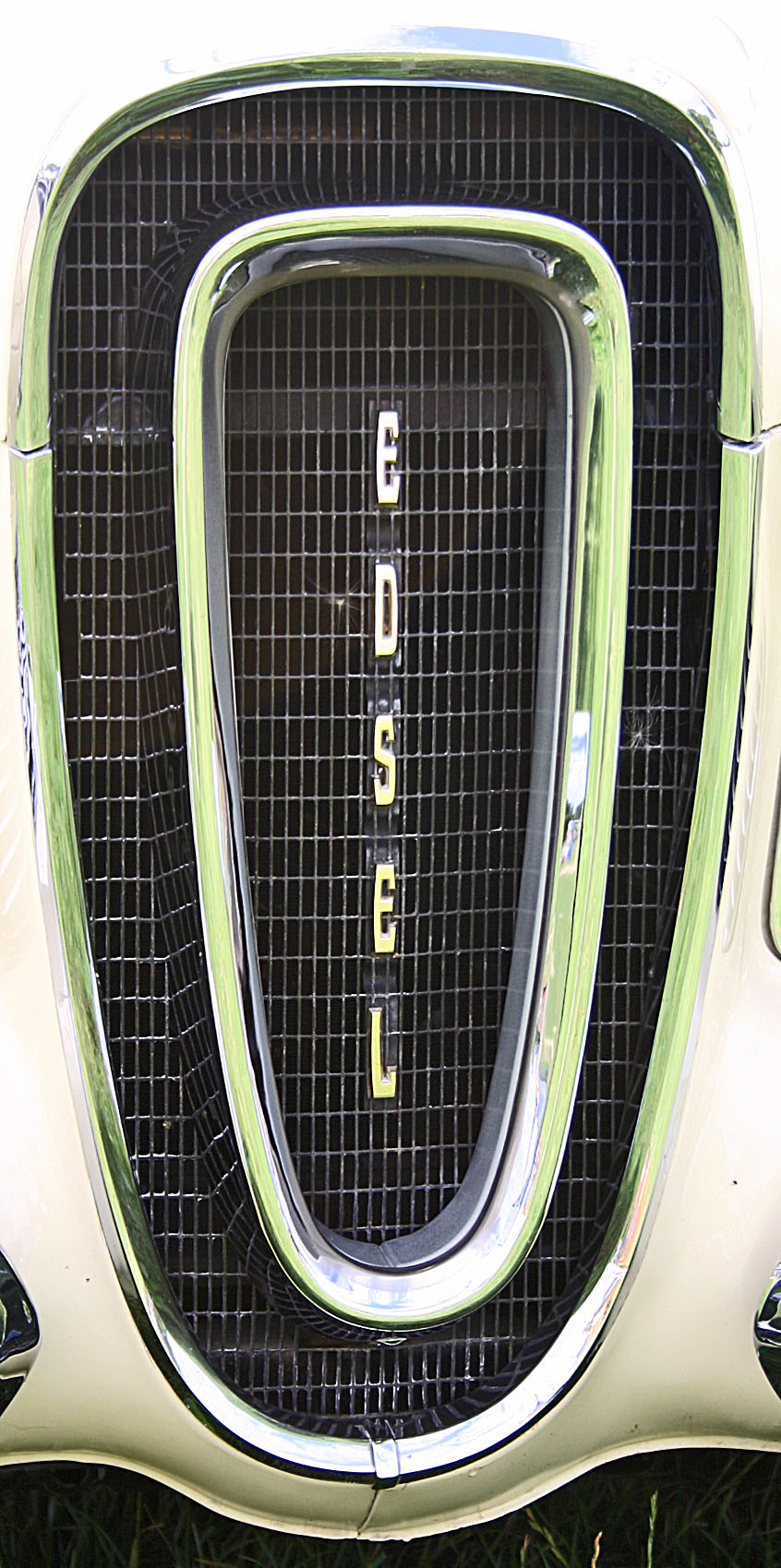
Initial production generated substantial interest: about 63,110 Edsels were sold in the first model year, a launch comparable to major brand debuts. However several factors undermined the marque: a recession after the launch, mixed public reaction to the car's styling (notably its vertical grille and distinctive front end), uneven quality control, and marketing that many found confusing. By 1959 only two models remained in the lineup (Ranger and Corsair) and sales dropped to about 44,891 units. Production continued in a greatly reduced form into the 1960 model year; only a few thousand cars were built before the Edsel division was closed (the corporate shutdown was announced on November 19, 1959), effectively ending the marque.
Legacy and significance
Although commercially unsuccessful, Edsel influenced the automobile industry in several ways. Its development underscored the hazards of launching a new marque during uncertain economic conditions and the importance of clear market positioning. Some design elements and engineering lessons migrated back into Ford products, and Edsel has remained a subject of study in marketing, brand management and industrial design. Collector interest and historical reassessment have, over time, given Edsel a niche place in classic‑car circles.
Notable facts and distinctions
Edsel's short production run and distinctive styling made it a cultural touchstone for mid‑20th century American automotive history. Exact production totals varied by year and model—63,110 in the first year, 44,891 in the second, and only about 2,848 during the final run—figures often cited in retrospectives. The marque's story is frequently used in business literature to illustrate how product planning, timing, and consumer perception can determine success or failure.
For further reading and archival material, consult contemporary company releases and automotive histories that analyze the Edsel program in the contexts of corporate strategy, design choices and postwar American consumer markets (Ford archives, E‑Day coverage, 1957 reviews, biographies, 1960 retrospectives, Lincoln comparisons, design notes, 1958 model guides, convertible options, wagon lineage, 1959 season, closure announcement).
Questions and answers
Q: What was the name of the car division introduced by Ford Motor Company?
A: The car division introduced by Ford Motor Company was called Edsel.
Q: When did the company introduce this new car making division?
A: The company introduced this new car making division on September 4, 1957, which they referred to as "E-Day".
Q: Who was Edsel named after?
A: Edsel was named after Henry Ford's son, Edsel Ford.
Q: How many models were produced in their first year (1958)?
A: In their first year (1958), Edsel produced four models - Citation, Corsair, Pacer and Ranger.
Q: What body styles were offered for each model?
A: For each model there were different body styles offered - 2 door hardtop, 4 door sedan, 2 door convertible for Citation and Corsair; 2 door sedan and 2 door convertible for Pacer; and 2 door, 4 door and 4 door sedan for Ranger. Additionally station wagons based on the two smaller Edsel models - Bermuda, Villager and Roundup - were also available.
Q: How many cars sold during the first year of production?
A: 63,110 cars sold during the first year of production which was second largest car launch in history only behind Plymouth introduction in 1928.
Q: When did production of Edsels end?
A: Production of Edsels ended on November 19th 1959 with only 2848 cars built before closing down the motor division.
Related articles
Author
AlegsaOnline.com Edsel — Ford Motor Company automobile marque (1958–1960) Leandro Alegsa
URL: https://en.alegsaonline.com/art/30212