
East Antarctica: geography, climate, ice sheet, and scientific importance
East Antarctica, or Greater Antarctica, is the vast, ice‑covered eastern sector of the Antarctic continent, noted for extreme cold, a thick continental ice sheet, and major scientific research sites.
Overview
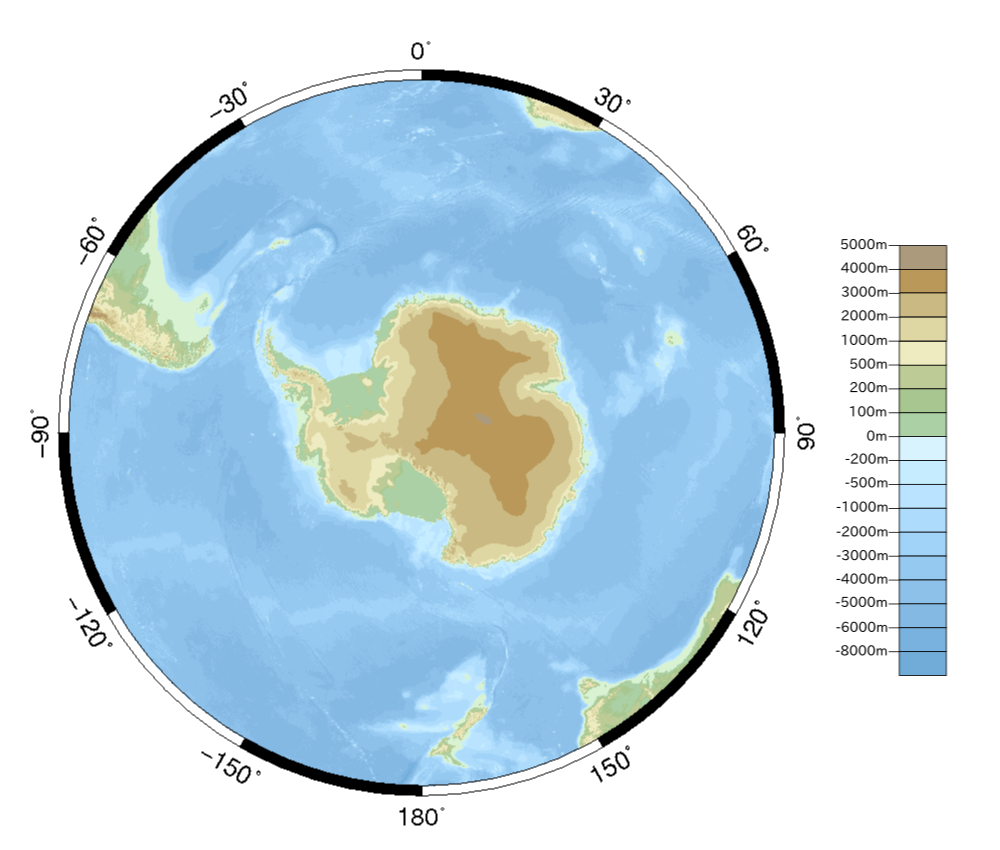
East Antarctica, often called Greater Antarctica, comprises the larger portion of the Antarctic landmass and lies mainly in the Eastern Hemisphere. Separated from West Antarctica by the Transantarctic Mountains, it contains much of the continent's ice volume and includes extensive coastal margins and a vast interior plateau. This region is famous for its extreme climate: the coldest, driest and one of the windiest places on Earth.
Image gallery
7 Images




Geography and major areas
East Antarctica covers a broad arc of territory facing the Indian Ocean side of the Antarctic divide and contains many named coastal sectors and underlying geological provinces. On the surface the landscape is dominated by an ice sheet, but beneath the ice lie ancient cratons and mountain ranges discovered by geophysical surveys.
- Coats Land
- Queen Maud Land
- Enderby Land
- Kemp Land and Mac. Robertson Land
- Princess Elizabeth Land, Kaiser Wilhelm II Land, Queen Mary Land
- Wilkes Land, Adélie Land, George V Land
- Oates Land and Victoria Land
The Transantarctic Mountains act as the conventional boundary between East and West Antarctica. Key subglacial features include ancient shields and mountain ranges such as the Gamburtsev Subglacial Mountains identified by radar and seismic surveys. For regional maps and further orientation see the broader Antarctic continent resources.
Climate and the ice sheet
East Antarctica is characterized by a high, cold interior plateau where temperatures reach the lowest measured on Earth. Long-term weather records from inland stations document exceptionally low winter temperatures and persistent katabatic winds flowing from the interior toward the coast. The surface is extremely dry; most precipitation falls as very light snowfall that is later compacted into ice.
The East Antarctic Ice Sheet is thick and extensive, storing the majority of the planet's continental ice. Its stability and flow patterns are central to global sea level and climate studies. Researchers drill ice cores here to reconstruct past climates and atmospheric composition over hundreds of thousands of years.
Human presence and scientific research
Permanent and seasonal research stations operated by multiple countries occupy coastal sites and a few high interior locations. Notable facilities in East Antarctica include long‑running bases such as Russia's Vostok station, the Franco‑Italian Concordia camp, and Australian stations like Mawson, Davis and Casey. These sites support glaciology, meteorology, astronomy, and biology among other disciplines. Logistics are demanding: access often depends on ice conditions, long overland traverses, or specialized aircraft. For details on logistical approaches and station locations consult polar program references at research networks.
Ecology and broader significance
Life in East Antarctica is mostly limited to coastal and marine environments where sea ice, open water leads and coastal rock outcrops provide habitat. Seabirds, seals and penguins (including emperor penguins) breed on sea ice and along the ice-edge; marine productivity is driven by cold, nutrient-rich waters that support krill and other plankton. The vast interior, blanketed by ice and subject to extreme cold, supports microbial life in specialized niches but no large terrestrial fauna.
Notable facts and global role
East Antarctica plays a central role in Earth's climate system. Its ice cores preserve records of past atmospheric composition and temperature, helping scientists understand natural climate variability and human influence. Changes in the ice sheet—whether gradual or rapid—have implications for global sea level. The region is protected under the Antarctic Treaty System, which sets aside Antarctica for peaceful scientific cooperation and environmental protection. For perspectives on oceanic influences and regional connections see materials about the surrounding seas on the Indian Ocean side of the continent.
Related articles
Author
AlegsaOnline.com East Antarctica: geography, climate, ice sheet, and scientific importance Leandro Alegsa
URL: https://en.alegsaonline.com/art/29604
Sources
- commons.wikimedia.org : Commons
- wikidata.org : wikidata.org/wiki/Q866405
- d-nb.info : 4075726-2
- id.loc.gov : sh85040524
- aleph.nkp.cz : ge329566
- viaf.org : 237711493
- worldcat.org : 237711493