
El Niño–Southern Oscillation (ENSO): causes, phases, impacts and measurement
ENSO is a recurring ocean–atmosphere phenomenon in the tropical Pacific with warm (El Niño) and cool (La Niña) phases that alter global weather patterns, ecosystems and climate variability.
Overview
The El Niño–Southern Oscillation is a coupled climate pattern involving the tropical Pacific Ocean and the overlying atmosphere. It alternates irregularly every few years between a warm phase commonly called El Niño and a cool phase called La Niña, with neutral intervals in between. These phases shift large-scale wind and rainfall distributions across the tropics and can influence weather much farther afield.
Image gallery
10 Images




Physical characteristics and mechanisms
Under normal conditions, east-to-west trade winds push warm surface water toward the western Pacific, maintaining a warm pool near Indonesia and a relatively cool eastern equatorial Pacific. During El Niño the trade winds weaken or reverse, allowing warm water to spread eastward along the equator and closer to South America. A weak warm current that often becomes noticeable around Christmas historically gave the event the Spanish name "El Niño". In La Niña, the trade winds strengthen and the eastern Pacific becomes unusually cool. These changes affect the position of the oceanic thermocline, convection over the warm pool, and the large-scale Walker circulation that links the ocean and atmosphere.
How ENSO is observed and quantified
Scientists monitor ENSO using a combination of sea-surface temperatures, atmospheric pressure, winds and rainfall. Common oceanic indices measure temperature anomalies in specific tropical regions (for example, the Niño 3.4 area), while atmospheric variability is tracked by the Tahiti–Darwin pressure contrast. The anti-correlated relationship between sea-level pressure at these locations is summarized by the Southern Oscillation Index (SOI). A negative SOI often coincides with an unusually warm eastern Pacific — the El Niño state — while a positive SOI tends to match La Niña conditions. Together these atmospheric and oceanic signals are referred to by the acronym ENSO.
History and scientific discovery
Early mariners and coastal communities in South America recorded episodic warming and fisheries collapse associated with El Niño long before formal study. In the early 20th century, researchers including Sir Gilbert Walker identified a large-scale "seesaw" in atmospheric pressure across the tropical oceans, linking pressure changes to remote rainfall anomalies. Over subsequent decades the ocean component and its connection to global climate were established, making ENSO one of the best understood modes of natural climate variability.
Impacts and examples
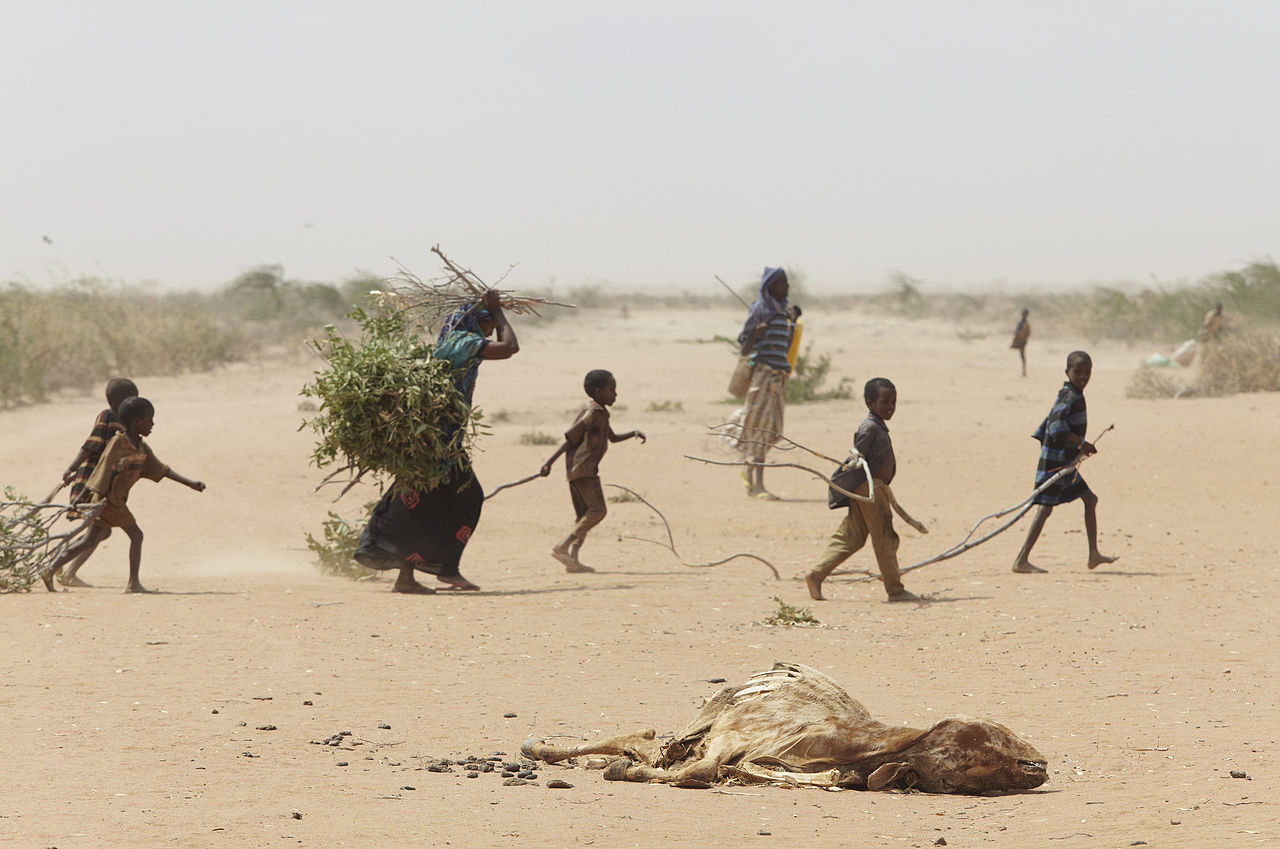
The global fingerprint of ENSO affects storm tracks, droughts, floods, and marine ecosystems. For instance, El Niño is often associated with reduced rainfall in parts of Australia and Southeast Asia, while coastal regions of Peru and Ecuador can experience unusually heavy rains and flooding. The converse, La Niña, tends to enhance rainfall in eastern Australia and can lead to flooding events such as the 2010–2011 Queensland floods. Regions of East Africa and other subtropical zones may experience either wetter or drier conditions depending on the phase and strength of ENSO. Changes in upwelling during El Niño can reduce nutrient supply and depress fisheries along the South American coast, illustrating direct impacts on livelihoods and economies.
Measurement, predictability and societal relevance
Operational monitoring combines satellite observations, buoys, and weather station networks to maintain real-time ENSO diagnostics. Indices based on sea-surface temperature and atmospheric pressure help forecasters assess the current state and the likelihood of transitions between phases. Although seasonal to interannual forecasts of ENSO have improved substantially, predicting the timing and strength of events remains challenging. Because ENSO modulates hazards such as drought (drought in some regions) and flood risk in others, it is a key consideration in water management, agriculture and disaster preparedness. Research continues into how long-term climate change may alter ENSO behavior and its global consequences, and operational early-warning systems link scientific indices to decision-making in many countries.
- Key concepts: El Niño (warm), La Niña (cool), Southern Oscillation (atmospheric)
- Typical recurrence: every few years with variable strength
- Monitored by ocean temperature indices and pressure differences such as the SOI
- Wide-ranging impacts on weather, ecosystems and economies
For further reading, consult authoritative climate summaries and national meteorological services that provide up-to-date ENSO bulletins and guidance. Many resources explain the roles of oceanic indices, atmospheric circulation and regional impacts in greater technical detail.
Indian Oceans studies, Pacific Ocean observations and regional reports together form the basis of modern ENSO monitoring and adaptation planning.
Questions and answers
Q: What is El Niño-Southern Oscillation (ENSO)?
A: El Niño-Southern Oscillation (ENSO) is a natural event that takes place in the Pacific Ocean. It is also called El Niño and La Niña, which mean "little boy" and "little girl" in Spanish.
Q: How often does this event occur?
A: The Pacific Ocean has this event every two to five years. Every three to seven years, an El Niño event may last for many months.
Q: What are the effects of ENSO?
A: ENSO can change the weather and have important effects around the world. Australia and Southeast Asia can have drought while the deserts of Peru have very heavy rainfall, or East Africa can have both drought and heavy rain depending on whether it's an El Niño or La Niña event.
Q: Who discovered Southern Oscillation?
A: Sir Gilbert Walker discovered Southern Oscillation in 1923.
Q: What is the Southern Oscillation Index (SOI)?
A: The Southern Oscillation Index (SOI) is the difference in sea-level pressure measured at Tahiti and Darwin.
Q: What caused the 2010-2011 Queensland floods?
A: The 2010-2011 Queensland floods were caused by a La Niña event which brought very heavy rain to the east coast of Australia.
Related articles
Author
AlegsaOnline.com El Niño–Southern Oscillation (ENSO): causes, phases, impacts and measurement Leandro Alegsa
URL: https://en.alegsaonline.com/art/30569
Sources
- walker-institute.ac.uk : "About Sir Gilbert Walker"
- bom.gov.au : "BOM - Australian Climate Extremes-Flood"
- news.com.au : "Counting cost of Queensland floods"
- aviso.oceanobs.com : "Chronology of the Events Since 1992"
- producer.com : El Niño's Bark is Worse than its Bite