
Dynamic Random-Access Memory (DRAM)
DRAM is the dominant type of volatile semiconductor memory used for main system memory. It stores bits in capacitors and requires periodic refresh; variants include SDRAM and DDR generations.
Overview
Dynamic random-access memory (DRAM) is a form of volatile semiconductor memory widely used as the primary working memory in computers, servers, smartphones and many embedded systems. Unlike non-volatile storage such as flash or hard drives, DRAM loses its stored information when power is removed. It is called "dynamic" because each memory cell must be periodically refreshed to preserve the charge that represents a stored bit.
Image gallery
10 Images



Design and operation
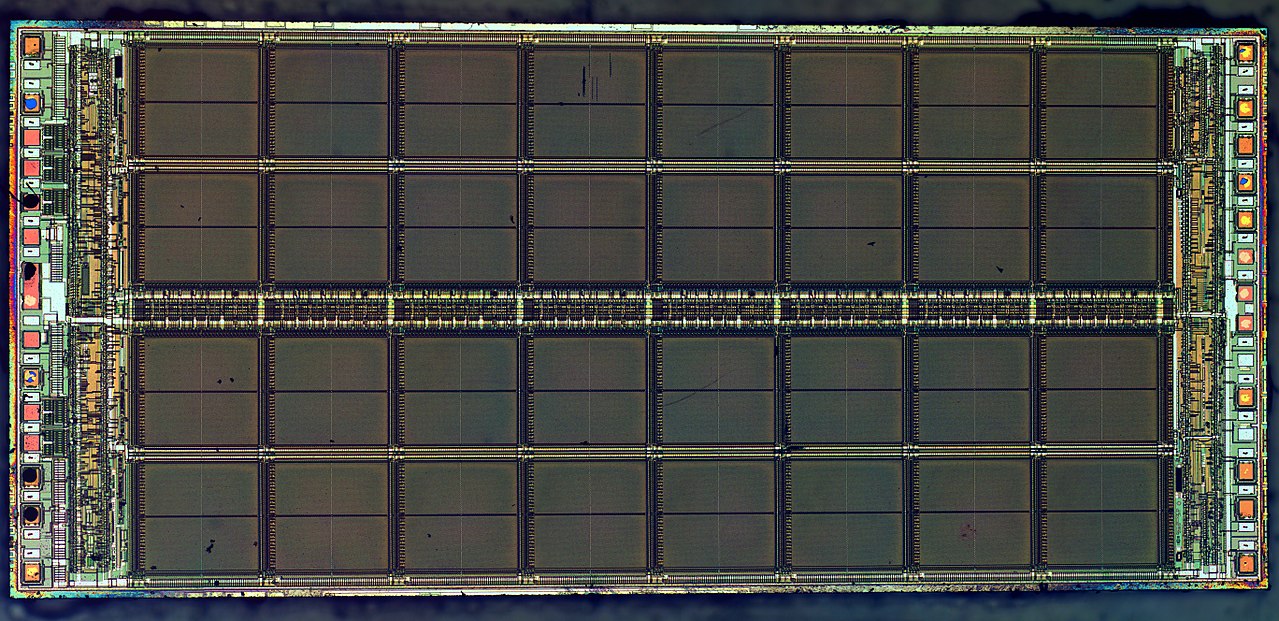
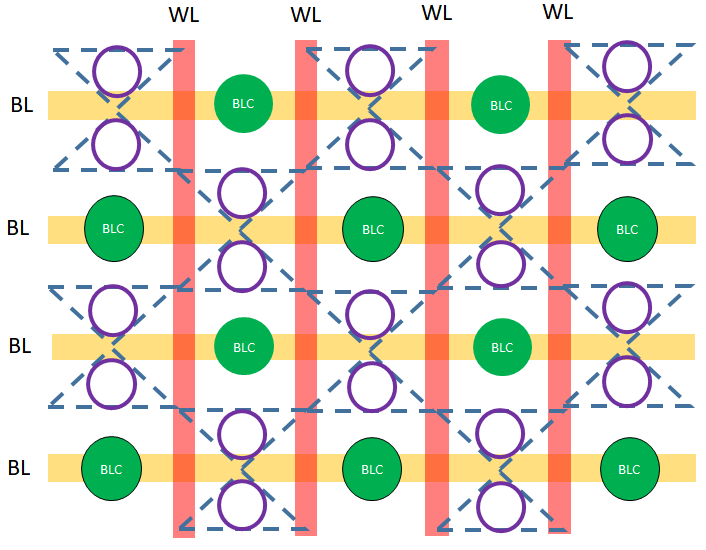
A DRAM chip is organized as a large two-dimensional array of cells. Each cell typically consists of a single capacitor and a single access transistor. The capacitor holds an electrical charge that represents a binary value (charged for a "1", discharged for a "0"), while the transistor acts as a gate connecting the capacitor to a bit line during read and write operations. Because capacitors leak charge over time, a memory controller or refresh circuitry must periodically read and re-write each row to restore the charge; this process is usually automated by the memory controller and invisible to applications. For more on refresh behavior see refresh timing. For illustrations of the basic components see capacitor and transistor.
Key characteristics
- Volatility: DRAM requires continuous power and refresh cycles to retain data.
- Density: Because it uses a single transistor–capacitor pair per bit, DRAM achieves high density and relatively low cost per bit.
- Performance: Access latency is higher than that of SRAM, but modern DRAM offers high bandwidth through wide data buses and synchronous interfaces.
- Energy: Refresh and access operations consume power, an important consideration in mobile and battery-powered devices.
History and development
DRAM technology emerged in the late 1960s as improvements in semiconductor fabrication made very small capacitors and transistors practical. Early DRAM designs evolved rapidly, giving rise to standardized synchronous interfaces and successive generations of double data rate (DDR) memory that trade latency for increasing transfer rates. Over decades manufacturers and designers have optimized cell structure, error-correcting features, power-saving modes, and packaging to meet the demands of general-purpose and specialized computing.
Uses and importance
DRAM serves as the main system memory in virtually all general-purpose computers: it stores program code, working data and the operating system kernel while the processor executes tasks. Variants of DRAM are also used in graphics cards (GDDR), high-performance computing, and network equipment. Designers choose DRAM over other memory types when a combination of moderate latency, high density and reasonable cost is required. For small, ultra-fast caches, static RAM (SRAM) is used instead; for long-term storage, non-volatile media are chosen.
Distinctions and notable facts
Unlike SRAM, which uses multiple transistors per bit and retains data without refresh while powered, DRAM emphasizes bit density. The need to refresh can affect real-time performance and power usage, so modern systems schedule refreshes carefully and offer low-power refresh modes. Error-correcting codes (ECC) are often applied in server memory to detect and correct bit flips. Advances in packaging, channel architecture, and memory controllers continue to shape how DRAM is integrated into computing platforms.
For practical introductions and specifications consult introductory materials or technical references: DRAM refresh, capacitor basics, transistor operation.
Related articles
Author
AlegsaOnline.com Dynamic Random-Access Memory (DRAM) Leandro Alegsa
URL: https://en.alegsaonline.com/art/29422