
Dual carriageway (divided highway)
A dual carriageway, also called a divided highway, is a road with physically separated directions of travel. This article explains its features, history, uses and distinctions from motorways and freeways.
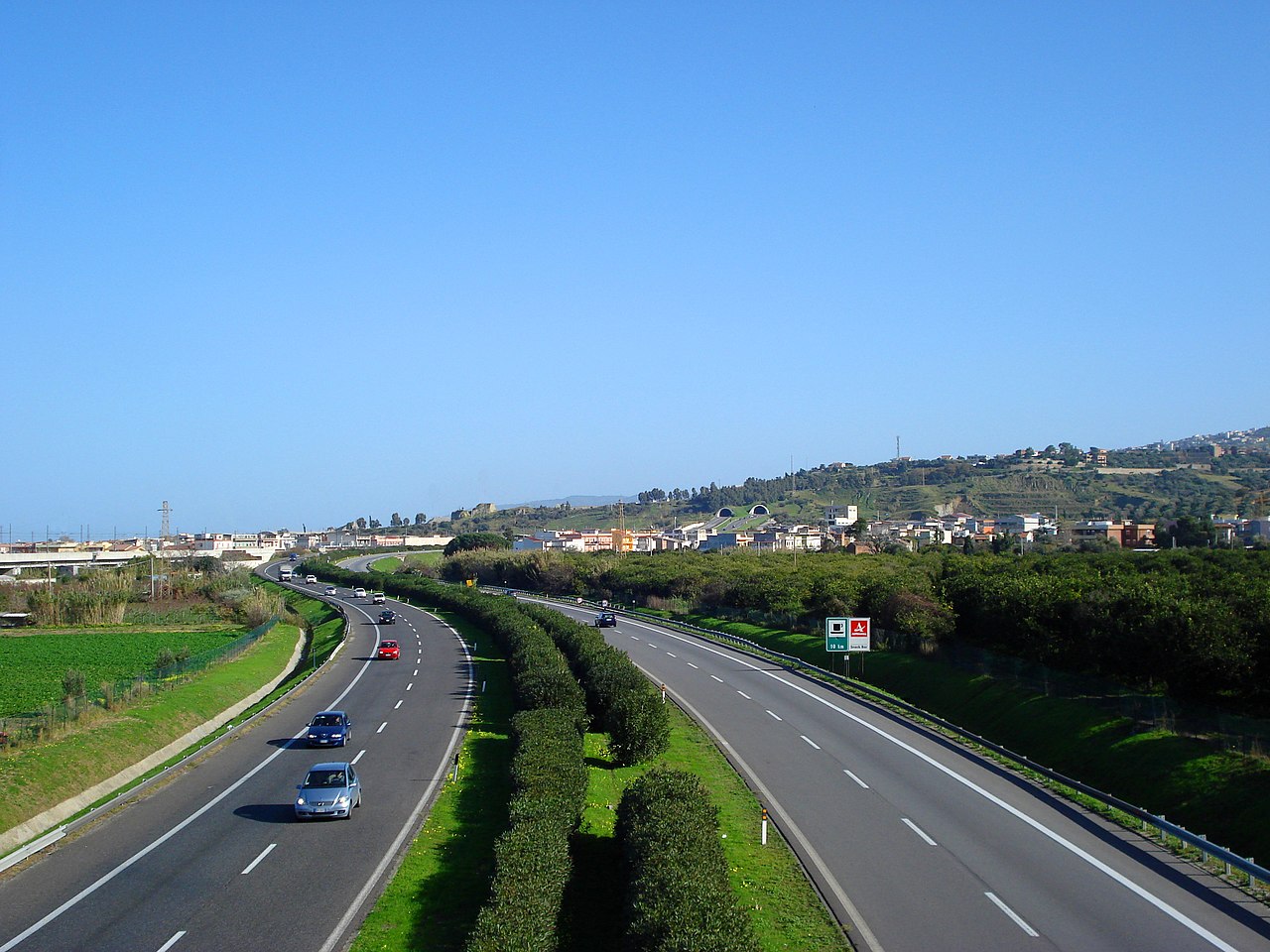
A dual carriageway (British English) or divided highway (American English) is a road design in which traffic traveling in opposite directions uses physically separate carriageways. Separation is provided by a central reservation, median strip, barrier or verge. Dual carriageways are commonly used for medium- and long-distance transport because separating directions reduces conflict between vehicles and can improve traffic flow.
Image gallery
10 Images




Characteristics and common features
Typical dual carriageways have two or more lanes for each direction, but lane counts can vary widely. The two carriageways are separated by a median that may be landscaped, paved, or occupied by a safety barrier. Access control ranges from full (no direct property access; grade-separated junctions) to partial (at-grade intersections and property entrances). Some dual carriageways include a hard shoulder for emergency stops, while others do not; availability depends on local design standards.
History and development
The concept of separating opposing traffic flows developed in the early 20th century as vehicle speeds and volumes increased. As motor vehicle use grew, engineers adopted divided alignments to reduce head-on collisions and ease overtaking. Over time, many countries established standards for central reservations, barrier types and junction design. Modern expressways and motorways evolved from these earlier divided road forms.
Uses, benefits and limitations
- Benefits: improved safety compared with undivided roads, higher capacity, and smoother traffic flow.
- Limitations: higher construction footprint and cost, potential environmental and community impacts, and the need for safe crossing points for pedestrians and local traffic.
- Applications: intercity routes, ring roads, and major urban arteries. Some dual carriageways form part of national highway networks.
Terminology and related road types
Terms vary by country. In British English, "dual carriageway" is common; in American English, "divided highway" is used. More controlled forms with grade-separated junctions and restricted access are called motorways, freeways or expressways, depending on local definitions and legal status. For technical guidance on classifications and standards, see further information on road types.
Because designs and regulations differ internationally, it is important to check local highway standards when comparing dual carriageways and their safety or operational features.
Related articles
Author
AlegsaOnline.com Dual carriageway (divided highway) Leandro Alegsa
URL: https://en.alegsaonline.com/art/29071
Sources
- dictionary.cambridge.org : "Cambridge Dictionaries Online: Cambridge Advanced Learner's Dictionary: hard shoulder"
- greenflag.com : "Hard Shoulder Safety"