
Dragan Holcer — Croatian football defender (1945–2015)
Dragan Holcer was a Croatian football defender who played for Hajduk Split, FK Radnički Niš, VfB Stuttgart, FC Schalke 04 and the Yugoslavia national team. Born in 1945, he died in 2015.
Dragan Holcer was a prominent Croatian football defender whose professional career spanned domestic and West German clubs and included appearances for the Yugoslavia national team. Born on 19 January 1945 and deceased on 23 September 2015, Holcer is remembered for his steady presence in defence and for his role in the football scene of the 1960s and 1970s.
Image gallery
2 Images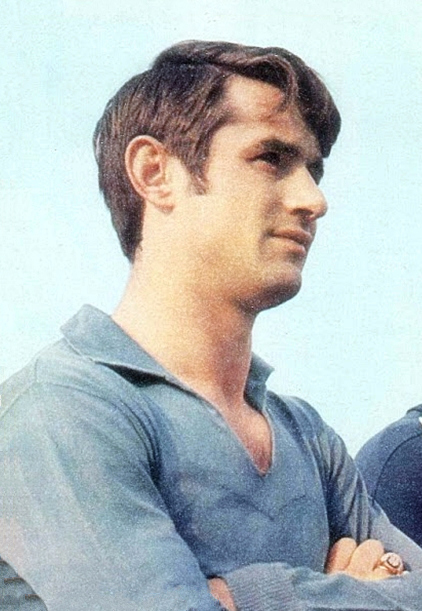

Early life and background
Holcer's origins were unusual and shaped by wartime Europe. He was born in a Nazi prison camp at Zwiesel in Germany. His family background was mixed: his mother was of Austrian–Italian descent and his father was Slovenian. After the war he grew up in the territory of the former Yugoslavia, where he began playing football and developed into a professional defender.
Club career
Holcer's club career included spells at several well known teams. He started his senior career in Yugoslavia and became established at HNK Hajduk Split, where he gained wider recognition. He later moved abroad to West Germany and played for VfB Stuttgart and FC Schalke 04, joining the ranks of players who brought Yugoslav experience to the Bundesliga. He also played for FK Radnički Niš earlier in his domestic career.
Playing style and role
Known as a dependable defender, Holcer combined positional awareness with simple, effective tackling and the ability to support his team from the back. He was not principally celebrated for flamboyant technique but for consistency, discipline and the leadership expected of a defensive specialist in his era.
National team and reputation
Holcer represented the national side of Yugoslavia during his international career, earning recognition at home and abroad. His international service added to his reputation and helped secure his transfers to clubs outside Yugoslavia. He remained a respected figure among supporters who followed the leagues where he played.
Legacy and death
After retiring from playing, Holcer's name continued to be cited in histories of Hajduk Split and in accounts of Yugoslav players who made successful moves to Western Europe. He died in Split on 23 September 2015. His life — from a wartime birth in a German camp to a football career that crossed borders — is often recalled as an example of sport intersecting with larger historical currents.
- Notable clubs: FK Radnički Niš, HNK Hajduk Split, VfB Stuttgart, FC Schalke 04.
- International: represented Yugoslavia national team.
Related articles
Author
AlegsaOnline.com Dragan Holcer — Croatian football defender (1945–2015) Leandro Alegsa
URL: https://en.alegsaonline.com/art/28837
Sources
- slobodnadalmacija.hr : "Nakon teške bolesti preminuo Dragan Holcer > Slobodna Dalmacija > Hajduk"