
Division of Hume (Australian federal electoral division)
Federal electoral division in southern New South Wales created in 1901, named for explorer Hamilton Hume. A primarily rural seat with shifting boundaries and a history of conservative representation.
The Division of Hume is an Australian federal electoral division located in the southern inland region of New South Wales. Established for the first federal election in 1901, the division is named after the early explorer Hamilton Hume, who with William Hovell conducted inland expeditions that opened parts of the region to European settlement. The seat covers a predominantly rural area with farming, grazing and regional service towns contributing to its economy.
Image gallery
10 Images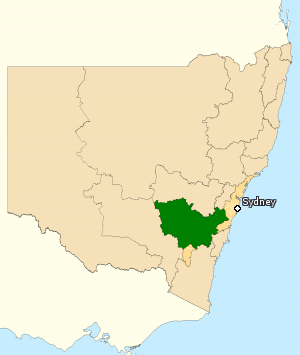






Characteristics and boundaries
The division's precise boundaries have varied over time because federal electoral districts are periodically redrawn to reflect population change. Its territory typically stretches across agricultural plains and low hills rather than metropolitan suburbs, and it includes a mix of small towns, river valleys and open countryside. Infrastructure, local industries and transport links play an important role in the day-to-day issues for electors.
History and origin
Hume was one of the original 75 divisions created at the birth of the Australian Commonwealth in 1901. It takes its name from a prominent early European explorer whose journeys in the early 19th century are part of the local historical identity. Over more than a century the division has been reshaped by successive redistributions as population centers have shifted within New South Wales.
Political significance
As a largely rural seat, the Division of Hume has tended to be represented by conservative parties at federal level, reflecting the social and economic profile of many regional electorates. Its electoral contests focus on issues such as agriculture, regional services, transport and local infrastructure. Redistributions can alter the political balance from one election to the next.
Notable aspects and present-day role
- Named for explorer Hamilton Hume, linking the division to early colonial exploration.
- Part of the state's regional representation in the federal parliament of New South Wales.
- Subject to periodic boundary changes administered by the Australian Electoral Commission and relevant to discussions about rural representation and services.
The Division of Hume remains an example of Australia's long-established rural electorates: historically rooted, administratively evolving, and central to the federal political voice of regional communities. For official maps and current boundary descriptions consult electoral authorities or the division's formal profile published during redistribution cycles here and here.
Questions and answers
Q: What is the Division of Hume?
A: The Division of Hume is an electoral division in the state of New South Wales, Australia.
Q: When was the Division of Hume established?
A: The Division of Hume was set up for the first Federal election in 1901.
Q: Who is Hamilton Hume?
A: Hamilton Hume was one of the first Europeans to travel through the area that the Division of Hume is named after.
Q: Why was the Division of Hume named after Hamilton Hume?
A: The Division of Hume was named after Hamilton Hume because he was one of the first Europeans to travel through the area.
Q: How many electoral divisions were set up for the first Federal election?
A: 75 electoral divisions were set up for the first Federal election in 1901.
Q: What state is the Division of Hume located in?
A: The Division of Hume is located in the state of New South Wales.
Q: What is the purpose of an electoral division?
A: The purpose of an electoral division is to represent a specific geographic area and elect a representative to the Australian Parliament.
Related articles
Author
AlegsaOnline.com Division of Hume (Australian federal electoral division) Leandro Alegsa
URL: https://en.alegsaonline.com/art/27901
Sources
- vtr.aec.gov.au : "House of Representatives Division First Preferences"
- aec.gov.au : "Profile of the electoral division of Hume (NSW"