
Divisions of the Australian House of Representatives
Explanation of the 151 single-member divisions (electorates or seats) used to elect members of the Australian House of Representatives, including how they are drawn, named, and why they matter.
The Australian House of Representatives is constituted from 151 single-member areas known as divisions, commonly referred to as electorates or seats. Each division elects one member to the House; the collection of divisions determines representation for states and territories in the lower chamber of the federal Parliament. For general information about the chamber and its role, see House of Representatives.
Image gallery
10 Images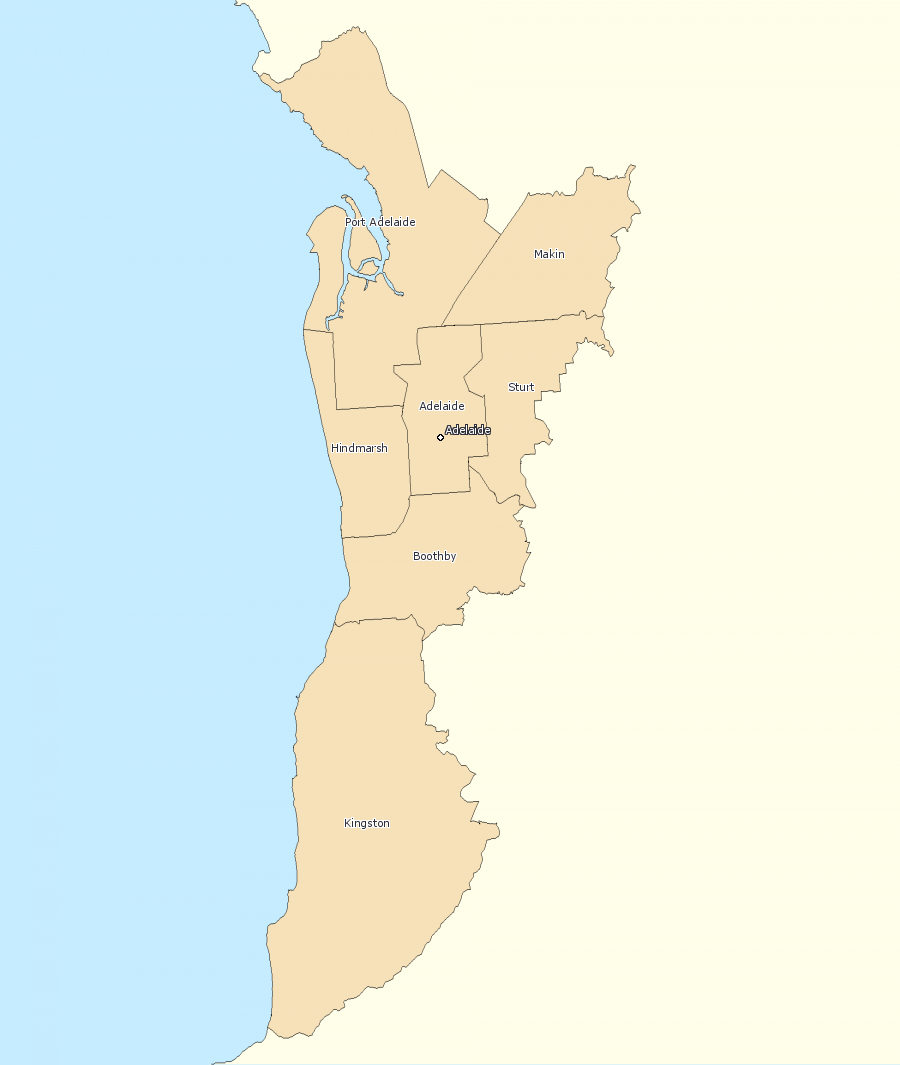


Characteristics of divisions
- Single-member: each division returns one Member of Parliament (MP) under preferential voting.
- Population-based: boundaries are drawn so that electorates contain broadly equal numbers of enrolled voters.
- Geographic variety: urban divisions are compact and densely populated, while rural divisions can cover very large areas.
- Names and identities: divisions are usually named after people or places and become political communities over time.
Divisions are not permanent. An independent electoral authority reviews and redraws boundaries periodically to reflect population change and to maintain the principle of one vote, one value. Redistributions may be triggered by population shifts, changes in a state's entitlement to seats, or at regular intervals to correct malapportionment.
Politically, divisions are the basic units of federal electoral competition. The outcome in marginal or swing divisions often decides which party or coalition can form government. MPs represent local concerns, run electorate offices, and balance constituent service with national legislative duties.
Historically the number and allocation of divisions are linked to population and constitutional principles that relate House size to the Senate. While the total count can adjust over time, the single-member division model has been central to Australia’s system of representative democracy since federation.
Notable distinctions include the contrast between "safe" seats, reliably won by one party, and "marginal" seats that frequently change hands. The process of naming, boundary-setting, and the geographic diversity of divisions together shape how Australians are represented in the House of Representatives.
Related articles
Author
AlegsaOnline.com Divisions of the Australian House of Representatives Leandro Alegsa
URL: https://en.alegsaonline.com/art/27996
Sources
- aec.gov.au : Research Report 4 - Australian Federal Redistributions 1901-2003.
- aec.gov.au : Guideline for Naming Divisions.