
Dime (United States coin)
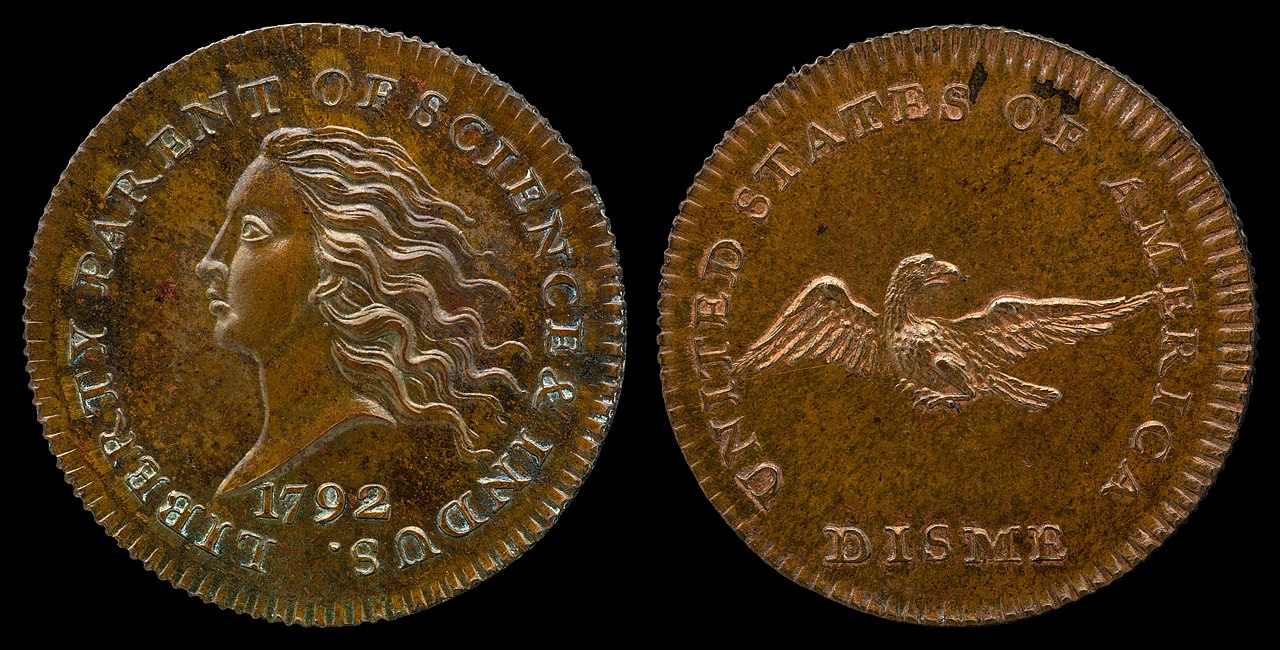
The U.S. dime is a ten-cent coin first authorized in 1792. Small in size but important in daily and collectible use, its design and metal composition have changed several times, now featuring FDR on the obverse.
Overview
The dime is a United States coin worth ten cents (one tenth of a dollar). It was authorized by the Coinage Act of 1792 and has circulated continuously since the early years of the republic. Although small in physical size, the dime plays a steady role in retail transactions, coin-operated machines, and numismatic collecting.
Image gallery
10 Images




Design and characteristics
Modern dimes have a small, thin planchet with a reeded (grooved) edge. The current obverse shows the portrait of President Franklin D. Roosevelt, introduced shortly after World War II as a tribute to his leadership and to commemorate his association with the March of Dimes public health campaign. The reverse bears a torch flanked by an olive branch and an oak branch, symbolizing liberty, peace, and strength.
- Edge: reeded, intended historically to deter clipping.
- Composition: modern dimes are clad coins; pre-1965 dimes were struck in 90% silver and 10% copper.
- Produced by multiple U.S. Mint facilities; mint marks identify place and sometimes special issues.
History and development
Over more than two centuries the dime’s appearance has evolved through several major series. Early types were inspired by classical and portrait styles; later named series include designs often called Draped Bust, Seated Liberty, Barber, and the Winged Liberty Head (commonly known as the "Mercury" dime). The Roosevelt design replaced the Winged Liberty Head series in the mid‑20th century. A significant material change occurred in the 1960s when rising silver prices led to a switch from silver to a copper-nickel clad composition used today.
Uses, collecting, and value
Dimes serve everyday transactional roles and are widely used in vending machines, parking meters, public transit fareboxes, and cash payments. For collectors, older silver dimes, certain mint-mark varieties, proofs, and coins with low mintage or errors can carry significant premium over face value. Bullion value applies to dimes struck from silver when they are in the pre-1965 category.
Notable facts and distinctions
The dime is the smallest current U.S. circulating coin by diameter, not the lowest in value—its value is ten cents. Its compact size and long history mean it illustrates broader trends in American coinage: changing portraiture, adjustments in metal content, and evolving minting technology. For official collecting information and current specifications, see resources from the United States Mint or other numismatic references such as specialist guides and price catalogs. General background on the denomination and its legal status can be found in federal coinage statutes and summaries at government and educational sites.
Related articles
Author
AlegsaOnline.com Dime (United States coin) Leandro Alegsa
URL: https://en.alegsaonline.com/art/27448
Sources
- usmint.gov : "Coins"