
Dirham — historic coin and modern currency unit
Dirham: a currency name and historic silver coin derived from the Greek drachma; used today in several countries and as fractional units elsewhere with a long medieval trading history.
Overview
The term "dirham" refers both to a historical silver coin and to several modern monetary units. Originating in the medieval Islamic world, the word now names national currencies and fractional monetary units in parts of North Africa, the Arabian Peninsula and Central Asia. Today the most widely known currencies called dirham are the Moroccan dirham and the United Arab Emirates dirham. For a list of contemporary uses see countries using the dirham.
Image gallery
10 Images



History and etymology
The name ultimately derives from the Greek drachma. Ancient and late antique Greek coinage influenced the monetary vocabulary of surrounding regions; the Greek term is reflected in Arabic as "dirham." Scholars trace this linguistic path from the Greek drachm and the related drachma coin through contacts with the Byzantine world. The Byzantine Empire's presence in the Levant helped Greek-style coinage circulate in pre-Islamic Arabia and later within Islamic polities, allowing the name to be adopted and adapted over time (Byzantine interactions, pre-Islamic trade).
Medieval circulation
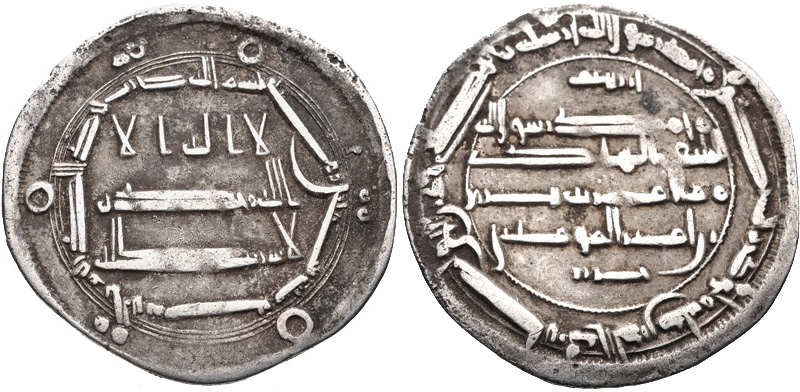
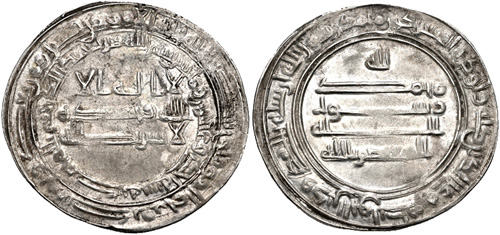
By the end of the 7th century the dirham had become established as a silver currency in many Islamic territories. Coins typically bore the name or titulature of the issuing ruler together with religious formulas and dates; such inscriptions helped standardize value and verify authenticity. Dirhams circulated widely across the Mediterranean and into parts of Europe, and they played a key role in long-distance commerce and in monetary exchanges between Islamic and Christian lands (7th-century adoption, religious inscriptions, Mediterranean trade).
Modern uses and denominations
In modern times "dirham" names both full national currencies and fractional units of larger currencies. Examples include:
- The Moroccan dirham, the official currency of Morocco.
- The United Arab Emirates dirham, used across the UAE.
- Subunit usages: in Libya the term appears as 1/1000 of the dinar; in Qatar as 1/100 of the riyal; in Jordan as 1/10 of the dinar; and in Tajikistan the variant spelling "diram" denotes 1/100 of the somoni.
These modern forms reflect regional monetary systems: see general historical notes on use in Spain (al-Andalus) and more broadly in Europe during the medieval centuries from the 10th century to the 12th century.
Coinage, banknotes and design
Historically a silver coin, the dirham's material and weight varied by time and place. Modern dirhams are produced as both coins and banknotes; designs typically incorporate national emblems, notable persons, architecture or cultural motifs rather than the religious legends of earlier coins. Central banks issue and manage dirham currency units, adjusting denominations and security features as monetary policy requires.
Notable distinctions and legacy
The dirham's long history makes it a useful example of how ancient monetary terms persist in modern economies. As a medieval trade currency it fostered links across regions; as a contemporary name it reflects national identity and continuity. The variant spellings and uses (dirham, diram) highlight local linguistic adaptation. For further reading on specific issuances and numismatic details consult specialized catalogues or central bank publications (see modern currency overview).
Although the dirham no longer denotes a single standardized coin across centuries, it remains an influential term in monetary history and everyday commerce in several countries today.
Questions and answers
Q: What is a dirham?
A: A dirham is a unit of currency used in several Arabic-speaking nations.
Q: Which countries use the dirham currency?
A: The Moroccan dirham, the United Arab Emirates dirham, 1/1000 of the Libyan dinar, 1/100 of the Qatari riyal, and 1/10 of the Jordanian dinar use the dirham currency.
Q: What is the value of a dirham in Tajikistani somoni?
A: The dirham, spelt 'diram,' is 1/100 of the Tajikistani somoni.
Q: What is the historical origin of the word "dirham"?
A: The word "dirham" historically comes from 'dirhem' which comes from the name of a Greek coin, the Drachm.
Q: When did the dirham become an Islamic currency?
A: Near the end of the 7th century, the dirham became an Islamic currency.
Q: Where was the dirham circulated in pre-Islamic times?
A: The Byzantine Empire controlled the Levant and traded with Arabia, circulating the coin there in pre-Islamic times and afterward.
Q: In which countries, outside the Arabic-speaking nations, was the dirham used as currency?
A: The dirham was used by many Mediterranean countries, including Spain. It could be used as currency in Europe between the 10th and 12 centuries.
Related articles
Author
AlegsaOnline.com Dirham — historic coin and modern currency unit Leandro Alegsa
URL: https://en.alegsaonline.com/art/27611