
Digital Audio Tape
Digital Audio Tape (DAT) is a magnetic cassette format for digital sound recording. It was developed in the 1980s, used in studios and backups, and competed with DCC and MiniDisc.
Digital Audio Tape, usually abbreviated as DAT, is a magnetic tape format for recording and playing digital audio. It looks like a compact cassette, but it stores sound as digital data rather than as an analog waveform. In practice, this allowed very high-quality recordings, often close to compact disc quality, while still using a portable tape cartridge. DAT is part of the broader history of magnetic tape media, but it represents a later, digital stage in that development.
DAT was developed in the 1980s as manufacturers searched for a successor to the compact cassette. The format used a small cassette and a helical-scan recording system similar to that used in video tape technologies. Unlike an ordinary audio cassette, the DAT cassette is effectively one-sided: the tape runs in a single direction and is not meant to be turned over. This made the format compact and technically capable, but it also added mechanical complexity.
Image gallery
8 Images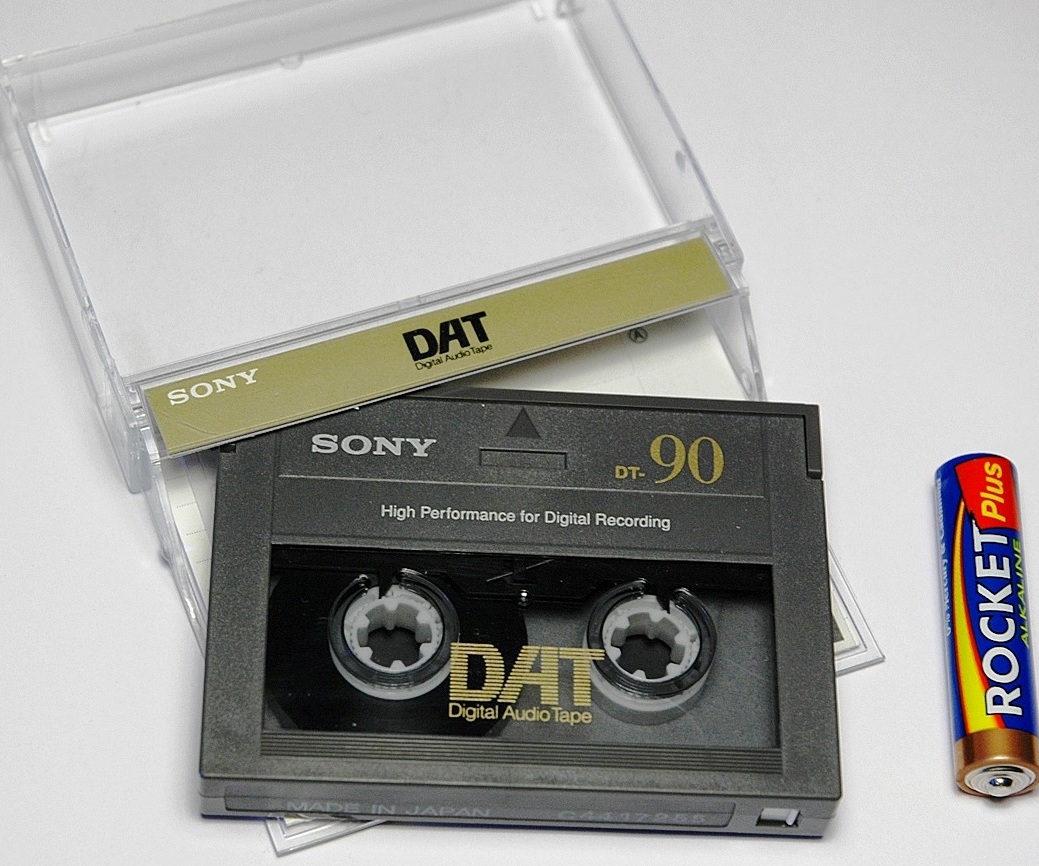



Competition and technical importance
During the late 1980s and 1990s, DAT competed with other digital consumer audio formats, especially Digital Compact Cassette (DCC) and MiniDisc. A key difference was that DAT could, under the right circumstances, produce an exact digital copy of the source material. By contrast, DCC and MiniDisc used lossy data compression to reduce file size. For professionals and archivists, that distinction mattered because it preserved the original audio without the artifacts introduced by compression.
Although DAT was respected for its quality, it did not become a universal home format. The machines were relatively costly, and the market soon shifted toward compact discs, recordable CD media, and later file-based digital audio. Even so, DAT found an important niche in studios, broadcasting, live recording, and field work, where reliable digital capture was more valuable than mass-market convenience.
Use in computer storage
DAT was also widely used for backing up computer data in the 1990s and early 2000s. As a storage medium, it offered a practical mix of portability, capacity, and relatively low media cost for the time. Many organizations relied on DAT cartridges for routine backups and archival copies. However, computer DAT drives were generally designed for data, not music, so most of them will not read audio DAT tapes directly.
- Strengths: high sound quality, digital copying, and compact tape cartridges.
- Common uses: music recording, broadcasting, archiving, field recording, and data backup.
- Limitations: more complex hardware, higher cost than simpler cassettes, and a market that moved toward discs and solid-state media.
Today, DAT is mostly a legacy format, but it remains significant in the history of digital audio. It helped bridge the gap between analog cassette culture and modern digital recording, and many institutions still encounter DAT in old archives, studio collections, and backup libraries. For that reason, the format is remembered both as a technical milestone and as a practical tool that served two different worlds: music production and computer storage.
Related articles
Author
AlegsaOnline.com Digital Audio Tape Leandro Alegsa
URL: https://en.alegsaonline.com/art/27371