
Dinosauromorpha — the dinosaur lineage and its close relatives
Dinosauromorpha is the bird-line archosaur group that contains dinosaurs and their nearest relatives. It frames the evolutionary steps leading to dinosaurs and, ultimately, to birds.
Overview
Dinosauromorpha is a clade within the bird-line archosaurs that includes true dinosaurs and several closely related, non-dinosaurian forms. Members of this group share key anatomical trends associated with upright, bipedal locomotion and an increasingly specialized hind limb. In modern terms, birds are the only living dinosauromorphs. The group sits within the larger archosaur radiation often referred to by specialists as archosaurs.
Image gallery
10 Images




Characteristics
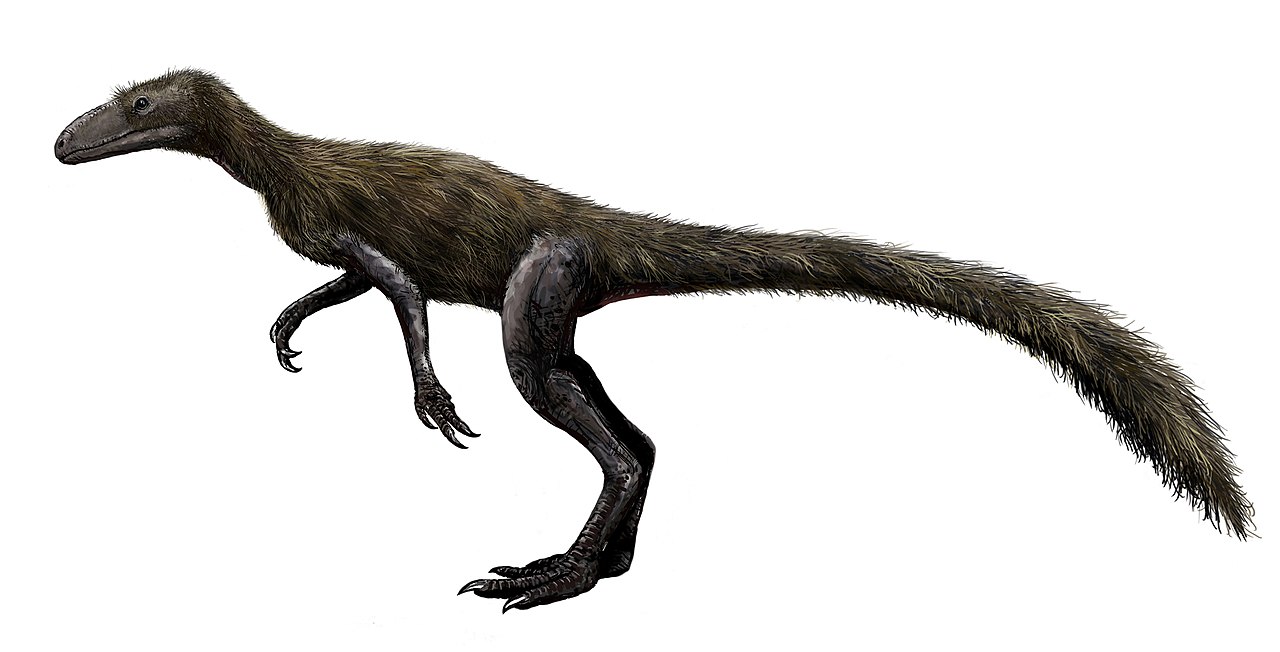
Dinosauromorphs are recognized by a suite of skeletal features rather than a single diagnostic trait. Common characteristics seen among early members include elongated hindlimbs, modifications of the ankle that favor a more parasagittal gait, and skull and pelvic traits that foreshadow dinosaurian anatomy. These features appear in varying combinations among taxa such as Lagerpeton, Marasuchus and silesaurids. Many were adapted for active, cursorial life, which helped set the stage for the later success of dinosaurs.
History of the concept
The name "Dinosauromorpha" was introduced by Michael J. Benton in 1984 to group dinosaur-like archosaurs. Paul Sereno provided an explicit cladistic definition in 1991, framing the clade around the last common ancestor of certain Triassic forms and the Dinosauria (including birds). Since those early definitions, phylogenetic analyses have refined the membership and relationships of the group as new fossils and methods emerged.
Diversity and fossil record
Fossils attributable to dinosauromorphs are primarily known from Triassic and Early Jurassic deposits. Well-known genera that help illustrate the early diversity include Lagerpeton and Marasuchus, plus a number of silesaurids which occupy a position close to the base of Dinosauria. Studies continue to reassess some of these taxa, so the precise lineup and branching order remain active topics in paleontology.
Importance and study
Studying dinosauromorphs illuminates the anatomical and ecological changes that preceded the rise of true dinosaurs and the eventual evolution of birds. Their fossils inform research on locomotion, metabolism, and how major terrestrial vertebrate groups diversified after the end-Permian and through the Triassic. Paleontologists compare a broad array of skeletal details to reconstruct behavior and evolutionary sequence.
Distinctions and related groups
Dinosauromorpha should be distinguished from Dinosauria (the clade that contains all true dinosaurs) and from broader assemblages. For example, the term Avemetatarsalia is often used by researchers for the bird-line archosaurs and can include pterosaurs as well as dinosauromorphs, depending on the definition. Birds remain the living representatives of the dinosauromorph lineage, and modern avian anatomy provides a long-lived continuation of many trends that began in these Triassic relatives — a continuity emphasized when authors refer to birds as surviving dinosauromorphs.
- Representative early taxa: Lagerpeton, Marasuchus, silesaurids
- Primary significance: origin and early evolution of dinosaurs and avian ancestors
- Related term to consult: archosaurs and Avemetatarsalia
Ongoing discoveries and analytical improvements continue to reshape our understanding of dinosauromorph relationships and their role in Mesozoic ecosystems.
Questions and answers
Q: What is Dinosauromorpha?
A: Dinosauromorpha is a clade of archosaurs that includes dinosaurs and other closely related animals.
Q: What is the meaning of the name Dinosauromorpha?
A: The name Dinosauromorpha was coined by Michael J. Benton in 1984.
Q: Which animals are the only surviving dinosauromorphs?
A: Birds are the only surviving dinosauromorphs.
Q: Who first defined the concept of Dinosauromorpha?
A: Paul Sereno defined the concept of Dinosauromorpha in 1991.
Q: What is Paul Sereno's definition of Dinosauromorpha?
A: Paul Sereno defined Dinosauromorpha as the last common ancestor of Lagerpeton chanarensis, Marasuchus lilloensis, Pseudolagosuchus major and the Dinosauria (including Aves) and all its descendants.
Q: What is Avemetatarsalia?
A: Avemetatarsalia is another term with somewhat different coverage than Dinosauromorpha.
Q: How does Avemetatarsalia differ from Dinosauromorpha?
A: Avemetatarsalia has somewhat different coverage than Dinosauromorpha.
Related articles
Author
AlegsaOnline.com Dinosauromorpha — the dinosaur lineage and its close relatives Leandro Alegsa
URL: https://en.alegsaonline.com/art/27507
Sources
- doi.org : 10.1144/SP379.9