
Dewey Decimal System (Dewey Decimal Classification)
A hierarchical numeric scheme for organizing library materials by subject. Developed by Melvil Dewey in 1876, it uses classes 000–900 with decimal subdivisions and has abridged and full editions.
The Dewey Decimal System, formally known as the Dewey Decimal Classification (DDC), is a library shelving and cataloging scheme that arranges books and other items by subject so they can be found on the shelf in a consistent order. Materials are assigned numerical class numbers that reflect their primary topic; those numbers are read left to right to determine shelf sequence. The system is widely used in public and school libraries and remains one of the most familiar classification schemes for organizing general collections, alongside alternatives such as the Library of Congress system.
Image gallery
5 Images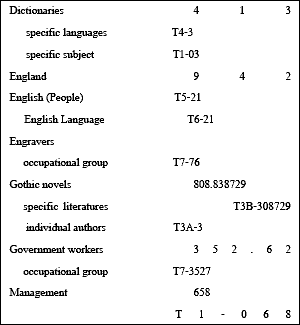


Structure and notation
DDC is hierarchical and decimal in two senses: it groups knowledge into ten broad main classes numbered 000–900, and it uses numbers to the right of the decimal point to add finer levels of specificity. Each main class divides into ten divisions, and each division into ten sections, producing a predictable numeric tree. Typical features include:
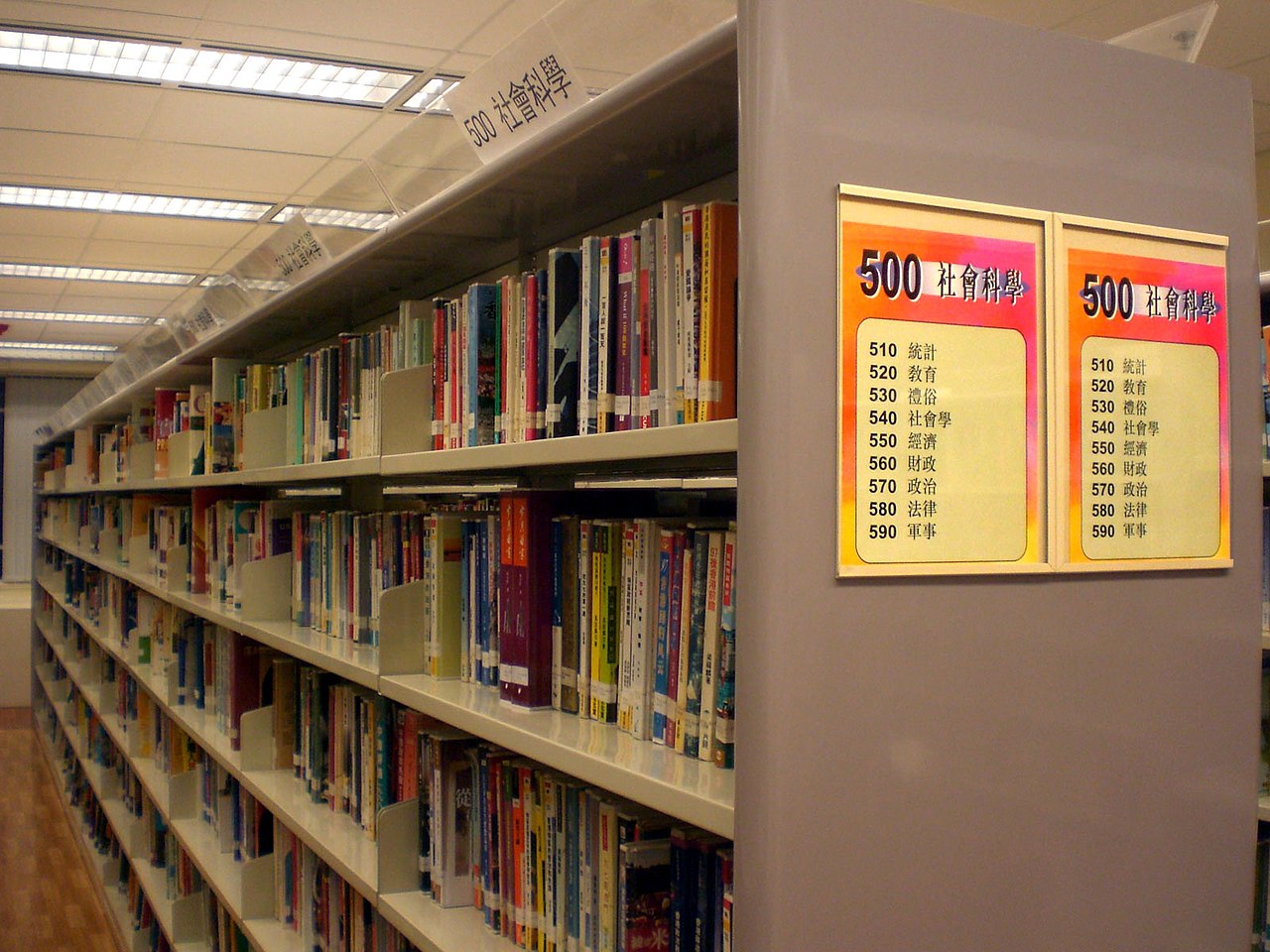
- Three-digit main class numbers (for example, 000–099 general works; 100–199 philosophy; 500–599 natural sciences).
- Decimal extensions for subtopics (for instance, 510 for mathematics with further decimals to indicate specific fields within mathematics).
- Local additions appended to the class number—to indicate author, edition, geographic area or publication date—so each item on a shelf has a unique call number.
As an example of geographic subdivision, a history of a particular region or province may receive a number like 944.1, which narrows the general history class to a specific place or theme.
History and development
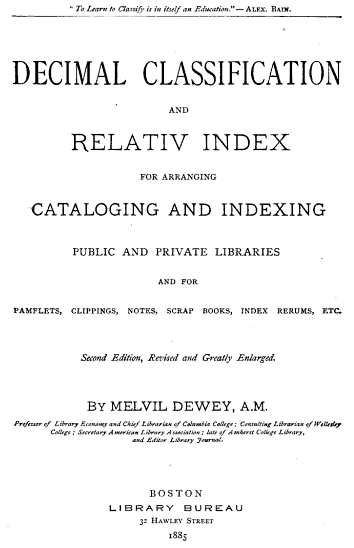
The DDC was devised in 1876 by librarian Melvil Dewey as a compact, numeric alternative to more verbose subject arrangements then in use. Its decimal design allowed continuous expansion without reorganizing entire collections: new subdivisions can be created simply by adding more digits. Since its first publication the classification has been revised repeatedly to reflect new fields, changing terminology and library practice; successive editions incorporate editorial updates and editorial policies. Major revisions have produced numbered editions; for example, a later comprehensive update was published as the 23rd edition in 2011.
Uses, editions and variants
Libraries adopt the full DDC or an abridged form suited to smaller collections. The abridged editions condense or omit very specialized subdivisions while preserving the main structure, making them easier for school and small public libraries to apply. In everyday practice, a library assigns a DDC class number to an item, then adds a cutter or other local element to form a shelf-ready call number. Catalog records and signage use those numbers so patrons can browse by topic on the shelves.
- Full editions support large academic and national collections that require detailed subdivision.
- Abridged editions simplify classification for smaller or general-interest collections.
- Special schedules and local practices (shelf lists, children's sections) tailor the system to user needs.
Limitations and notable points
While effective for many general collections, DDC has limitations: like any scheme, it reflects the historical order of knowledge and sometimes uses cultural perspectives rooted in its origins. Libraries balance consistency with the need to update terminology and classifications. DDC is one of several widely used systems; comparison with alternatives (such as the Library of Congress classification) often hinges on collection size, subject balance and local preference. Training and explanatory tools help staff and patrons interpret numeric notation and find materials.
For practical help finding items or understanding a particular number, many public catalogs and library guides explain DDC notation and provide examples. Users seeking more detailed rules or editorial policies can consult official resources and manuals produced for librarians and classification editors; introductory guides and tutorials are commonly available from library websites and professional associations. For simple browsing, patrons can also ask library staff to locate topics or to demonstrate how a call number directs them to related subjects in a collection or to request assistance in a public library. Additional online or in-print references can supply historical background and a fuller description of editorial practice, including the sequence of editions and editorial changes made since Dewey first published the scheme.
Further reading and reference entries are often linked from library portals; sample biographies and historical notes about the system's creator can be found through curated resources labeled under Melvil Dewey and classification histories. For practical examples of class use and local policies, many libraries publish their local adaptations and shelf guides online—consult a nearby library or their digital catalog to see the system in action via their classification of specific works.
Related articles
Author
AlegsaOnline.com Dewey Decimal System (Dewey Decimal Classification) Leandro Alegsa
URL: https://en.alegsaonline.com/art/27005