
David Atlas — Pioneer of Radar Meteorology
David Atlas (1924–2015) was an American meteorologist who advanced radar methods for observing weather and storms while working for the US Air Force, universities, NCAR, NASA, and as a consultant.
David Atlas (May 25, 1924 – November 10, 2015) was an American meteorologist widely recognized as a pioneer of radar meteorology. Over a career spanning five decades he helped turn radar from a military detection tool into a practical instrument for weather observation and research. His work influenced how precipitation, storm structure and wind fields are observed and interpreted in both research and operational forecasting.
Image gallery
2 Images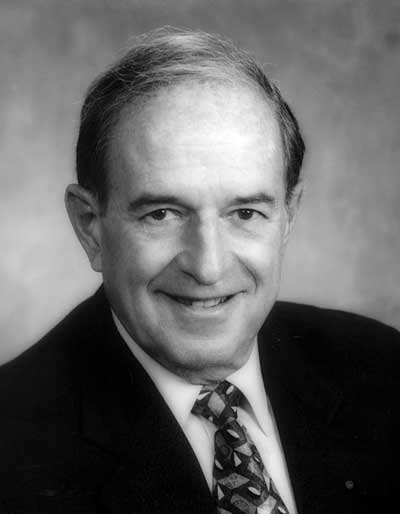
Early life and education
Atlas was born in Brooklyn, New York City, on May 25, 1924, into a family of Jewish immigrants from Poland and Russia. He studied physics and related subjects at the City College of New York, where his early training prepared him for work at the intersection of atmospheric science and instrumentation. From the mid-20th century onward he combined engineering approaches with atmospheric physics to improve how radar data are collected and interpreted.
Career and contributions
Atlas held positions in government, academia and private practice. Early in his career he worked with the United States Air Force on airborne and ground-based radar systems for meteorological use. He later served as a professor at the University of Chicago and worked with the National Center for Atmospheric Research (NCAR). He also carried out research at NASA and, after leaving formal institutions, acted as a private consultant for research groups and operational services.
Key contributions and techniques
- Adaptation of radar technology to detect and quantify precipitation and storm echoes, improving situational awareness for aviation and civil weather services.
- Development and refinement of techniques to interpret radar return patterns, including the identification of storm structure, precipitation intensity and drop-size information.
- Application of airborne and Doppler radar methods to measure wind fields and storm dynamics, helping to bridge observations and theory in cloud physics.
- Training and mentoring of generations of radar meteorologists and publication of numerous scientific papers that consolidated practical radar methodology for the atmospheric sciences.
Legacy and impact
Atlas's efforts helped establish radar as an indispensable tool for meteorologists. His influence is visible in modern weather surveillance networks, operational Doppler systems, and research radars used to study convective storms, precipitation processes and mesoscale dynamics. Colleagues and students credit him with creating practical frameworks that made radar data more accessible to forecasters and scientists alike.
He retired in 1994 but remained a respected figure in meteorology until his death. David Atlas died on November 10, 2015, from complications following a stroke at a nursing facility in Newark, New Jersey. His career left a lasting mark on the ways in which weather is observed, interpreted and forecasted around the world.
For further background on radar meteorology and related developments, readers can consult introductory texts and institutional histories at professional centers and universities that continue the kinds of research to which Atlas contributed.
Related articles
Author
AlegsaOnline.com David Atlas — Pioneer of Radar Meteorology Leandro Alegsa
URL: https://en.alegsaonline.com/art/25721
Sources
- books.google.com : A to Z of Scientists in Weather and Climate
- jewishvirtuallibrary.org : "Atlas, David"
- thevane.gawker.com : "David Atlas"