
Darlington transistor (Darlington pair)
A Darlington transistor is a compound arrangement of two bipolar transistors that provides a very high current gain. Used for switching and amplification, it has distinctive benefits and trade-offs.
Overview: A Darlington transistor, often called a Darlington pair, is a compound device formed by two transistor stages connected so that the current amplified by the first transistor is further amplified by the second. In practice collectors are tied together and the emitter of the first transistor drives the base of the second, producing a combined current gain roughly equal to the product of the two individual gains. Because they multiply gain, Darlingtons are used where a very large input-to-output current amplification is needed without additional amplifier stages.
Image gallery
3 Images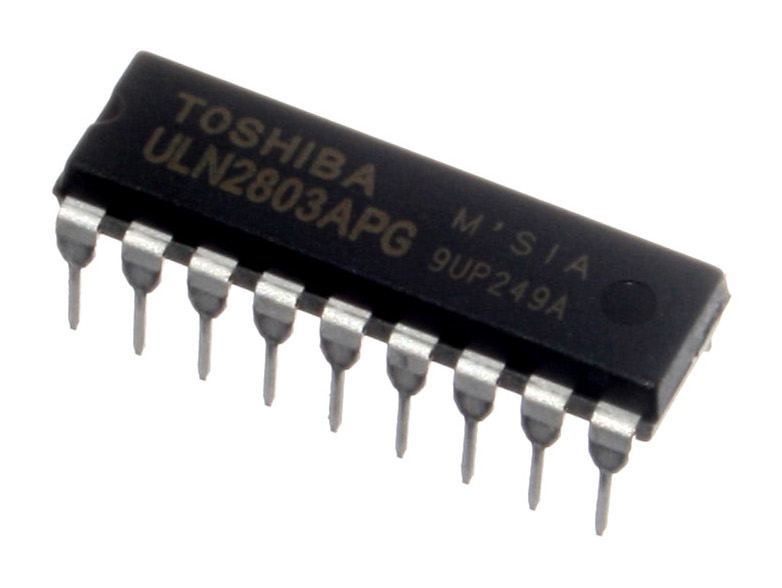


Structure and operation
The canonical Darlington connection joins two bipolar transistors in cascade: the emitter of the first transistor feeds the base of the second, while the collectors are connected to the same supply. This arrangement means a small base current into the first device produces a much larger emitter current into the second, and then an even larger collector current out of the second. The overall current gain is approximately the multiplication of the two transistor betas, though real-world factors (temperature, transistor mismatches and load conditions) reduce the ideal product. The input-to-emitter voltage is roughly the sum of two base-emitter drops, so the input typically needs a higher voltage to turn the pair on than a single transistor would.
History and packaging
The topology was named after Sidney Darlington, who developed the concept while associated with Bell Labs. It has been implemented both with discrete devices and inside integrated devices. Many power transistor arrays and driver ICs include built-in Darlington stages to provide high current drive in compact packages; such modules often add base resistors and suppression diodes to simplify use in switching applications. For packaged and discrete implementations see typical integrated circuit and transistor modules.
Applications and examples
Darlington pairs appear in many roles where a large current must be switched from a relatively small control signal. Typical uses include relay and motor drivers, lamp switching, input stages for power amplifiers and simple touch or leak-current sensing probes. In audio systems they have been used in output stages where high gain and ease of drive are priorities, though designers balance that against the Darlington's characteristic voltage drops and thermal behavior. For practical circuit examples and driver applications consult standard circuit references and component datasheets.
Advantages and limitations
- Advantages: very high current gain from two transistors, simple single-input control, easy to implement with discrete or integrated parts.
- Limitations: higher input voltage required (two base-emitter drops), greater saturation voltage than a single transistor, slower switching and higher leakage currents in some designs. These factors can increase power dissipation and affect efficiency in switching applications.
Variants and alternatives
Designers sometimes choose complementary arrangements or the Sziklai pair (a compound configuration using complementary polarities) to reduce the effective saturation voltage while keeping high gain. For digital and power-driver use, integrated Darlington driver arrays and modules are common; in audio and precision analog circuits designers may prefer alternate topologies to avoid the Darlington's extra voltage drop or speed constraints. For more on audio uses and practical considerations see resources on audio amplifiers.
Overall, the Darlington transistor remains a useful, straightforward way to achieve high current gain with minimal component count. Its strengths and compromises make it well suited to many switching and amplification tasks, provided the additional voltage drops, thermal requirements, and speed limitations are accounted for in the design.
Related articles
Author
AlegsaOnline.com Darlington transistor (Darlington pair) Leandro Alegsa
URL: https://en.alegsaonline.com/art/25552