
Data Matrix (two-dimensional barcode symbology)
Data Matrix is a compact 2D barcode format that encodes text, numbers or binary data with strong error correction, widely used for small items, industrial marking and logistics tracking.
Overview
Data Matrix is a compact, machine-readable two-dimensional code used to represent alphanumeric and binary data in a small area. Designed to be readable by optical scanners and camera-based readers, it packs a comparatively large amount of information into a square or rectangular pattern of dark and light cells. The symbol is used where space is limited or a durable, high-density label is required. For a brief origin note see invention and its place among two-dimensional barcode technologies.
Image gallery
6 Images



Structure and encoding
A Data Matrix symbol consists of a grid of modules (cells) arranged in rows and columns. Two adjacent sides form a solid border known as the "finder" or "L" pattern; the opposite two sides typically contain an alternating pattern that defines row and column positions. Data is encoded into the grid using a defined mapping of characters and bits, and modern Data Matrix variants include error-correction coding so that the original information can be recovered even if part of the symbol is damaged. It can encode text or numbers and binary streams, with capacity scaled by symbol size.
History and standards
Developed as part of the evolution of two-dimensional symbologies in the late 20th century, Data Matrix was adopted into international barcode standards to ensure interoperability between printers and readers. Standardized forms specify symbol sizes, encoding modes, and error-correction techniques (widely implemented using Reed–Solomon style codes) so that different equipment can reliably create and read symbols.
Uses and importance
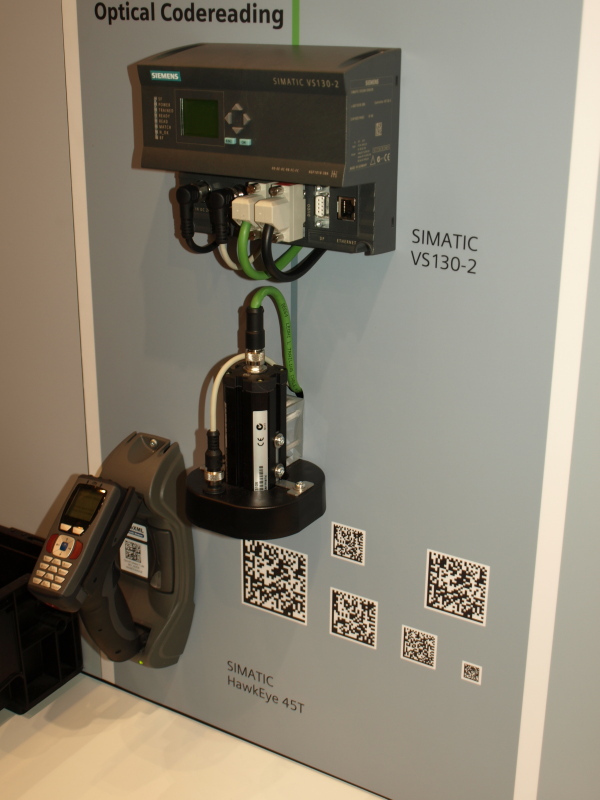
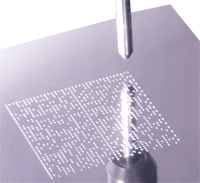
Because of its high density and robustness, Data Matrix is common in manufacturing, electronics, aerospace, pharmaceuticals and healthcare. It is frequently used for direct part marking (DPM) where codes are etched, laser-marked or dot-peened onto small components. Other applications include product identification, traceability, inventory control and document management. The error correction makes it suitable for environments where labels may be scratched, obscured or partially removed.
Variations and notable facts
Data Matrix symbols are available in multiple square and rectangular sizes to balance capacity and physical space. Notable characteristics include compact footprint, high data capacity relative to one-dimensional barcodes, and reliable recovery from damage. Typical practical considerations involve print and mark quality, contrast between cell and background, and the choice of symbol size for scanner optics and reading distance.
- Compact storage of large strings in limited area
- Designed for camera and imager readers as well as laser scanners
- Used both on labels and as permanent direct marks
Questions and answers
Q: What is a data matrix?
A: A data matrix is a type of two-dimensional barcode that can store information in the form of text or numbers.
Q: How is a data matrix read?
A: A data matrix is read using a bar code reader.
Q: What are error correction codes in data matrix?
A: Error correction codes are used in data matrix to increase its reliability. Even if some cells within the data matrix are damaged, the message can still be read.
Q: How much alphanumeric characters can a data matrix store?
A: A data matrix symbol can store up to 2,335 alphanumeric characters.
Q: What type of information can be stored in a data matrix?
A: A data matrix can store information in the form of text or numbers.
Q: Can a partially damaged data matrix still be read?
A: Yes, a data matrix symbol can still be read even if some cells are damaged, thanks to the use of error correction codes.
Q: What is the advantage of using a data matrix?
A: One of the advantages of using a data matrix is its high storage capacity, allowing it to store up to 2,335 alphanumeric characters.
Related articles
Author
AlegsaOnline.com Data Matrix (two-dimensional barcode symbology) Leandro Alegsa
URL: https://en.alegsaonline.com/art/25634