
D-block elements: the transition region of the periodic table
Overview of the d-block: location on the periodic table, electronic structure, chemical and physical properties, common uses, and distinctions such as Group 12 being classed as post‑transition metals.
Overview
The d-block is the region of the chemical periodic table where electrons progressively fill d atomic orbitals. It is commonly associated with the transition metals and spans the central portion of the table between the s- and p-blocks. For a conventional layout and element list see the periodic table and general resources on d-block elements.
Image gallery
3 Images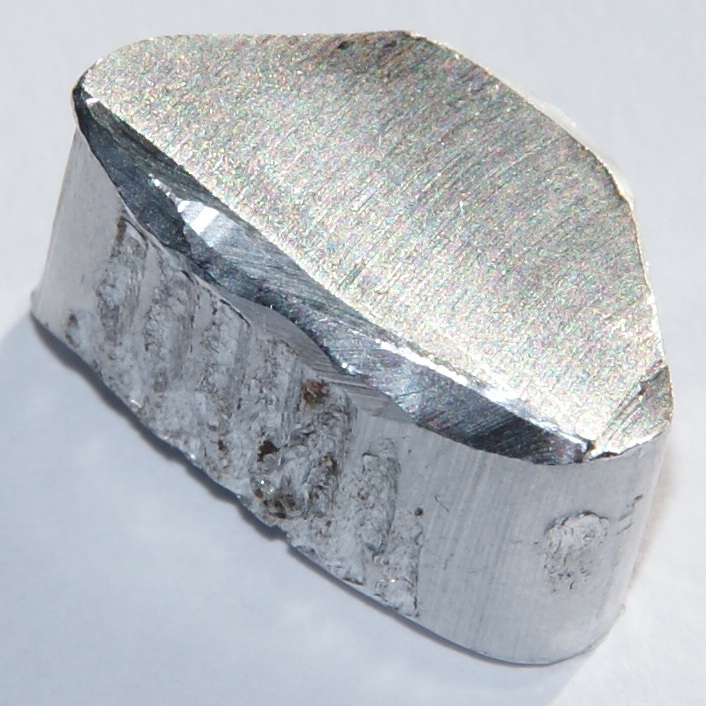


Electronic structure and position
Elements in the d-block are characterized by having their differentiating electron occupy an (n−1)d subshell, often alongside one or two ns electrons. The d subshell can accommodate up to ten electrons, which explains the block's width. Electron arrangements in this region produce many characteristic chemical behaviors; for example, several elements show variable oxidation states because electrons can be removed from both ns and (n−1)d orbitals.
Chemical and physical characteristics
D-block elements share a set of recurring properties that distinguish them from s- and p-block elements. Typical features include metallic luster, good electrical and thermal conductivity, relatively high melting and boiling points, and the ability to form colored compounds and coordination complexes. A number of d-block metals—iron, cobalt and nickel, for example—exhibit magnetic ordering.
- Variable oxidation states: Many d-block metals form compounds in several oxidation states.
- Catalytic activity: Surfaces and complexes of d-block metals catalyze numerous industrial reactions.
- Complex formation: The ability to bind ligands leads to rich coordination chemistry and colored salts.
Uses and examples
Because of their strength, conductivity and chemical versatility, d-block metals are central to modern technology and industry. Iron and its alloys (steel) are foundational in construction; copper is widely used in electrical wiring; platinum-group metals serve as catalysts in automotive catalytic converters and in chemical synthesis; titanium provides high strength-to-weight ratios in aerospace applications. Many of these roles rely on electronic and surface properties unique to d-electron systems. Additional examples and classifications of transition metals are discussed in general references on transition metals.
Distinctions and notable facts
Classification within the d-block can be nuanced. The elements of Group 12 (zinc, cadmium, mercury) occupy d-block positions but are often labeled "post-transition metals" because their d electrons are filled and they show different chemistry from the classic transition metals; see further notes on Group 12. Also, simple electron-counting rules have exceptions: a few elements (e.g., chromium and copper rows) exhibit configurations that prioritize half-filled or filled d subshell stability, which affects observed properties.
History and significance
The concept of block division (s, p, d, f) arose as quantum mechanics clarified atomic structure in the 20th century and helped explain periodic trends. The d-block remains a focal area of inorganic chemistry because of its varied oxidation chemistry, diverse coordination compounds, and central role in catalysis and materials science. For experimental and applied contexts—such as catalysis, magnetism, and alloy design—the behavior of d electrons is often the key factor determining function.
Related articles
Author
AlegsaOnline.com D-block elements: the transition region of the periodic table Leandro Alegsa
URL: https://en.alegsaonline.com/art/24992