
Cnidaria: overview of jellyfish, corals, sea anemones and related animals
Cnidaria is a phylum of mostly marine, simple animals that includes jellyfish, corals and sea anemones, notable for stinging cnidocytes and two basic body forms: polyps and medusae.
Cnidaria is a biological phylum of predominantly aquatic animals that today includes roughly 11,000 described species. Most cnidarians live in the ocean, although some occupy brackish or freshwater habitats as aquatic organisms and many favor shallow coastal waters and reefs. Members range from solitary jellyfish to extensive colonial forms such as corals and hydroids that form colonies.
Image gallery
10 Images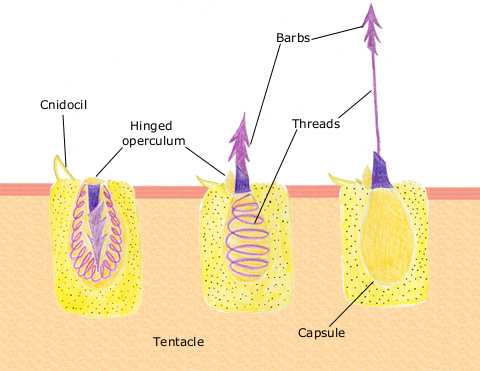



Distinctive features
The defining characteristic of the group is the cnidocyte, a specialized cell that contains a harpoon-like organelle called a nematocyst, used in prey capture and defence nematocysts. Cnidarians are diploblastic (two body layers) with a central gastrovascular cavity rather than a through-gut, and a simple diffuse nervous system often called a nerve net. Many individuals in colonial species are functionally specialized zooids zooids, which may arise by budding and behave like clones genetic clones of one another.
Body forms and life cycle
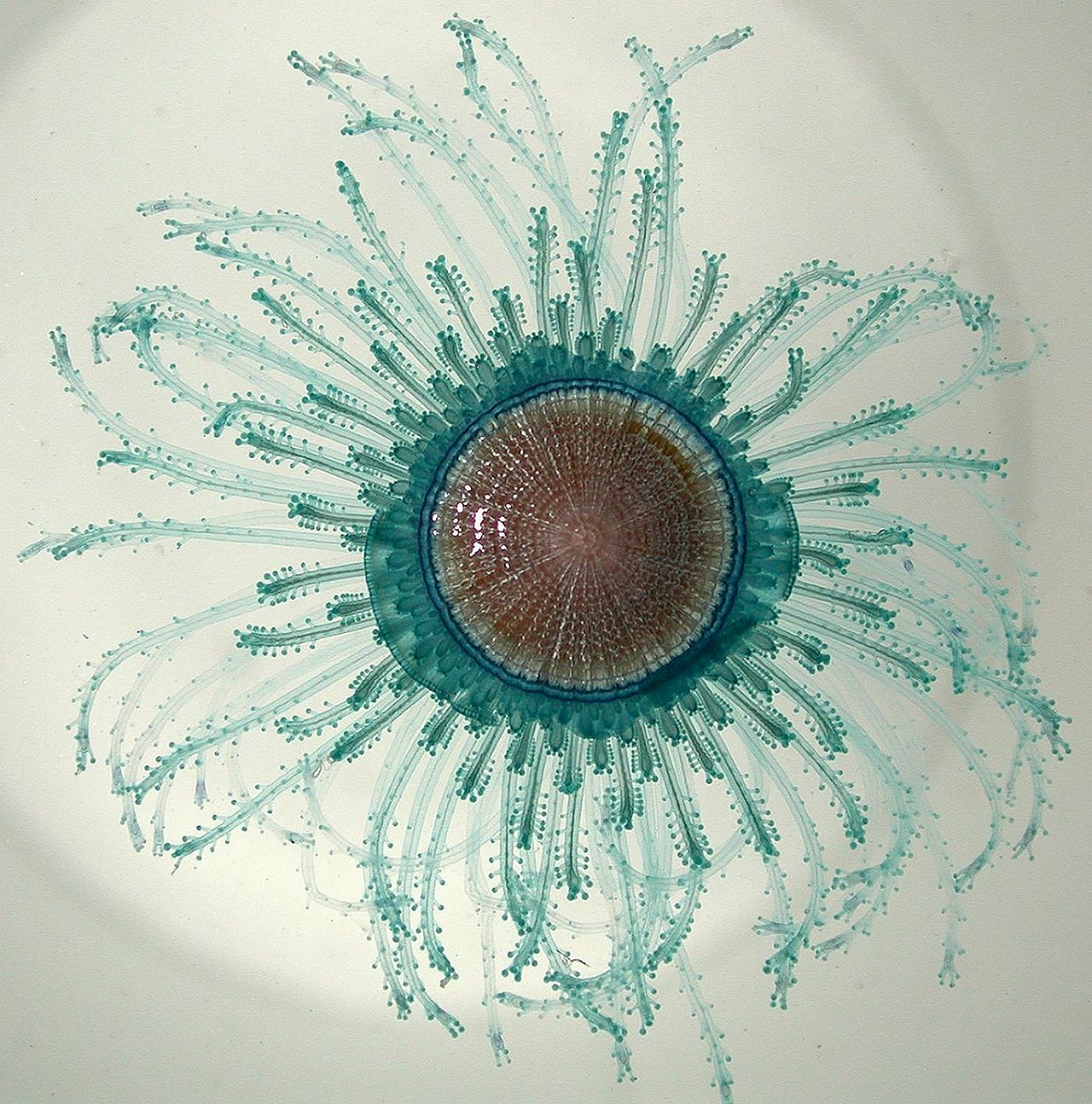
Cnidarian bodies occur mainly as two broad morphologies: the sessile polyp and the free-swimming medusa. Polyps are often attached and tubular in shape polyps, while medusae are bell-shaped and mobile medusae. Many species alternate between these stages during their life cycle and combine asexual reproduction (budding, fragmentation) with sexual reproduction (gamete production).
Major groups and diversity
The phylum includes several familiar classes: Anthozoa (corals and sea anemones), Scyphozoa (most large jellyfish), Hydrozoa (hydroids and some colonial forms) and Cubozoa (box jellies). Each group shows variations in morphology, ecology and life history that reflect different strategies for feeding, reproduction and habitat use.
Ecology, importance and human interactions
Cnidarians play central ecological roles: reef-building corals create habitat that supports high biodiversity, while jellyfish act as predators and prey in marine food webs. Some species produce painful stings that affect swimmers and fisheries, and periodic jellyfish blooms can influence coastal economies. Cnidarians are also subjects of biomedical research (venoms, regeneration) and of conservation concern where coral reefs are threatened by climate change and pollution.
Notable facts
- Cnidarians are among the simplest animals with true tissues and a mouth leading to a gastrovascular cavity.
- Many corals form long-lived colonies and build calcium carbonate structures that form coral reefs.
- Several species exhibit remarkable regeneration and some can reproduce both sexually and asexually.
For further reading and taxonomic resources, consult general references and databases that specialize in marine biodiversity phylum overview, species lists species catalogues and educational materials about marine life animal groups. Additional resources cover aquatic biology aquatic contexts, marine habitats sea environments, colonial organisms colonial life, zooid structure zooids, clonality clonal reproduction, polyp form polyp stage, medusa form medusa stage and the specialized stinging cells nematocyst details.
Questions and answers
Q: What is the name of the phylum that Cnidaria belongs to?
A: Cnidaria belongs to the phylum Cnidaria.
Q: How many species are in this phylum?
A: There are about 11,000 species in this phylum.
Q: Where do most of these animals live?
A: Most of these animals live in the sea.
Q: Are any of them colonial organisms?
A: Yes, some are colonial organisms composed of zooids which may be clones.
Q: What two forms can cnidarian zooids take during their life cycle?
A: Cnidarian zooids can take the form of polyps or medusae at different phases of their life.
Q: What is responsible for their success as a species?
A: Their success as a species is largely due to special cells with organelles that sting called nematocysts. This device is largely responsible for their success and is their main specialised and distinctive cell type.
Q: What does "cnidaria" mean?
A:"Cnidaria" comes from Greek and means "stinging nettle".
Related articles
Author
AlegsaOnline.com Cnidaria: overview of jellyfish, corals, sea anemones and related animals Leandro Alegsa
URL: https://en.alegsaonline.com/art/21191
Sources
- mapress.com : mapress.com/zootaxa/2007f/zt01668p182.pdf
- taxonomy.nl : "The Taxonomicon - Taxon: Subphylum Medusozoa"
- si.edu : "Recent insights into Cnidarian phylogeny"
- plosone.org : "Expulsion of symbiotic algae during feeding by the green Hydra – a mechanism for regulating symbiont density?"
- doi.org : 10.1666/0022-3360(2004)078<0051:RAATTE>2.0.CO;2