
Cyclostomes: the jawless fishes (lampreys and hagfish)
Cyclostomes are the living jawless fishes — lampreys and hagfish. This article explains their anatomy, evolution, ecology, and significance as the only extant Agnatha.
Overview
Cyclostomes (Cyclostomata) are a small but ancient group of jawless fishes represented today by two distinctive lineages: lampreys and hagfish. They are the only surviving members of the broader assemblage traditionally called Agnatha. Modern genetic studies support a single evolutionary lineage for the two groups, setting cyclostomes apart from jawed vertebrates.
Image gallery
10 Images




Key characteristics
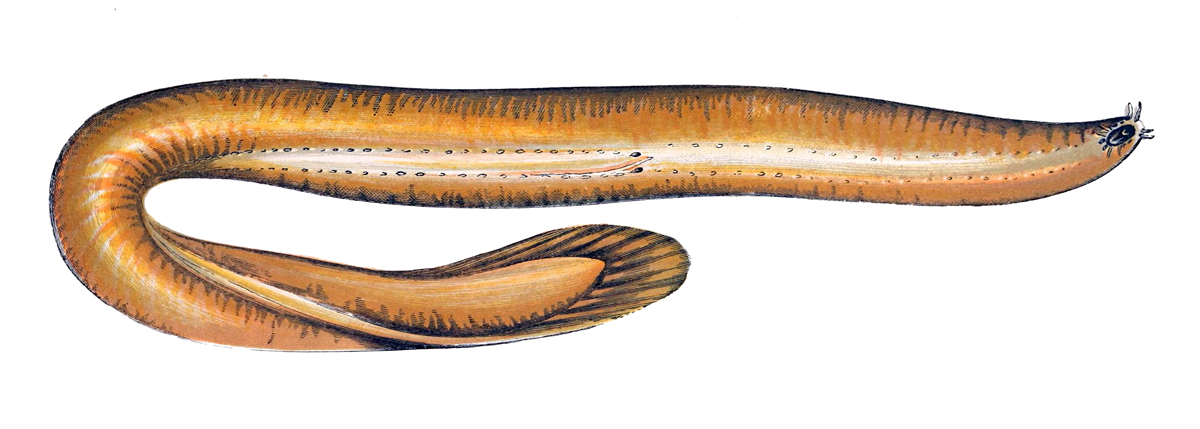
Cyclostomes share a set of primitive and specialized features that distinguish them from jawed fishes. Common traits include a round, jawless oral opening; an elongated, eel-like body; absence of paired fins; and a reliance on muscular pumping to move water through the mouth and gills. Other notable features are reduced or cartilage-based skeletal elements and simple sensory systems adapted to benthic or parasitic lifestyles.
- Oral anatomy: a circular, bore-like mouth without hinged jaws.
- Skeleton: primarily cartilaginous structures rather than ossified bones.
- Respiration: multiple gill openings and buccal pumping to move water.
- Ecology: roles range from scavenging to parasitism.
Members and diversity
The two living cyclostome groups are linked to separate links in the literature: the lampreys (lamprey) and the hagfish (hagfish). Together they include roughly a hundred described species (species overview). Although hagfish lack well-developed vertebrae, many researchers treat them as vertebrates that may have secondarily lost some skeletal elements; this topic is discussed in broader reviews of jawless vertebrates (Agnatha).
Evolutionary and practical importance
Cyclostomes are of outsized interest to biologists because they occupy a pivotal position near the base of vertebrate evolution. Their anatomy and genomes provide clues about the origin of jaws, paired limbs, and other vertebrate innovations. In applied contexts, some lamprey species are important parasites of fishes and have been the focus of fisheries management where they become invasive, while hagfish are noted scavengers that contribute to nutrient cycling on the seafloor.
Notable facts and distinctions
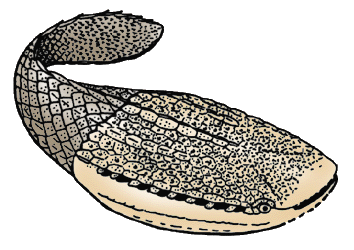
The name Cyclostomata means "round mouths," reflecting the un-jawed oral aperture. Although superficially simple compared with most fishes, cyclostomes show complex adaptations—such as keratinous tooth plates in lampreys and prolific slime glands in hagfish—that suit their different lifestyles. Fossil records of diverse jawless fishes in the Paleozoic show that modern cyclostomes are the last survivors of a once much larger assemblage.
Questions and answers
Q: What are the cyclostomes?
A: The cyclostomes are the lamprey and hagfish, which are the only two living jawless fish known as Agnatha.
Q: What recent data shows about living agnathans?
A: Recent molecular data from rRNA and mtDNA reveal that these living agnathans are monophyletic.
Q: How many species of cyclostomes are there?
A: There are about 100 species of cyclostomes.
Q: Are hagfish vertebrates?
A: Yes, hagfish are vertebrates.
Q: Do hagfish possess vertebrae?
A: No, hagfish do not have vertebrae.
Q: How did hagfish lose their vertebrae?
A: It is believed that hagfish lost their vertebrae as a result of their lifestyle adaptations.
Q: Why are cyclostomes called "round mouths"?
A: Cyclostomata means "round mouths" because their mouths cannot close due to the lack of a jaw, so they have to constantly cycle water through the mouth.
Related articles
Author
AlegsaOnline.com Cyclostomes: the jawless fishes (lampreys and hagfish) Leandro Alegsa
URL: https://en.alegsaonline.com/art/24884
Sources
- ncbi.nlm.nih.gov : ncbi.nlm.nih.gov/pubmed/9866205
- sciencedirect.com : sciencedirect.com/science/article/pii/S1055790301910450