
Critical thinking: principles, skills, history, and practical uses
Critical thinking is the disciplined process of evaluating information and arguments for accuracy, relevance and logic. This article explains core skills, methods, history, and everyday applications.
Overview
Critical thinking is the disciplined practice of evaluating ideas, claims and evidence so you can form reasoned judgments rather than relying on habit, authority or emotion. It is sometimes described as "thinking about thinking", a reflective stance that asks whether a belief is supported, coherent and useful. The goal is not simply to label statements as true or false but to determine degrees of reliability, highlight assumptions and identify limits to what can be concluded.
Image gallery
2 Images
Core skills and characteristics
At its heart, critical thinking depends on several interrelated abilities. These include recognizing and seeking appropriate evidence, locating and assessing relevant information, and formulating clear, answerable questions when trying to solve a problem or test an idea. Critical thinkers define terms carefully, separate observations from interpretations, and prefer explanations that are testable and consistent with the available facts.
Typical skills taught under the umbrella of critical thinking include:
- Question formulation: turning vague worries into precise queries that can be investigated.
- Source evaluation: judging whether an information source is current, competent and impartial.
- Argument analysis: identifying premises, conclusions and hidden assumptions.
- Using formal tools: applying methods from statistics, experiment design and logic to reduce bias.
Methods, tools and disciplines
Critical thinking draws on techniques from many fields. Quantitative methods such as statistics help quantify uncertainty and test hypotheses. Practical planning and sequencing come from logistics, while attention to meaning and ambiguity is informed by semantics. Experimental methods and controlled observation guide causal inference, and insights from psychology and sociology explain common cognitive biases and social influences that can distort judgment.
When investigating claims, skilled researchers combine library and online searching, expert interviews and direct evidence gathering. Professional interviewers and researchers specialize in locating knowledgeable sources and asking questions that reveal useful, verifiable information; for instance trained interviewers know how to probe expertise without leading the subject. Good investigations rely on high-quality research sources that are current, transparent about methods and free from vested interests.
History and development
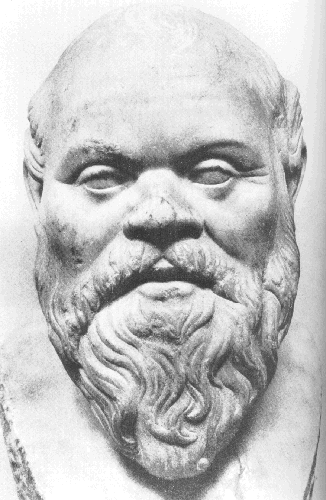
The practice of questioning received wisdom dates back to ancient philosophy, with figures such as Socrates emphasizing the value of careful inquiry. Over centuries, the methodical examination of evidence developed alongside scientific methods and formal logic. In modern education and professional practice, critical thinking became a distinct goal as societies sought citizens and professionals capable of making reasoned decisions in complex, information-rich environments.
Practical uses and examples
Critical thinking is applied in virtually every domain: physicians weigh diagnostic evidence, engineers test design assumptions, journalists corroborate sources, and citizens evaluate policy arguments. At an everyday level, applying critical thinking might mean checking the basis for a headline, asking how a statistic was collected before accepting it, or defining terms clearly when a debate turns heated. In problem solving, the first step is often to restate the problem precisely and list what would count as good evidence that a solution worked; this approach reduces wasted effort and leads to more reliable outcomes. See also general guidance on solving problems.
Common pitfalls and distinctions
Critical thinking is not the same as being argumentative or dismissive. It requires intellectual humility—willingness to revise beliefs when new evidence appears—and awareness of fallacies such as straw man arguments, false dilemmas or appeals to authority. It also differs from rote skepticism: productive skepticism seeks positive evidence and logical coherence rather than rejecting claims by default. Developing critical thinking is an ongoing process of learning methods, practicing careful reasoning and reflecting on one’s own cognitive habits.
For readers interested in practical next steps, basic exercises include identifying assumptions in a short editorial, checking two independent sources for a factual claim, or designing a simple test that would disconfirm a favored hypothesis. Over time, these practices strengthen the habits that make critical thinking effective in both private decisions and public life.
Related articles
Author
AlegsaOnline.com Critical thinking: principles, skills, history, and practical uses Leandro Alegsa
URL: https://en.alegsaonline.com/art/24234