
Craven County, North Carolina
Craven County lies on North Carolina's coastal plain. Its county seat is New Bern. The county blends colonial history, river and estuary landscapes, military presence, and tourism.
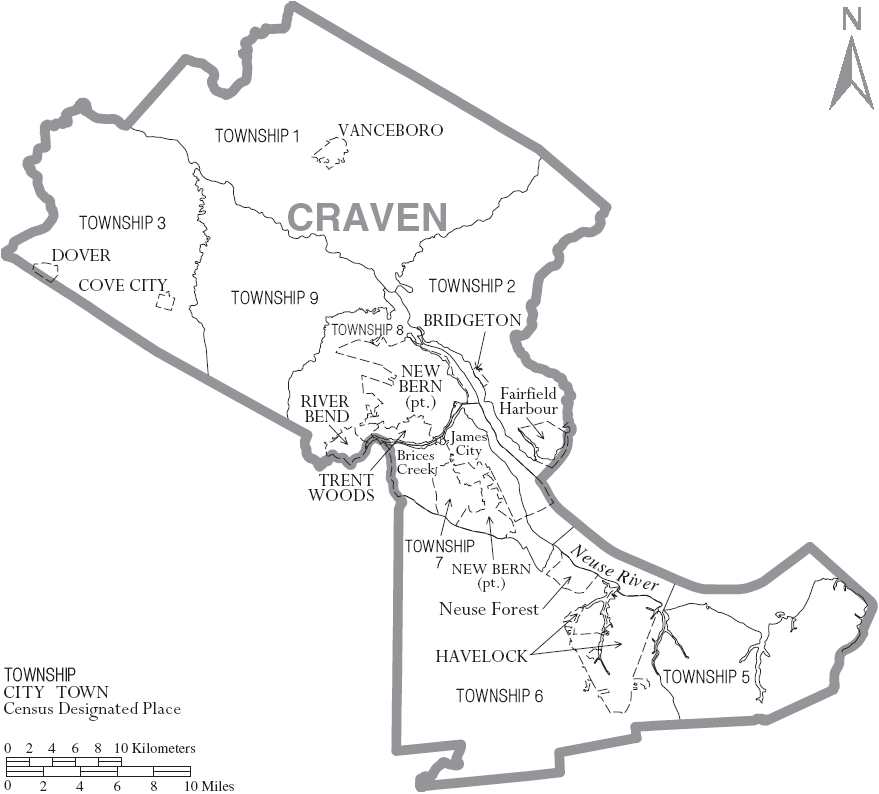
Craven County occupies a portion of the coastal plain in the eastern United States. Located in the state of North Carolina, the county is centered on tidal rivers and estuaries and has a mix of small cities, towns and rural areas. The administrative center and largest historic town is identified by the county seat, New Bern, which sits at the confluence of two rivers.
Image gallery
6 Images



Geography and communities
The landscape of Craven County is typical of the coastal plain: flat to gently rolling land, broad river floodplains, marshes and estuarine waters. Important population centers include New Bern and Havelock, with smaller towns and unincorporated communities scattered across the county. Waterways and access to the Atlantic influence local industry, recreation and settlement patterns.
History and development
Craven County has roots in the colonial era and preserves a number of historic sites and districts. Its towns grew around river trade and later developed as administrative and military centers. Architectural and cultural landmarks reflect colonial, antebellum and 19th‑century growth phases; preservation and interpretation of these sites contribute to the county’s identity.
Economy, culture and uses
The county economy mixes public and private sectors: local government and services, tourism focused on historic towns and waterways, light industry and commerce, and significant military employment associated with nearby installations. Cultural life emphasizes maritime heritage, historic preservation, and annual events tied to music, arts and riverfront activities.
Notable facts and considerations
- New Bern is a historic port town with preserved architecture and museums.
- The coastal location makes the county popular for boating, fishing and ecotourism.
- Like other coastal counties, it faces planning challenges related to storm surge and flood management.
Craven County continues to balance heritage conservation with modern economic needs, serving as both a gateway to eastern North Carolina’s waterways and a community with distinctive historic character and regional importance.
Related articles
Author
AlegsaOnline.com Craven County, North Carolina Leandro Alegsa
URL: https://en.alegsaonline.com/art/24008
Sources
- quickfacts.census.gov : U.S. Census
- naco.org : "Find a County"