
New Bern, North Carolina — overview, history, and notable landmarks
New Bern is a historic port city in Craven County, North Carolina, known for its colonial heritage, waterfront setting at two rivers, preserved historic districts and as the birthplace of Pepsi-Cola.
Overview
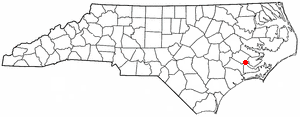
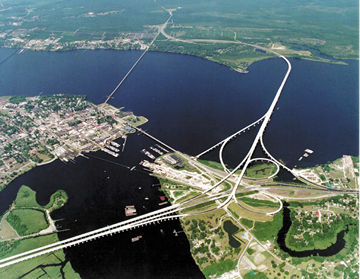
New Bern is a riverfront city in Craven County, North Carolina, with a population reported as about 29,524. It sits at the confluence of the Trent and Neuse rivers and serves as the county seat. The town lies roughly 112 miles east of Raleigh and about 80 miles northeast of Wilmington. Its location on navigable waterways has shaped New Bern’s economy, settlement pattern and cultural life since the colonial era.
Image gallery
7 Images


Geography and city character
New Bern occupies low-lying, river-influenced terrain where tides and freshwater meet, creating broad waterfront areas and marshes. The downtown district clusters near the riverfront, with tree-lined streets, historic homes and a mix of commercial corridors. The city is noted for ornamental plantings—especially thousands of crape myrtles—and gardened public spaces. Riverfront parks, boat access points and promenades emphasize outdoor recreation and community events on the water.
Founding and early history
The site was originally a Native American settlement known as Chattoka. In 1710, Swiss settlers established a town they named after the Swiss capital: Bern. The name reflects Swiss German roots—Bern means "bear" in German, a motif visible in municipal iconography. During the colonial period New Bern served as a political and commercial center and briefly functioned as the capital of North Carolina. After the American Revolution the town prospered through trade with the Caribbean and New England, becoming one of the largest and wealthiest communities in the state by the early 19th century.
Historic districts and landmarks
New Bern preserves multiple historic districts containing homes, churches and commercial buildings dating back to the 18th and 19th centuries. More than 164 properties in and near downtown are listed on the National Register of Historic Places. Key sites include Tryon Palace, the reconstructed governor’s mansion that once served as the colony’s administrative center; the long-running Masonic performance space; and numerous Federal- and Victorian-era residences. The community’s historic preservation efforts have supported adaptive reuse of storefronts, bed-and-breakfast inns and specialty businesses.
Culture, events and local economy
New Bern maintains an active calendar of cultural events and festivals that highlight its riverside setting and historic identity. Union Point Park, at the meeting of the Trent and Neuse rivers, is a focal point for public gatherings including summer waterfront festivals and Fourth of July celebrations. Downtown revitalization initiatives—led historically by civic groups—helped reintroduce art galleries, antique shops, cafés and a variety of restaurants. The city also claims a place in popular culture as the birthplace of Pepsi-Cola, a fact often noted in local history exhibits and visitor information.
Notable facts and present-day distinctions
Once nicknamed the "Athens of the South" for its cultural prominence, New Bern today balances tourism, historic preservation and residential life. The Masonic institution and artistic venues keep long traditions alive—the Masonic Theater is among the city’s longstanding cultural anchors. Contemporary New Bern also faces challenges common to coastal communities, including flood resilience and sustaining downtown vibrancy. Visitors and researchers can explore the city’s layered story through walking tours, museum collections and documents held by local repositories. For more detailed municipal, historical or travel guidance, consult official resources and local archives linked from area guides (language and symbols) and community pages (cultural background).
- Major waterfront public space: Union Point Park (Craven County information).
- Historic attraction: Tryon Palace and grounds (National Register details).
- Cultural highlights: Masonic performance venue and local theaters (Masonic).
- Travel notes: proximity to Raleigh, Wilmington and regional trade routes.
For further reading and visitor planning, local historical societies and tourism offices provide maps, archival sources and schedules for seasonal festivals. Governance, demographic updates and public services are published by city and county offices linked through official directories and tourism portals (city) and (county).
Questions and answers
Q: What is the population of New Bern?
A: The population of New Bern is 29,524.
Q: Where is New Bern located?
A: New Bern is located in Craven County, North Carolina, where the Trent and Neuse rivers meet. It is 112 miles east of Raleigh and 80 miles northeast of Wilmington.
Q: What was the original name of New Bern?
A: The original name of New Bern was Chattoka, which was a Native American town.
Q: When did Swiss immigrants move to New Bern?
A: Swiss immigrants moved to New Bern in 1710.
Q: What does "Bern" mean in German?
A: In German, "Bern" means bear.
Q: How many homes and buildings are listed on the National Register of Historic Places near the waterfront in New Bern?
A: There are more than 164 homes and buildings listed on the National Register of Historic Places near the waterfront in New Bern.
Q: When was Tryon Palace built?
A: Tryon Palace was built in 1770.
Related articles
Author
AlegsaOnline.com New Bern, North Carolina — overview, history, and notable landmarks Leandro Alegsa
URL: https://en.alegsaonline.com/art/69464
Sources
- newbern-nc.org : "Which Ward Do I Live in?"
- factfinder2.census.gov : "American FactFinder"
- geonames.usgs.gov : "US Board on Geographic Names"
- city-data.com : "New Bern, North Carolina (NC) Detailed Profile"
- books.google.com : North Carolina Architecture