
COVID-19 pandemic in the Philippines
Overview of the COVID-19 pandemic in the Philippines: onset, public-health measures, healthcare and economic impacts, vaccination and variants, and notable aspects of the national response.
Overview
The COVID-19 pandemic, caused by the novel coronavirus SARS‑CoV‑2, reached the Philippines in early 2020. The first laboratory-confirmed infection was reported on January 30, 2020 in Metro Manila. From that point the virus spread across the archipelago, prompting national and local authorities to deploy large-scale public health and social measures.
Image gallery
10 Images


Early response and public-health measures
Initial countermeasures combined travel restrictions, quarantine of arriving travelers, testing and contact tracing, and sweeping community quarantines in high-transmission areas. Measures evolved over time as authorities balanced infection control with social and economic pressures. Government actions included temporary closure of schools and many workplaces, mask mandates, limits on public gatherings, and phased reopening programs.
Healthcare impact and variants
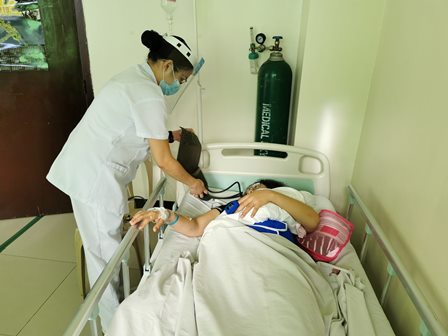
Hospitals and health-care workers experienced pressure during case surges, with capacity and supply challenges in some regions. As the pandemic progressed, global variants of concern—such as Delta and Omicron—affected transmission patterns and led to localized waves of infection. Authorities adjusted protocols for testing, isolation and treatment in response to emerging evidence about the virus and its variants.
Vaccination and longer-term strategies
A national vaccination campaign began in 2021, using a mix of vaccine sources and distribution channels. Vaccination, together with testing and non-pharmaceutical interventions, became a central component of efforts to reduce severe disease and allow gradual reopening. Over time, policy emphasis shifted from emergency containment toward vaccination, targeted protection of vulnerable groups, and recovery planning.
Economic and social effects
The pandemic triggered significant economic disruption: declines in tourism and domestic activity, changes in labor markets including impacts on overseas Filipino workers, and shifts in education caused by school closures and remote learning. Social programs and stimulus measures were introduced to mitigate hardship and support public services.
Key measures and notable facts
- Major interventions: border controls, enhanced community quarantine, mask mandates, testing and contact tracing.
- Public communication and regional differences: local governments often implemented tailored measures alongside national guidance.
- International cooperation and aid contributed to supplies, vaccines and technical support.
For background on the worldwide event see the global pandemic overview. For technical information on the virus itself consult resources about SARS‑CoV‑2. Official Philippine reporting and case data can be followed via Philippine case reports, and the location of the first confirmed case is recorded in Metro Manila.
Related articles
Author
AlegsaOnline.com COVID-19 pandemic in the Philippines Leandro Alegsa
URL: https://en.alegsaonline.com/art/23832
Sources
- nytimes.com : "Philippines Reports First Coronavirus Death Outside China"
- rappler.com : "Coronavirus: What we know about first death outside China"
- news.abs-cbn.com : "Coronavirus: What we know about first death outside China"
- cnnphilippines.com : "San Juan prayer hall frequented by coronavirus patient temporarily closed"
- news.abs-cbn.com : "Greenhills Mall implements 'precautionary measures' vs coronavirus"
- ncovtracker.doh.gov.ph : "COVID-19 Tracker"
- endcov.ph : "COVID-19"
- news.abs-cbn.com : "Tracking COVID-19 cases in the Philippines"
- inquirer.net : "Novel Coronavirus Update"
- gmanetwork.com : "Philippines' COVID-19 cases now 2,084; deaths rise to 88"
- cnnphilippines.com : "Philippines records 76 new COVID-19 cases, total now 3,094"
- doi.org : 10.2139/ssrn.3573353