
COVID-19 pandemic in the Republic of Ireland
Overview of the arrival, spread, public-health response and societal effects of the COVID-19 pandemic in the Republic of Ireland, including key characteristics and cross‑border considerations.
Overview
The COVID-19 pandemic reached the Republic of Ireland on 29 February 2020 and, according to contemporaneous reporting, spread to every county within weeks. The outbreak prompted an extended public-health emergency and a series of national measures intended to reduce transmission, protect vulnerable people and preserve health system capacity. For broader context about the disease, see COVID-19.
Image gallery
10 Images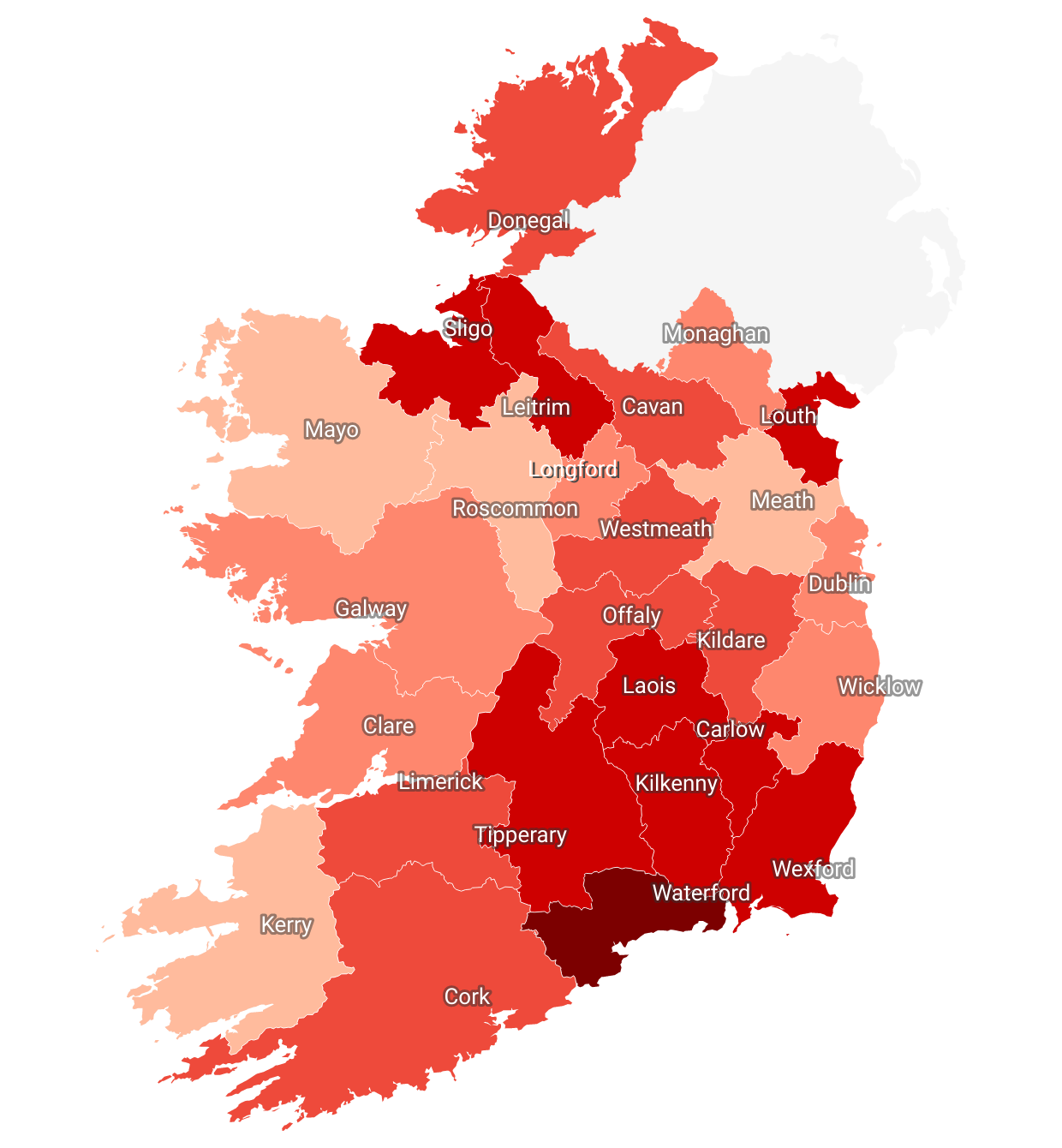





Timeline and spread
Initial cases were identified among travellers and close contacts, after which local chains of transmission established themselves in multiple population centres. The rapid geographic spread across counties led public-health authorities to introduce national restrictions. Early months were characterised by waves of rising and falling case numbers, influenced by changes in social behaviour, variants of the virus and the deployment of countermeasures.
Public health response
The Health Service Executive (HSE) and public-health agencies coordinated testing, contact tracing and guidance on isolation, while government departments issued legally enforceable restrictions and advice. Typical interventions included limits on gatherings, temporary school and business closures, travel guidance and recommendations or requirements for face coverings. A vaccination programme was introduced once vaccines became available, with prioritisation for older people, health-care workers and those at highest risk.
Impact and adaptations
The pandemic affected many aspects of life: health services faced pressure, care homes experienced significant challenges, and the economy and education systems adapted through remote working and distance learning. Mental-health and social-support needs increased, and policy debates often focused on balancing public-health protection with economic and civil‑liberties considerations.
Notable distinctions and cross‑border issues
As a sovereign state sharing a land border with Northern Ireland, the Republic faced unique coordination questions across jurisdictions. Public discussion covered hospital capacity, supply chains, travel restrictions and the alignment of measures. For official national information and updates, consult domestic guidance sources such as government and public‑health pages, and for regional details see county-level reports (county information).
- Key measures: testing, contact tracing, isolation, masking and vaccination
- Major impacts: strain on health-care services, education disruption, economic effects
- Distinct aspects: island geography and cross-border coordination
The national response evolved over time as scientific understanding and available tools changed. Further reading and archival documents provide detailed timelines, policy decisions and analyses of health, social and economic outcomes.
Related articles
Author
AlegsaOnline.com COVID-19 pandemic in the Republic of Ireland Leandro Alegsa
URL: https://en.alegsaonline.com/art/23833
Sources
- rte.ie : "10 more deaths from Covid-19, 159 additional cases"
- newstalk.com : "Coronavirus: 10 more deaths and 159 new cases in Republic"
- bbc.com : "First case of coronavirus in Republic of Ireland"
- irishtimes.com : "Coronavirus cases now confirmed in every county in Ireland"
- thejournal.ie : "Every single county in Ireland now has at least one coronavirus case - here's a breakdown of where the virus is"
- thejournal.ie : "Taoiseach announces all non-essential shops to close, restrictions on gatherings of more than four people"
- rte.ie : "Taoiseach addresses nation on road map to ease restrictions"
- ft.com : "Coronavirus pushes unemployment in Ireland to ‘unprecedented’ level"
- independent.ie : "Coronavirus Ireland: Country set for deep recession as economy to shrink by 10pc and mass unemployment grows"
- irishexaminer.com : "Spread of Covid-19 infection has reached a 'plateau' with growth rate 'close to zero'"
- rte.ie : "'Important to continue current measures until 5 May', says Dr Holohan"
- worldometers.info : Coronavirus cases: Reported Cases and Deaths by Country
- irishtimes.com : "Over-65s account for 90% of coronavirus deaths recorded in Ireland"
- irishtimes.com : "Nursing homes account for 50 per cent of coronavirus deaths in Ireland"