
COVID-19 pandemic in Paraguay: overview, response, and impacts
Summary of the COVID-19 pandemic in Paraguay, including first confirmed case, public health response, social and economic effects, vaccination efforts, and notable challenges.
The COVID-19 pandemic reached Paraguay when the first confirmed infection was announced on 7 March 2020. The case involved a 32-year-old man who had lived in San Lorenzo and reported recent travel from Guayaquil, Ecuador. That initial importation signaled the start of community transmission and the beginning of a sequence of public-health actions aimed at slowing spread.
Image gallery
3 Images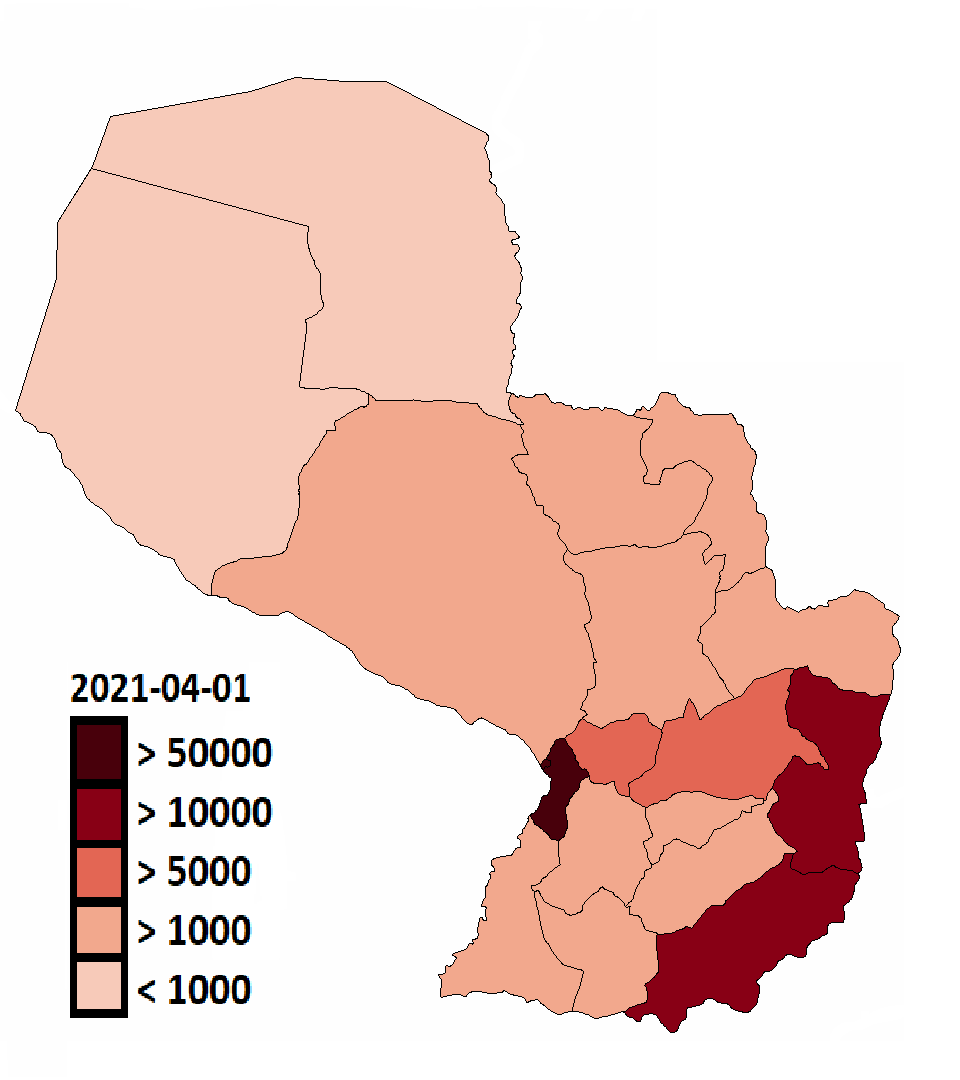


Early measures and public-health actions
In the weeks after the first case Paraguayan authorities imposed a mix of non-pharmaceutical interventions: border controls, school and workplace closures, limits on public gatherings, and periods of mandatory quarantine and curfews. Governments expanded testing and contact-tracing capacity, although testing availability and turnaround times varied between urban centers and more remote areas. Health messaging emphasized hand hygiene, mask use and physical distancing.
Impact on health systems and vulnerable groups
The pandemic stressed hospitals, particularly intensive-care services in major cities, and revealed disparities in access to care for rural and indigenous communities. Health workers faced heavy workloads and supply shortages at times. Authorities and civil society organizations worked to protect at-risk populations, including older adults and those with chronic conditions, while trying to limit interruptions to other essential health services.
Economic, social, and educational effects
Containment measures and global economic disruption hit Paraguay's economy hard, affecting formal and informal workers alike. School closures prompted a shift to remote learning where infrastructure allowed, but unequal internet access widened educational gaps. The pandemic increased food insecurity for some households and prompted government relief programs and donor assistance to mitigate immediate needs.
Vaccination and later phases
Vaccination campaigns began in the months after vaccines became available globally, with initial supplies prioritized for health personnel and older adults. Paraguay accessed vaccines through a mix of international mechanisms and bilateral agreements, and rollouts evolved to include broader age groups and booster doses as evidence and supplies permitted. Over time vaccination contributed to reductions in severe illness and deaths among those immunized.
Notable facts and lessons
- Paraguay's land borders with Brazil and Argentina made cross-border coordination important for controlling importation and transmission.
- Persistent challenges included ensuring equitable access to testing, treatment and vaccines across rural and indigenous communities.
- Authorities have emphasized strengthening public-health surveillance, laboratory capacity and emergency preparedness to better handle future outbreaks.
For historical records, policy reviews and ongoing updates, consult national health authorities and international public-health summaries that track epidemic trends and responses in Paraguay and the region.
COVID-19 pandemic | Paraguay | Guayaquil | Ecuador | San Lorenzo
Related articles
Author
AlegsaOnline.com COVID-19 pandemic in Paraguay: overview, response, and impacts Leandro Alegsa
URL: https://en.alegsaonline.com/art/23797
Sources
- rockandpop.cl : "En Paraguay: Suspenden clases y prohíben aglomeración de personas por 15 días"
- lanacion.com.py : "Advierten que cierre de fronteras será para personas, no para mercaderías"
- ultimahora.com : "Suman 18 casos de coronavirus y se confirma propagación comunitaria"
- ultimahora.com : "Ministerio de Salud confirma primer fallecido por coronavirus en Paraguay"
- abc.com.py : "La cuarentena irá hasta el domingo 12 de abril y aislamiento total con excepciones hasta el 28 de marzo – Nacionales – ABC Color"