
COVID-19 pandemic in Poland
Overview of the COVID-19 pandemic in Poland, its early detection, public-health response, social and economic effects, vaccination rollout, and notable aspects of the national experience.
Overview
The COVID-19 pandemic reached Poland in early 2020 and prompted a broad public‑health response. Health authorities began laboratory testing of suspected cases in February and March 2020, alongside measures such as home quarantine and monitoring to limit spread. For general context about the global outbreak see global pandemic resources, while national procedures and updates were published by Polish health authorities at official channels. Information on the causative virus is available at SARS‑CoV‑2 and coronaviruses.
Image gallery
5 Images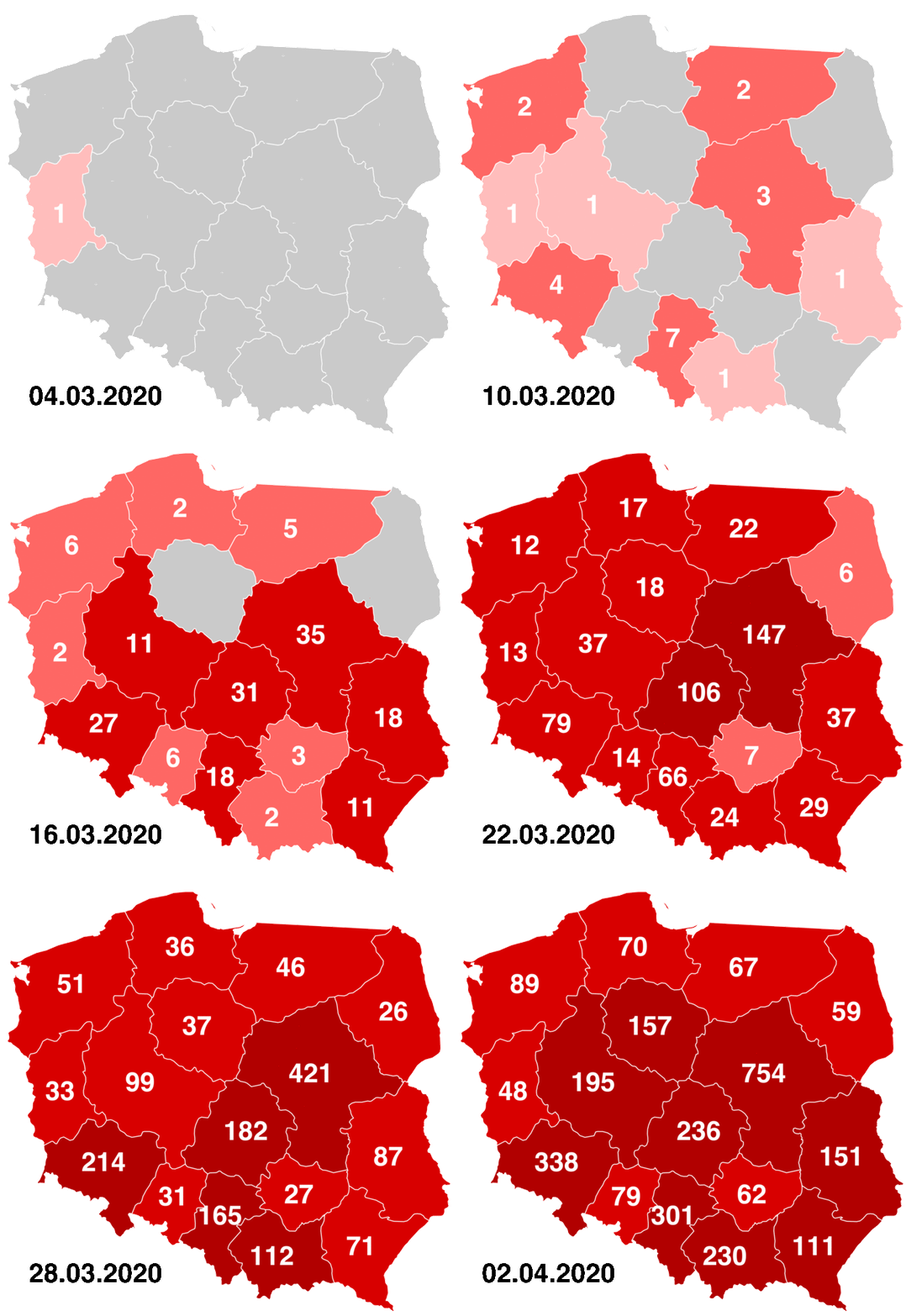


Early timeline and containment efforts
In the first months, authorities focused on identifying and isolating imported and locally transmitted cases through testing and contact tracing. Common containment measures included travel restrictions, quarantines for contacts, targeted testing of symptomatic individuals and travelers, and restrictions on large gatherings. Schools, cultural institutions, and some businesses moved to remote or limited operation during peak phases of transmission.
Public health measures and healthcare response
Poland expanded laboratory capacity, reorganized hospital wards for COVID‑19 care, and implemented infection control protocols in health settings. Public recommendations evolved with scientific guidance and included mask use in public spaces, physical distancing, hand hygiene, and stay‑at‑home guidance when appropriate. Authorities also issued guidance for employers, long‑term care facilities, and transport providers to reduce transmission risks.
Societal and economic impacts
The pandemic affected daily life, education, and the economy. Remote learning and telework became widespread where possible; sectors dependent on travel, hospitality, and service industries experienced disruption. Governments introduced fiscal and social support measures intended to stabilize employment and provide assistance to vulnerable groups, while civic organizations and volunteers contributed to local relief efforts.
Vaccination and later phases
With the emergency authorization of vaccines late in 2020 and early 2021, a national vaccination programme began targeting priority groups and then broader age cohorts. Vaccination campaigns, booster recommendations, and evolving treatment options altered the course of later waves, reducing severe outcomes for many vaccinated people and shifting public‑health priorities toward targeted protection and healthcare resilience.
Notable distinctions and lessons
- Coordination with regional and international bodies shaped vaccine procurement and regulatory decisions.
- Testing and home quarantine were central early responses and were scaled up as laboratory networks expanded.
- Public communication and adaptability of measures were critical to balancing health protection and social continuity.
Understanding Poland's pandemic experience involves both its immediate response measures and longer‑term adaptations in health policy, social services, and economic planning. For updates and primary sources consult national health agencies and international public‑health organizations linked above.
Related articles
Author
AlegsaOnline.com COVID-19 pandemic in Poland Leandro Alegsa
URL: https://en.alegsaonline.com/art/23799
Sources
- commons.wikimedia.org : References at Wikimedia Commons.
- usnews.com : "Poland Reports First Coronavirus Case - Health Minister"
- gov.pl : "Pierwszy przypadek koronawirusa w Polsce" · web.archive.org · web.archive.org
- wiadomosci.gazeta.pl : "47 osób z podejrzeniem koronawirusa w Polsce. Szumowski: Wirus pojawi się w najbliższych dniach" · web.archive.org
- who.int : "Coronavirus disease 2019 (COVID-19) – Situation Report – 49" · web.archive.org
- who.int : "Coronavirus disease 2019 (COVID-19) – Situation Report – 50" · web.archive.org
- twitter.com : "Minister @SzumowskiLukasz w #MZ: Mamy pierwszy śmiertelny przypadek wywołany przez #koronawirus. Pacjentka w wieku 56 lat miała poważne problemy zdrowotne przed zakażeniem"
- twitter.com : "(Tweet)" · archive.today