
COVID-19 pandemic in Saint Kitts and Nevis
Overview of the COVID-19 outbreak, public-health response, timeline, economic relief and notable developments in the two-island federation of Saint Kitts and Nevis.
The COVID-19 pandemic reached the Federation of Saint Kitts and Nevis in late March 2020, when the first confirmed infections were reported among recent arrivals. As with many small island states, the government responded quickly with public-health measures intended to limit community transmission, protect medical services and reduce the burden on an economy heavily dependent on travel and tourism.
Image gallery
2 Images
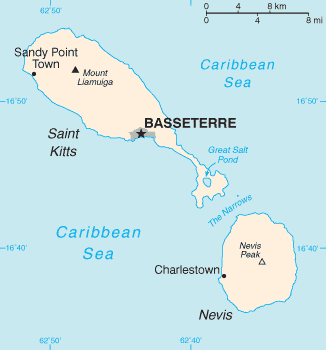
Initial cases and early response
The first two confirmed cases were announced on 24 March 2020; both were nationals who had recently arrived from New York City. In the days that followed authorities imposed strict movement controls, including a multi-day curfew beginning 31 March and a series of extensions through April. These measures aimed to limit social contact while health officials identified and traced contacts of confirmed cases.
Public-health measures and containment
Measures used in Saint Kitts and Nevis mirrored common international practice: testing and contact tracing, isolation of positive cases, quarantine for travellers and temporary restrictions on gatherings. Border controls and travel suspensions reduced arrivals, and mandatory quarantine for some incoming travellers helped reduce importation risks. The government issued regular updates and guidance to residents on hygiene, social distancing and the phased easing of restrictions.
Social and economic support
Recognizing the economic strain caused by closures and reduced tourism, the federation established relief efforts to support affected households and businesses. The COVID-19 Emergency Relief Fund distributed assistance to thousands of residents; at one point it was reported that around 2,000 people received benefits, and outreach continued for those who had not initially qualified. Support measures included direct assistance, relief for small enterprises and temporary adjustments to public services to mitigate hardship.
Progress, vaccination and later developments
Like other Caribbean states, Saint Kitts and Nevis participated in regional and international vaccination initiatives beginning in 2021, prioritizing frontline health workers, older adults and other vulnerable groups. Vaccination, continued surveillance and targeted restrictions have been central to reducing severe disease and hospital pressure. Over time authorities shifted from emergency lockdowns to calibrated public-health measures aligned with case trends and vaccine coverage.
Notable distinctions and context
- Small population and limited health infrastructure shaped the federation's cautious early approach.
- Dependence on tourism made border policy and economic relief politically and economically significant.
- Information and guidance were disseminated through official channels to coordinate public compliance and services.
For official announcements and regional coordination details see national health updates and international guidance on the broader COVID-19 pandemic. Additional sources on travel and public-health advice include government briefs, health advisories, and regional cooperation portals such as Caribbean health networks. For information on relief programs and local measures consult federation relief information and ongoing situational reports available through official channels.
Related articles
Author
AlegsaOnline.com COVID-19 pandemic in Saint Kitts and Nevis Leandro Alegsa
URL: https://en.alegsaonline.com/art/23805
Sources
- covid19.gov.kn : "NATIONAL STATISTICS"
- today.caricom.org : "St. Kitts and Nevis Confirms Two COVID-19 Cases"
- covid19.gov.kn : "ST. KITTS-NEVIS MOVES INTO COMPLETE LOCK-DOWN FOR THREE DAYS TO FURTHER PROTECT CITIZENS AND RESIDENTS FROM THE SPREAD OF COVID-19"
- covid19.gov.kn : "STATE OF EMERGENCY IN ST. KITTS AND NEVIS EXTENDED TO THURSDAY, APRIL 09"
- covid19.gov.kn : "Prime Minister Harris' Address to the Nation on Tuesday, April 7th, 2020"
- covid19.gov.kn : "STATE OF EMERGENCY EXTENDS IN ST. KITTS-NEVIS AS GOVERNMENT CONTINUES TO PROTECT CITIZENS AND RESIDENTS AGAINST THE SPREAD OF COVID-19"
- zizonline.com : "Two thousand residents benefit from Social Security's COVID-19 response in St. Kitts-Nevis"