
COVID-19 pandemic in North Macedonia
Overview of how the SARS‑CoV‑2 pandemic affected North Macedonia: timeline, public-health response, social and economic impacts, vaccination rollout, and lasting effects.
Overview
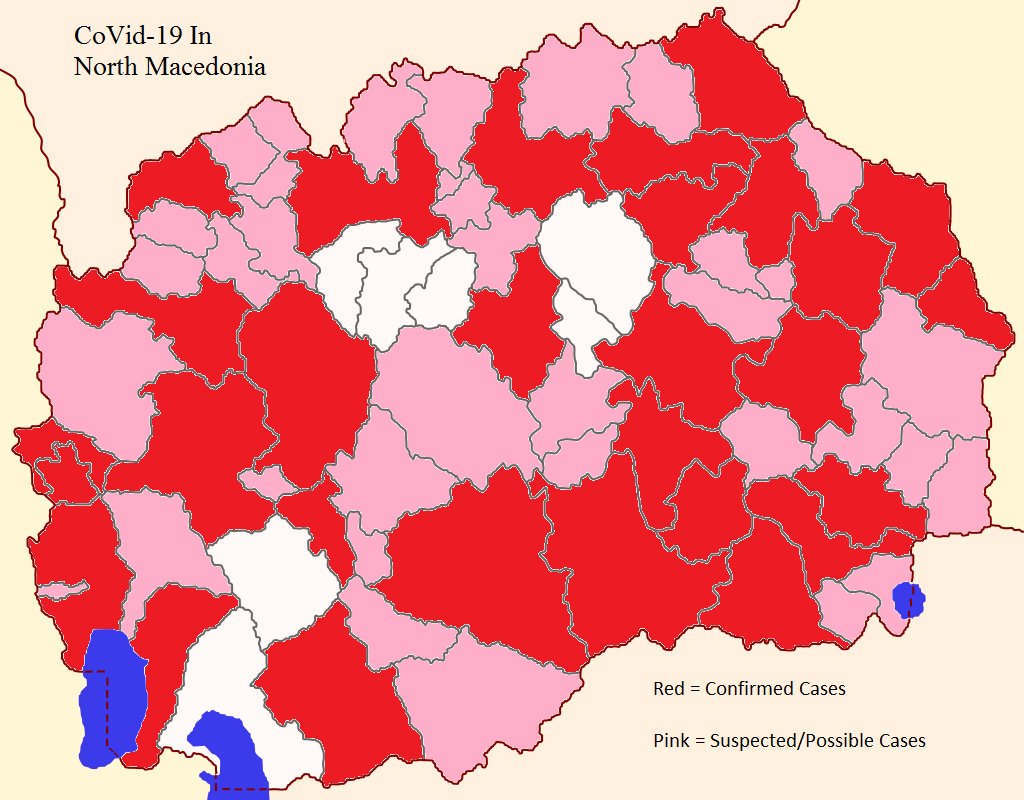
The COVID-19 pandemic was confirmed to have reached North Macedonia in February 2020. The emergence of SARS‑CoV‑2 led to successive waves of infection, periodic tightening of public-health measures, and efforts to expand testing, hospital capacity, and vaccination. For general background on the global pandemic see global summaries, and for country-specific context refer to resources about North Macedonia.
Image gallery
8 Images


Progression and key phases
After initial imported cases in early 2020 the country experienced multiple waves driven by changing social behaviour, seasonal factors, and the arrival of more transmissible viral variants. The pattern broadly matched that seen elsewhere in Europe: an initial outbreak in spring 2020, renewed surges in late 2020 and 2021, and further peaks associated with Delta and Omicron variants. Health authorities monitored case numbers, hospital admissions and mortality to guide responses.
Public-health response
Authorities introduced a range of non-pharmaceutical interventions to reduce transmission. Typical measures included:
- border controls and travel restrictions;
- temporary closures of schools and non-essential businesses;
- limits on public gatherings and curfews in some periods;
- mandatory mask use in indoor public spaces and increased hygiene campaigns;
- testing, contact tracing and isolation of cases where capacity allowed.
Hospitals expanded intensive-care capacity and field arrangements were used at times to relieve pressure on the health system.
Vaccination and international support
Vaccine rollout began once supplies became available in late 2020 and early 2021 through international mechanisms such as COVAX, bilateral donations and purchases. Campaigns prioritized health-care workers, older adults and other high-risk groups. Challenges included supply variability and vaccine hesitancy, which shaped uptake and required public information efforts.
Social and economic impact
The pandemic affected daily life, education and the economy. Service sectors, tourism and small businesses were particularly impacted by restrictions. Governments and institutions adopted short-term economic measures to support vulnerable households and businesses, while schools shifted to remote learning during closures.
Legacy and lessons
Key lessons include strengthening public-health preparedness, investing in testing and hospital capacity, promoting vaccine confidence, and improving coordination across institutions. The pandemic also highlighted the importance of international cooperation in supplying vaccines and medical resources. Continued vigilance, surveillance of variants and efforts to address the long-term economic and social consequences remain important.
Related articles
Author
AlegsaOnline.com COVID-19 pandemic in North Macedonia Leandro Alegsa
URL: https://en.alegsaonline.com/art/23790
Sources
- koronavirus.gov.mk : "Latest information on COVID-19 in North Macedonia"
- gdi-sk.maps.arcgis.com : "Real-time Coronavirus condition in North Macedonia"
- sitel.com.mk : "Уште три нови случаи на коронавирус во Македонија, вкупната бројка достигна седум"
- comuni-italiani.it : "Macedoni in Italia"
- zdravstvo.gov.mk : "Два нови потврдени случаи на корона вирус во Дебар"