
Cotyledon (seed leaf): definition, types, function and importance
Cotyledons are the first leaves formed inside a seed. This article explains their structure, role during germination, differences between monocots and dicots, common examples, and why they matter in plant development.
Overview
A cotyledon, commonly called a seed leaf, is an embryonic leaf contained within a seed. When a seed germinates, the cotyledon or cotyledons emerge first and often support the young plant until true leaves develop. Cotyledons are distinct from later leaves in shape, position, and function. The term is linked to the seed itself via the concept of the seed and to their identity as a leaf-type organ.
Image gallery
5 Images


Structure and development
Cotyledons develop as part of the plant embryo while the seed matures. They may remain below ground, above ground, or partially exposed depending on species and germination strategy. In many seeds the cotyledons contain stored nutrients and are thicker than later foliage. After the radicle (embryonic root) and shoot start to grow, cotyledons unfold or persist briefly and contribute to early growth.
Function and physiological role
The primary roles of cotyledons are reserve storage and early photosynthetic activity. Some cotyledons store starch, proteins or oils that feed the seedling until it can absorb nutrients from the soil and produce energy via photosynthesis. In other species the cotyledon surfaces become green and photosynthetically active as soon as they reach light, helping the emerging plant build biomass for true leaf development.
Types and distinctions
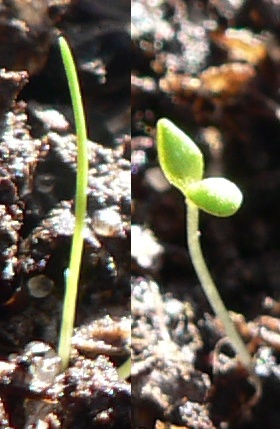
- Monocotyledons (monocots) have a single cotyledon; this is typical of grasses, lilies and related groups. See related concept: monocot.
- Dicotyledons (dicots) commonly have two cotyledons; beans, peas and many garden plants fall into this category.
- Ephemeral vs persistent: in some species cotyledons rapidly wither after true leaves form, while in others they remain green and functional for an extended period.
Practical examples and importance
Gardeners and botanists use cotyledons to identify seedlings: their shape and number can distinguish species at an early stage. Legume seedlings often show thick, nutrient-rich cotyledons that supply resources to the young shoot. Conversely, onion seedlings (a monocot example) have a single narrow cotyledon that behaves differently from broad dicot seed leaves.
Notable facts
Cotyledons are not considered 'true leaves' because they originate from the embryo and often lack features of mature foliage, such as complex venation or repeated leaf arrangement. Understanding cotyledon form and timing is important in horticulture, agriculture and plant identification, as these traits affect seedling survival and early growth strategies.
Related articles
Author
AlegsaOnline.com Cotyledon (seed leaf): definition, types, function and importance Leandro Alegsa
URL: https://en.alegsaonline.com/art/23390