
Cottbus: city in Brandenburg, Germany
Cottbus is an eastern German city in Brandenburg on the River Spree, known for its Sorbian heritage, two universities and a history shaped by industry and landscape change.
Overview
Cottbus is a city in eastern Germany with roughly 105,000 inhabitants. It is the second largest urban centre in the state of Brandenburg, after Potsdam, and lies southeast of Berlin on the River Spree. The town has a mixed urban fabric of medieval streets, 19th-century civic buildings and more recent developments from the 20th century.
Image gallery
2 Images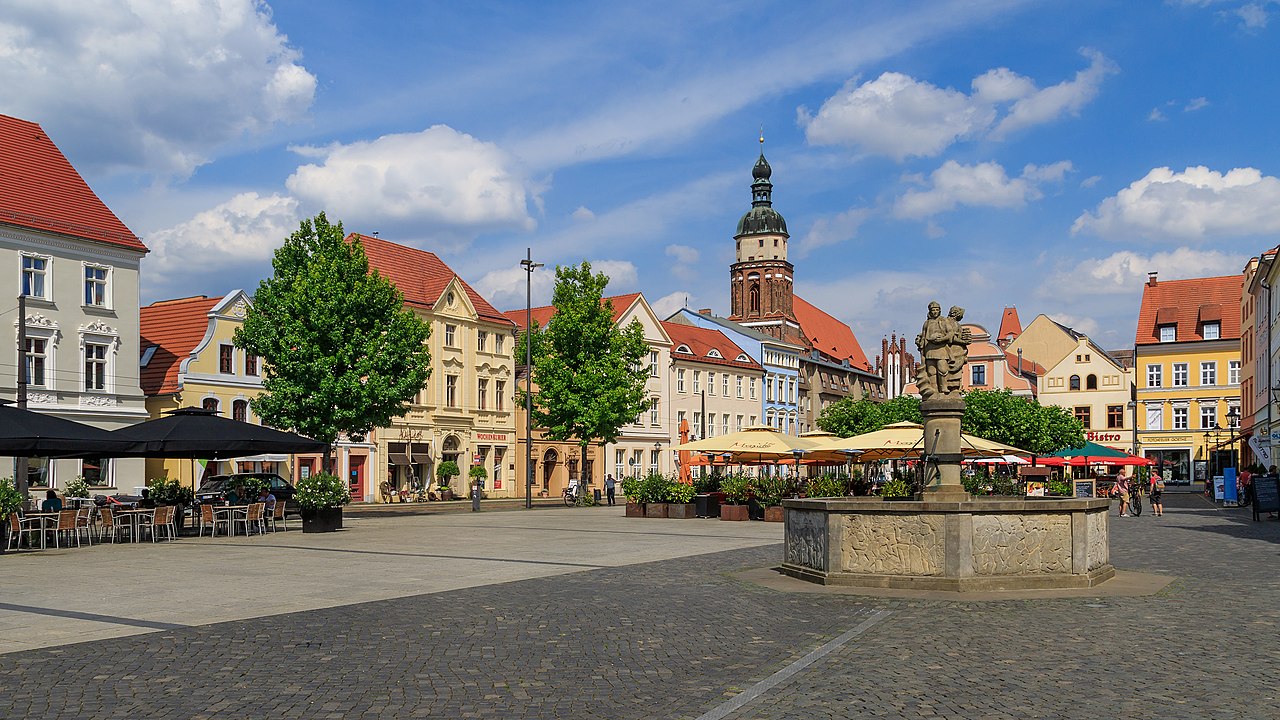

Names and linguistic character
Cottbus appears in Slavic languages as Chóśebuz (Low Sorbian) and Choćebuz (Upper Sorbian). It sits in the historical region of Lusatia (Lausitz), where a Sorbian-speaking minority has preserved language, traditions and place names; bilingual signs and cultural institutions reflect this bilingual heritage.
History and development
The site grew from a Slavic settlement into a German town during the Middle Ages and later developed as an industrial and mining centre. In the 19th and 20th centuries, textile manufacturing, rail links and nearby lignite (brown coal) extraction shaped its economy and landscape. After German reunification the city has worked to adapt former industrial areas and restore historic quarters while managing post‑mining reclamation in the surrounding region.
Education, culture and landmarks
Cottbus hosts two higher education institutions: the Brandenburg University of Technology (BTU Cottbus–Senftenberg) and the Hochschule Lausitz, both important for regional research, engineering and applied sciences. Cultural life includes theatres, museums and parks—most notably landscaped estates associated with 19th‑century garden design—and events that celebrate Sorbian music, crafts and customs.
Economy and transport
The local economy combines education, light industry, services and activities linked to the Lausitz energy sector and its transition. Rail and road connections provide links to Berlin and other regional centres; municipal planning has emphasised redevelopment of former mining sites into new uses and recreational lakes.
Notable facts and further resources
- Administrative centre of its district and a cultural hub for Lower and Upper Sorbian communities.
- Home to park landscapes and examples of brick Gothic and 19th‑century architecture.
- Local universities and applied sciences institutions contribute to regional innovation: see general university information at BTU / Hochschule Lausitz.
- For regional context about the state and administration, consult pages on the state and Brandenburg.
For introductory material and tourist information, local municipal sites and regional cultural portals provide uptodate details on events, transport and visitor attractions.
Related articles
Author
AlegsaOnline.com Cottbus: city in Brandenburg, Germany Leandro Alegsa
URL: https://en.alegsaonline.com/art/23368