
Cossoine, Sardinia: town and comune in the Province of Sassari
Cossoine is a small comune in the Province of Sassari, Sardinia, Italy. As of 2016 it had about 851 residents, covers 39.17 km² and sits at roughly 529 m above sea level.
Cossoine is a small town and administrative comune in northern Sardinia. Located in the Province of Sassari, it forms part of the inland hill country of the island region of Sardinia in Italy. The settlement appears in regional records under the Italian name Cossoine and the Sardinian form Cossoìne; it functions as a local municipal seat with services and governance typical of Italian comuni. The town is identified in regional and national listings as both a populated place and an administrative municipality: town, comune, within the Province of Sassari on the island of Sardinia in Italy.
Image gallery
2 Images
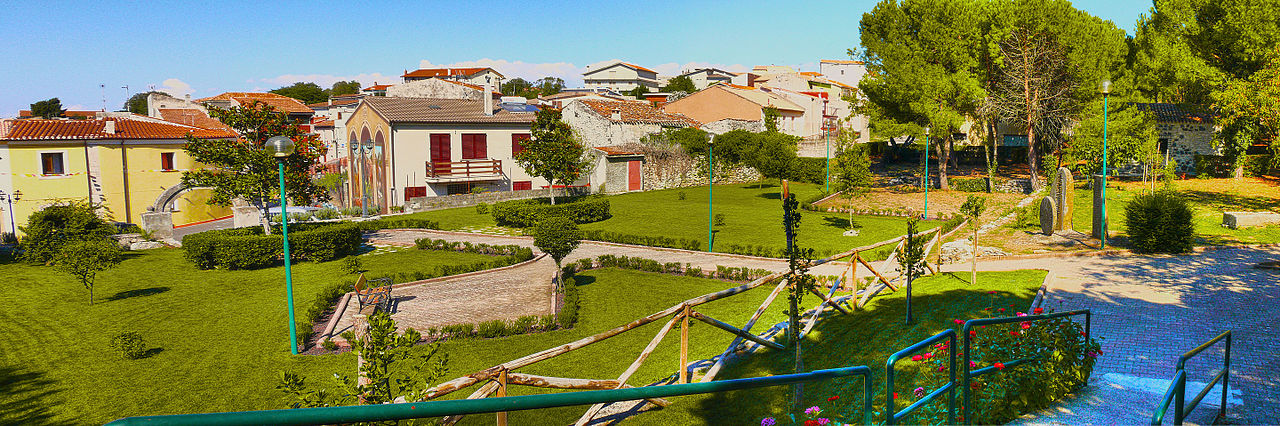
Geography and demographics
Cossoine occupies an area of about 39.17 square kilometres and is situated at an elevation of approximately 529 metres above sea level. According to a 2016 count, the resident population was 851 people. That implies a low population density typical of many interior Sardinian communities, reflecting scattered settlement patterns and a countryside shaped by hills and small valleys. The local climate is Mediterranean with some mountain influence at higher elevations: warm, dry summers and cooler, wetter winters than coastal locations.
Character and local life
The town's character mirrors that of many Sardinian inland settlements: a compact historic centre surrounded by agricultural and pastoral land. Local life is often organized around family-run farms, small businesses, and municipal institutions. Residents typically rely on nearby larger towns for specialized services, while maintaining traditions of community festivals, religious observances, and local cuisine. Sardinian language varieties and Italian are commonly heard in daily life, contributing to the area's cultural identity.
History and cultural background
Cossoine sits in a region with a long human presence; Sardinia has prehistoric, Nuragic, Roman and medieval layers of settlement across the island. While specifics for every small comune vary, inland towns like Cossoine commonly have archaeological traces and medieval-era development linked to rural life, ecclesiastical structures and local noble or communal arrangements. Traditional crafts, folk music, and seasonal celebrations form an important part of cultural continuity.
Economy and uses
The local economy is typically based on agriculture, pastoralism and small-scale services. Olive groves, cereal cultivation, vineyards and sheep or goat husbandry are widespread across Sardinia’s interior and support both subsistence and commercial activity. In recent decades, many inland communities have also developed modest tourism—country stays, hiking and cultural visits—capitalizing on natural landscapes and traditional hospitality. Public services provided by the comune support education, basic healthcare access and local infrastructure.
Notable features and practical information
- Administrative status: comune (municipality) in the Province of Sassari; see regional listings for governance details (Province of Sassari).
- Size and elevation: about 39.17 km² and 529 m above sea level; population around 851 as of 2016.
- Cultural context: part of Sardinia’s interior with local traditions, Sardinian linguistic presence and community festivals.
- Visiting: access is typically by regional roads from larger towns and cities; amenities are small-scale and oriented to local needs and visitors seeking rural experiences.
For official administrative information, municipal contacts and current statistics consult local government sources and regional databases that list Italian comuni and provinces; these resources also provide updates beyond the 2016 figures cited here.
Related articles
Author
AlegsaOnline.com Cossoine, Sardinia: town and comune in the Province of Sassari Leandro Alegsa
URL: https://en.alegsaonline.com/art/23327
Sources
- istat.it : "Superficie di Comuni Province e Regioni italiane al 9 ottobre 2011"
- demo.istat.it : "Popolazione Residente al 1° Gennaio 2018"
- demo.istat.it : Istituto Nazionale di Statistica - Bilancio demografico al 30/11/2016