
Cookiecutter shark (Isistius brasiliensis)
A small, oceanic shark known for taking round plugs of flesh from larger animals; widely distributed in warm waters and notable for bioluminescence and a distinctive biting method.
Overview
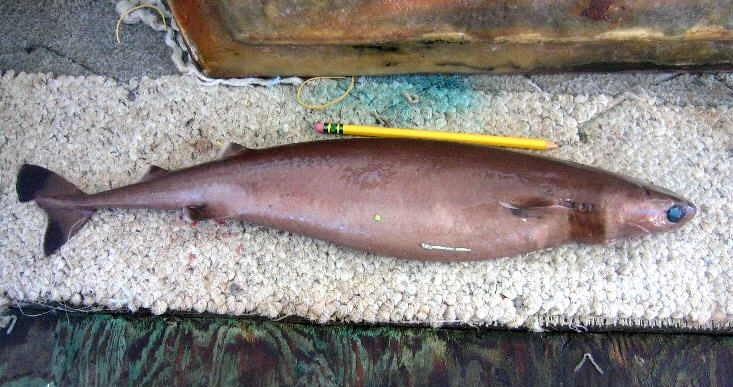
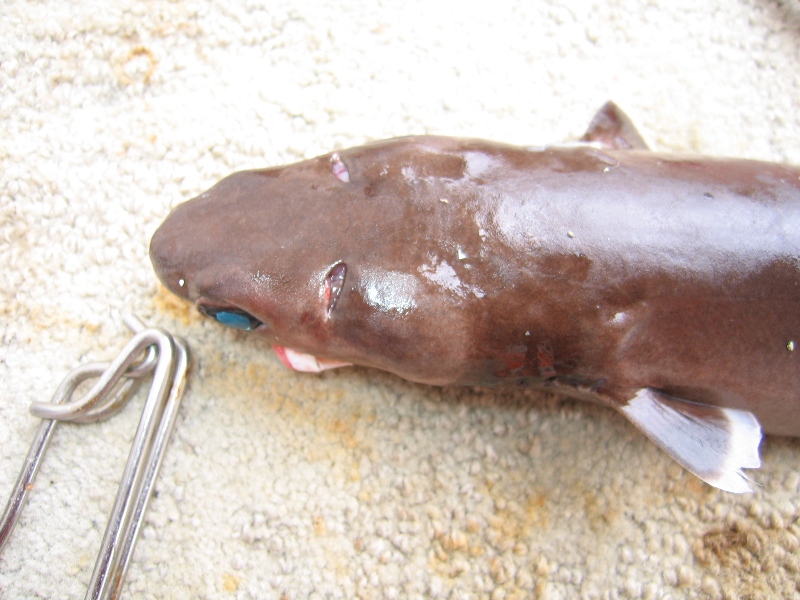
The cookiecutter shark (Isistius brasiliensis) is a small, deep‑sea species in the dogfish group that inhabits tropical and subtropical oceans around the world. Often called the cigar shark, it typically lives in open water rather than close to shorelines, and it has been observed from near the surface at night to several kilometres deep during the day.
Image gallery
10 Images




Appearance and adaptations
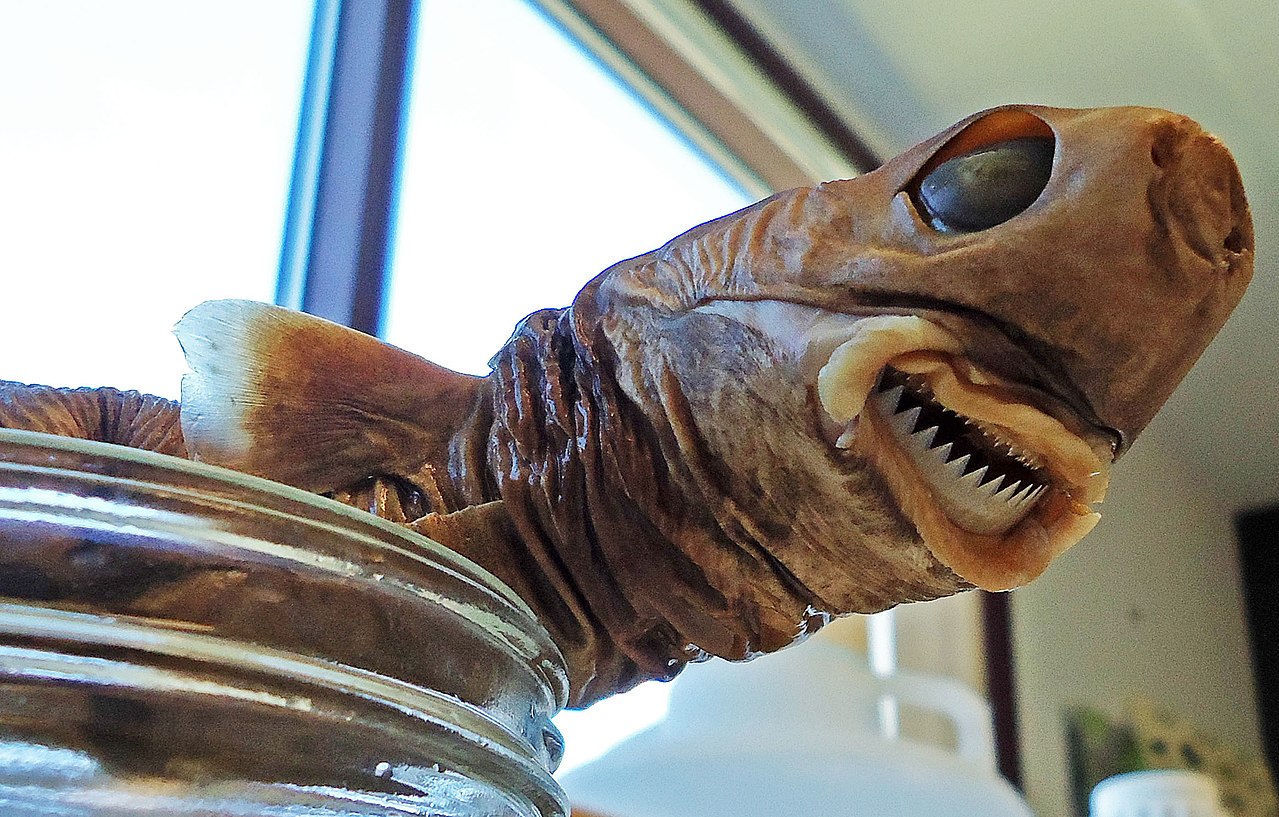
This shark is compact with a cylindrical body and a relatively large head. Its dentition is specialized: the lower teeth are larger and shaped for cutting, while the upper teeth are smaller, a combination that allows the animal to remove neat, round plugs of flesh from much larger creatures. A band of light‑producing organs (photophores) on the belly helps with counter‑illumination, and a darker collar near the throat may increase the contrast used to attract or deceive prey.
Feeding behaviour and ecology
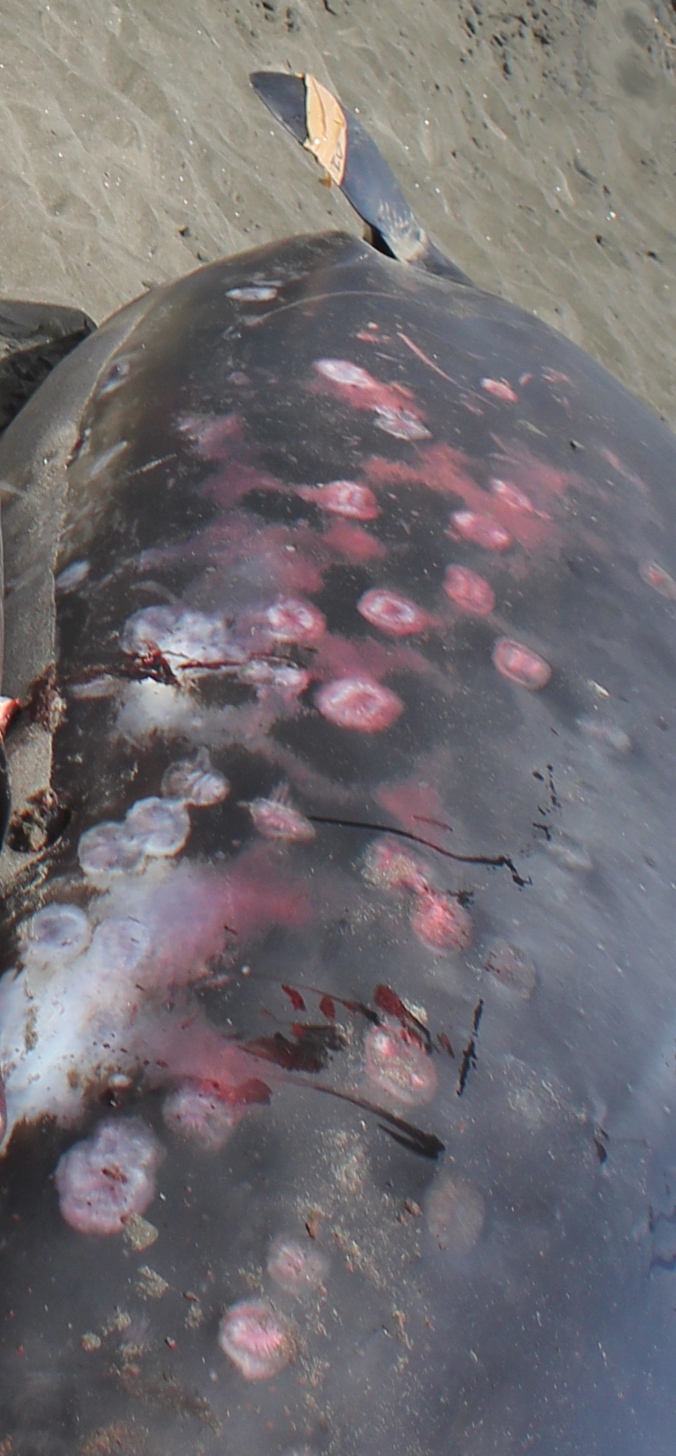
Cookiecutter sharks employ a distinctive feeding technique. They often attach to a host by suction, use their strong lower teeth to saw out circular chunks of tissue, and then swim off. Their victims include large fishes, squid and marine mammals; bite scars attributed to this species are commonly found on a wide range of animals and occasionally on man‑made objects. These sharks play a role as micropredators and scavengers in pelagic food webs, and their vertical migrations bring them into contact with many different species.
Human interactions and records
- Incidents involving people are rare, but cookiecutter bites have been recorded on swimmers and on recovered human remains.
- Marks consistent with this shark's bites have been observed on submarine hulls, undersea cables and caught fish, which helps scientists document their presence in certain regions.
- Research often relies on examining bite patterns and photophore arrangements to understand behaviour and distribution.
Taxonomy and related species
The cookiecutter shark belongs to the family Dalatiidae, a group of small to medium deepwater sharks known for varied diets and bioluminescent capabilities. It is one of a few species that have evolved the cookiecutter feeding method; related taxa differ in tooth shape, size and luminous patterns.
Notable facts
Beyond its unusual feeding habit, the species is notable for how its bite marks provide evidence of its presence across ocean basins. Its bioluminescence and nocturnal vertical migrations are adaptations to a pelagic, low‑light environment, making it an intriguing subject for studies of deep‑sea ecology and the evolution of specialized predatory strategies.
Related articles
Author
AlegsaOnline.com Cookiecutter shark (Isistius brasiliensis) Leandro Alegsa
URL: https://en.alegsaonline.com/art/22881