
Conrad II, Holy Roman Emperor (c. 990–1039)
Conrad II, first Salian Holy Roman Emperor, reigned 1024–1039. He consolidated royal authority, secured Burgundy for the empire, cultivated ties with the church, and established dynastic succession.
Overview
Conrad II (c. 990 – 4 June 1039) was a German ruler who became king and later Holy Roman Emperor, founding the Salian dynasty. Born into a noble family from the Rhineland, he was chosen by the princes as king in 1024 and received his imperial coronation in Rome in 1027. His reign marked a shift toward a stronger, more centralized royal authority within the medieval German realm.
Image gallery
10 Images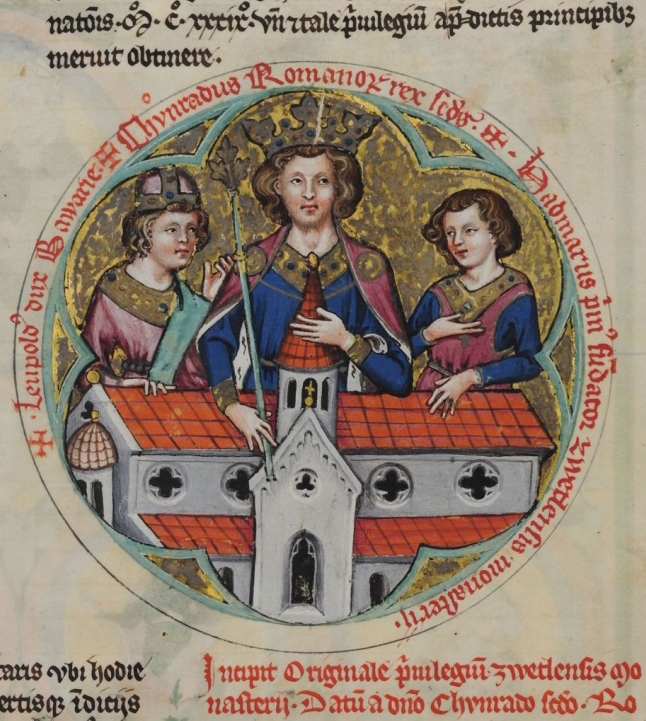




Background and accession
Conrad came from a comital house centered on Speyer; his mother was Adelheid of Alsace. After the end of the preceding royal line, the leading magnates selected Conrad. His elevation illustrates changes in the German political order and in the nature of the monarchy, as kingship became less dependent on ad hoc agreements and more on institutional control and dynastic claims.
Reign and government
As king and emperor, Conrad worked to strengthen royal institutions. He made use of loyal bishops and royal officials to administer justice and collect revenues, reducing the reliance on powerful territorial dukes. His itinerant court and regular assemblies helped bind regional lords to royal authority without entirely eliminating their traditional privileges.
Expansion, Italy and relations with the nobility
Conrad led campaigns into Italy and asserted imperial rights there while maintaining diplomatic ties with the papacy. He also secured the Kingdom of Burgundy (Arles), bringing that realm into the imperial fold and extending imperial influence in the west. Throughout his reign he managed revolts and negotiated with the great territorial lords, demonstrating that the crown could act independently of individual dukes when necessary.
Legacy and significance
Conrad II established the Salian dynasty and ensured a peaceful succession by preparing his son Henry to follow him. His policies strengthened the institutional basis of the empire, shaped relations between crown and church, and influenced how later German kings balanced local autonomy and central control. He died in 1039 and was succeeded by Henry III, who continued many of his reforms.
- First Salian Holy Roman Emperor; elected 1024 (king).
- Crowned emperor 26 March 1027 (coronation).
- Integrated the Kingdom of Burgundy and reinforced royal administration.
- Advanced the role of bishops and royal officials in government.
For further reading on Conrad's rule, institutions of the early 11th-century empire, and his relations with the papacy and regional magnates, consult specialized histories and primary-source collections. Important themes in his career are dynastic consolidation, administrative development, and the growing capacity of the crown to act beyond negotiated agreements with powerful nobles.
Related articles
Author
AlegsaOnline.com Conrad II, Holy Roman Emperor (c. 990–1039) Leandro Alegsa
URL: https://en.alegsaonline.com/art/22581