
Combinatorial chemistry: principles, techniques and applications
Combinatorial chemistry is a set of methods for rapidly creating and testing large libraries of related chemical compounds, widely used in drug discovery, materials science and chemical biology.
Overview
Combinatorial chemistry is an experimental approach that generates large collections (libraries) of related molecules by combining sets of building blocks in systematic ways. Instead of making one compound at a time, researchers produce many variants in parallel and then evaluate them for desired properties such as biological activity, binding affinity or material performance. This workflow shortens the path from concept to lead compounds and complements traditional, hypothesis-driven synthesis. For a concise introduction see further reading.
Image gallery
9 Images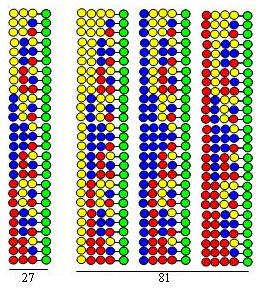


Common techniques and workflows
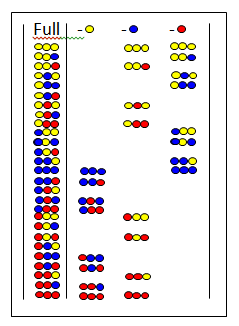
Several practical strategies are used to build libraries. Solid-phase synthesis attaches intermediates to an insoluble support so that excess reagents are washed away. Split-and-pool (also called split-mix) methods create very large libraries by iterative dividing and recombining reaction batches. Parallel synthesis runs many separate reactions at once under similar conditions. Variations include solution-phase libraries, DNA-encoded libraries, and automation using robotic platforms to increase throughput and reproducibility. Key analytical and screening steps follow synthesis to identify active members; more details are available at technical resources.
History and development
The approach grew in prominence during the late twentieth century as organic synthesis, solid-phase techniques and automation converged. Advances in instrumentation for synthesis, purification and high-throughput screening made it practical to create and evaluate thousands to millions of compounds. Over time, combinatorial chemistry evolved from generating very large but often conceptually repetitive libraries to more focused, diversity-oriented and target-directed strategies that emphasize chemical and functional variety. For an outline of developments consult historical context.
Applications and importance
Its principal impact has been in pharmaceutical research, where combinatorial libraries accelerate lead discovery and structure–activity relationship (SAR) studies. The method is also important in agriscience, catalyst discovery, polymer and material design, and chemical probe development in biology. Combinatorial approaches feed into parallel screening methods and computational prioritization, forming an integrated discovery pipeline. Examples and case studies can be found via application summaries.
Advantages, limitations and distinctions
Advantages include speed, the ability to explore chemical space systematically, and compatibility with automation. Limitations include the need for robust, general reactions, challenges in purifying and characterizing every member of very large libraries, and the risk that blindly large collections may contain many inactive or irrelevant molecules. Combinatorial chemistry is best viewed as a complement to targeted design rather than a universal substitute.
Practical considerations
Successful projects balance library size with chemical diversity and screening capacity. Design principles now often favor smaller, well-chosen libraries that maximize meaningful variation in shape, polarity and functionality. Modern practice integrates combinatorial methods with computational design, focused synthesis, and iterative optimization to move promising hits toward practical leads.
Related articles
Author
AlegsaOnline.com Combinatorial chemistry: principles, techniques and applications Leandro Alegsa
URL: https://en.alegsaonline.com/art/21869