
Aach, Baden-Württemberg
Aach is a small town in Baden-Württemberg near Lake Constance and the Swiss border, noted for the Aachtopf spring, karst hydrology, local tourism and a compact municipal government.
Overview
Aach is a small town in the southwestern German state of Baden-Württemberg, located near Lake Constance and close to the Swiss border. The settlement functions as a local centre for rural communities and visitors to the lakeshore region. Its landscape combines agricultural land, wooded areas and karst terrain, and the town is best known for the Aachtopf, a prominent natural spring that attracts both tourists and scientific interest.
Image gallery
2 Images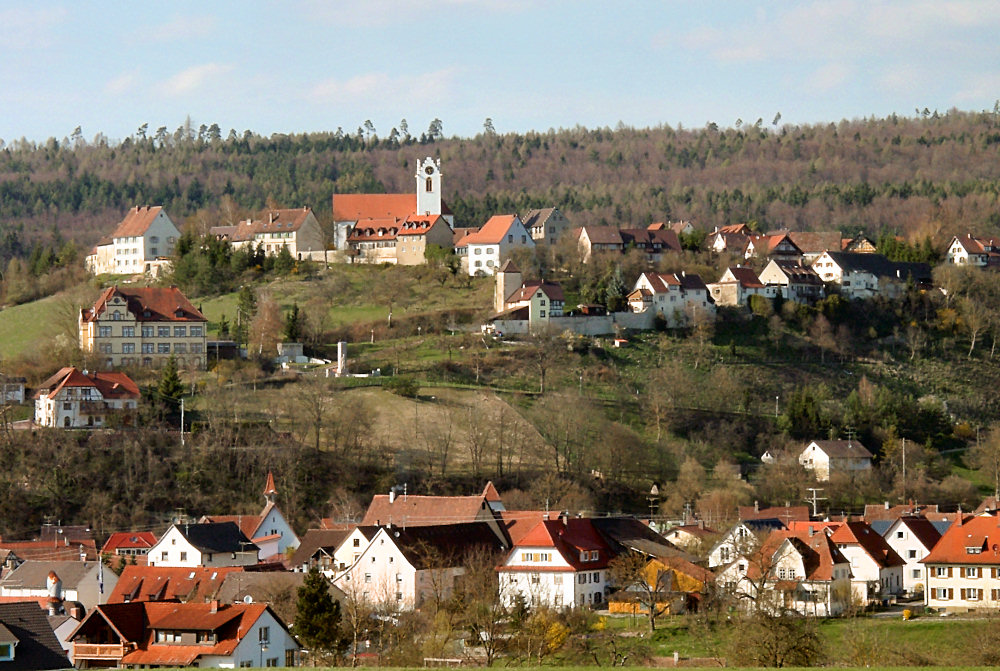

Geology and the Aachtopf
The Aachtopf is the defining natural feature of Aach and is often described as Germany's largest spring by discharge. It issues from a karst system developed in limestone and emerges as a powerful spring close to the town. Hydrologists have used dye-tracing and other methods to demonstrate an underground connection between the Aachtopf and sinking sections of the Danube River: water that disappears into swallow holes in the Danube reappears at the Aachtopf after flowing through subterranean conduits. The site is therefore important for the study of karst hydrology, groundwater flow and regional water balance.
History and governance
Aach has grown historically as a small local administrative and market place rather than as a large urban centre. Local government follows German municipal practice, with an elected mayor and a town council responsible for planning, services and cultural life. Past municipal elections have produced mixed representation, with seats held by national parties such as the Christian Democratic Union (CDU) and the Social Democratic Party (SPD), alongside independent voters' associations. At the time of some reports the mayor was Severin Graf (CDU); readers should consult current municipal sources for up-to-date officeholders.
Economy, tourism and community life
The town's economy is mainly local and service-oriented, supported by nearby agriculture and small businesses. Tourism linked to the Aachtopf and the wider Lake Constance area contributes to visitor services, hospitality and guided walks. Recreational opportunities include hiking on marked trails, birdwatching in wetland margins and day trips to lakeside towns. Local events and seasonal markets reflect regional traditions and provide focal points for community life.
Access, research and conservation
Aach is accessible by regional roads and serves as a convenient stop for visitors exploring cross-border attractions in southern Germany and northern Switzerland. The spring and its environs are of interest to schools, universities and research institutes studying karst systems and freshwater ecology. Conservation measures focus on protecting water quality and the integrity of underground flow paths; monitoring and public information help balance visitor access with scientific and environmental needs.
Practical information
- Natural interest: the Aachtopf provides a clear example of karst hydrology and is a frequent subject of educational visits.
- Location: proximity to international borders makes Aach a practical base for short cross-border excursions and for visiting Lake Constance.
- Visiting: viewpoints and marked footpaths offer safe observation of the spring; local tourist offices provide maps and seasonal advice.
Because small municipalities evolve over time, details about council composition, election results and the incumbent mayor may change between publications; for current administrative information consult official municipal communications or regional government portals. The Aachtopf remains the principal reason most visitors come to Aach, whether for scientific interest, nature walks or to enjoy the quieter side of the Lake Constance region.
Related articles
Author
AlegsaOnline.com Aach, Baden-Württemberg Leandro Alegsa
URL: https://en.alegsaonline.com/art/217
Sources
- destatis.de : "Alle politisch selbständigen Gemeinden mit ausgewählten Merkmalen am 31.12.2018 (4. Quartal)" · web.archive.org
- destatis.de : "Gemeinden in Deutschland nach Fläche, Bevölkerung und Postleitzahl am 30.09.2016"