
Coco the Clown: the auguste clown character and its performers
Coco the Clown is an auguste clown persona popularized in Britain and later abroad. Known for slapstick antics, custard pies and public-safety touring, the role has been linked to several 20th‑century performers.
Coco the Clown is a circus and variety stage persona best known in Britain and later in other countries. Rather than the more formal whiteface clown, Coco is an example of the auguste type: a deliberately foolish, big‑featured comic whose routine depends on pratfalls, mishaps and being the butt of jokes. The character became widely recognised in the 20th century through regular appearances in circuses, music‑hall programmes and public‑information events.
Image gallery
4 Images


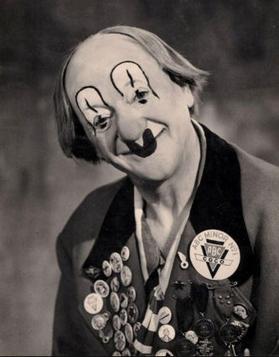
Characteristics and stage style
The auguste clown persona embodied by Coco relies on exaggerated costume and makeup, an open‑mouthed or rouged face, loose garments and bright colours. Behaviourally, the auguste plays the comic foil — clumsy, naïve and easily flustered — while another performer (often a straight man or a whiteface clown) acts as the instigator or authority figure. Classic bits associated with Coco include being the target of custard pie gags, having water tipped over him, slapstick chases and the kind of sight gags that translate well for large circus audiences. For a general overview of clown types and their roles, see clown classifications.
Origins and notable performers
The character of Coco is linked with several performers who adopted and refined the role on stage and on tour. Accounts of the character’s origins vary in details and in the spelling of performers’ names; some sources use variants such as Theo de Kovel or Polakovs. One of the best‑known interpreters of Coco travelled widely, bringing the persona into mainstream British popular culture and later using it outside the circus ring. A later performer helped popularise Coco in the Netherlands, demonstrating how a single clown persona can be carried across generations and countries. Biographical and historical materials on the people who performed Coco are available in specialist circus histories and collections; an introductory resource is performer biographies.
Public roles and cultural impact
Beyond circus shows, Coco the Clown was used for public‑facing work: appearances at community events, charity fundraisers and school visits. In Britain, performers in this role undertook road‑safety and other educational tours, using humour and a familiar comic persona to engage children and families. Such outreach work brought the character out of the ring and into civic life, and in some cases the performers were recognised for their contributions to public service. For examples of clowning used in public education, see educational outreach.
Legacy and distinctions
Coco exemplifies the auguste tradition: an intentionally ridiculous figure whose misfortune and buffoonery create laughter. This contrasts with the whiteface clown, who is usually more controlled, elegant and authoritative. The legacy of Coco is both practical — a repertoire of gags and routines still studied by working clowns — and cultural: the image of the pie‑in‑the‑face comic endures in visual humour and popular memory. For wider context on slapstick methods and their place in performing arts, consult general resources on physical comedy and slapstick techniques.
- Key features: auguste makeup, slapstick gags, foil relationship with a straight clown.
- Common gags: custard pies, water buckets, pratfalls and mistaken‑identity sketches.
- Notable associations: 20th‑century circus and variety theatre, school and community appearances.
Related articles
Author
AlegsaOnline.com Coco the Clown: the auguste clown character and its performers Leandro Alegsa
URL: https://en.alegsaonline.com/art/21347