
Colin Davis
British conductor Sir Colin Davis (1927–2013) led major opera houses and orchestras, championed Mozart and British repertoire, and held long associations with the Royal Opera House and the London Symphony Orchestra.
Overview
Sir Colin Rex Davis (25 September 1927 – 14 April 2013) was a prominent British conductor whose career combined significant operatic appointments and long-term orchestral leadership. Born in Weybridge, Surrey, and based for much of his life in London, England, he became known for clear musical instincts, advocacy for Mozart and twentieth-century British composers, and a reputation for thoughtful, unflashy direction.
Image gallery
5 Images


Early life and musical training
Davis received his school education at Christ's Hospital and trained initially as a wind player, studying the clarinet at the Royal College of Music. His path to the podium was unconventional: because he did not play the piano to the institution's standard he was not permitted formal conducting lessons there, so he acquired early conducting experience by leading student ensembles and local orchestras. These formative years shaped his practical, repertory-based approach to score study and rehearsal.
Rise to prominence
Davis's public profile grew through a series of opportunistic but defining moments. He first attracted wide attention when called on at short notice to conduct Mozart's Don Giovanni and later The Magic Flute, stepping in for ill colleagues such as Otto Klemperer and Thomas Beecham. Those performances showcased his feel for classical style and his capacity to lead operatic forces with clarity and dramatic sensitivity. In the 1960s he held positions with Sadler's Wells Opera and worked increasingly with the London Symphony Orchestra and the BBC Symphony Orchestra.
Major appointments and repertoire
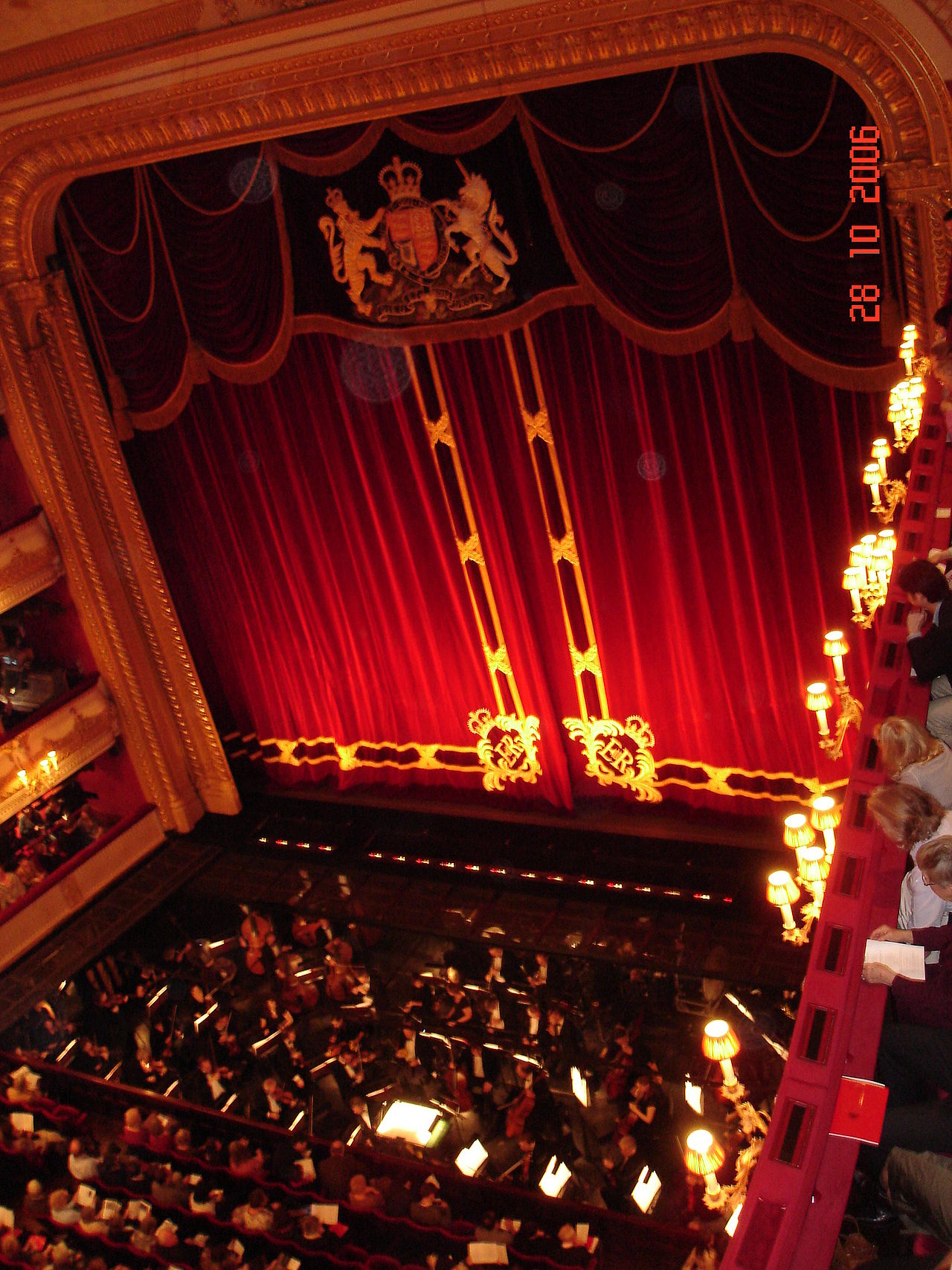
Among Davis's most notable tenures was his appointment as principal conductor at the Royal Opera House in 1971, succeeding Georg Solti, a post he retained through the mid-1980s. He was especially associated with modern British opera, conducting premieres by Michael Tippett and championing twentieth-century works alongside core Mozart and Beethoven repertory. Internationally he appeared at festivals including the Bayreuth Festival, where his 1977 appearance was notable as one of the earlier invitations to an English conductor. Orchestral engagements included a long relationship as Principal Guest Conductor with the Boston Symphony Orchestra, chief conductorship of the Bavarian Radio Symphony Orchestra, and leadership roles with the London Symphony Orchestra, where he later became President. He also served as Principal Guest Conductor of the New York Philharmonic.
Recordings, style and influence
Davis made a broad discography that documented his strengths in Mozart, the late German repertoire and twentieth-century British music, and he was admired for transparent orchestral textures, rhythmic precision and an emphasis on musical line over overt theatricality. He was instrumental in promoting British composers and in bringing thoughtful, well-prepared performances to both opera houses and concert halls. Orchestras he led often praised his collegial rehearsal manner and his ability to find balance between soloists, chorus and orchestra.
Honours and personal life
His services to music were recognized by national honours, including appointment as a Commander of the Order of the British Empire (CBE) and later as a Companion of Honour (CH). In his private life Davis was married twice: first to the soprano April Cantelo, with whom he had two children, and then in 1964 to Ashraf "Shamsi" Naini, the family's former au pair, with whom he had five children. To meet differing legal requirements the couple were married in multiple ceremonies in both Iran and the United Kingdom. He died in 2013 after a short illness. He was not related to the conductor Sir Andrew Davis, a frequent point of public clarification.
Selected associations and further reading
- Sir Colin Rex Davis (general)
- Weybridge, Surrey
- London, England
- Christ's Hospital
- Royal College of Music
- Clarinet and piano (early training)
- Don Giovanni and Mozart repertoire
- Colleagues and predecessors: Otto Klemperer, Thomas Beecham, Georg Solti
- Companies and orchestras: Sadler's Wells Opera, London Symphony Orchestra, BBC Symphony Orchestra, Boston Symphony Orchestra, New York Philharmonic
- Festivals and contemporary composers: Bayreuth Festival, Michael Tippett
- Honours and personal notes: CBE, CH, the family's au pair story
- Clarification of non-family relation: Sir Andrew Davis
This article provides a concise overview of Colin Davis's life, appointments, reputation and legacy. For detailed discographies, archival material and extended biographies consult specialist musical archives and published monographs.
Questions and answers
Q: When and where was Sir Colin Rex Davis born?
A: Sir Colin Rex Davis was born on 25 September 1927 in Weybridge, Surrey, UK.
Q: What did he study at the Royal College of Music in London?
A: At the Royal College of Music in London, Davis studied the clarinet.
Q: What opera did he conduct when Otto Klemperer was ill?
A: When Otto Klemperer was ill, Davis conducted Wolfgang Amadeus Mozart's opera Don Giovanni at the Royal Festival Hall.
Q: Who took over from Georg Solti as principal conductor at the Royal Opera House?
A: In 1971, Davis took over from Georg Solti as principal conductor at the Royal Opera House.
Q: What operas did he particularly like conducting?
A: He particularly liked conducting operas by Michael Tippett, giving the first performances of The Knot Garden (1970) and The Ice Break (1977).
Q: Where did he become Principal Guest Conductor from 1972 to 1984?
A: From 1972 to 1984, Davis became Principal Guest Conductor of the Boston Symphony Orchestra.
Q: How many times were he and his second wife married to satisfy both Iranian and British authorities?
A: To satisfy both Iranian and British authorities, Davis and his second wife were married three times - once in Iran and twice in the UK - in an Iranian Embassy as well as a regular UK civil ceremony.
Related articles
Author
AlegsaOnline.com Colin Davis Leandro Alegsa
URL: https://en.alegsaonline.com/art/21539
Sources
- lso.co.uk : lso.co.uk