
Cobalt(II) sulfate (cobaltous sulfate)
Cobalt(II) sulfate (CoSO4) is a water‑soluble cobalt(II) salt found as hydrated crystals. It serves as a precursor for pigments, electroplating baths, catalysts, and veterinary micronutrient supplements.
Overview
Cobalt(II) sulfate is an inorganic salt with the formula CoSO4. It commonly occurs as hydrated crystalline forms, the most widespread being the pink heptahydrate CoSO4·7H2O; the anhydrous salt and lower hydrates are also known. The compound provides a convenient, water‑soluble source of Co2+ in chemical synthesis and industry. It can also be found in nature as rare sulfate minerals such as bieberite under oxidizing conditions. For general chemical information see Cobalt(II) sulfate data.
Image gallery
4 Images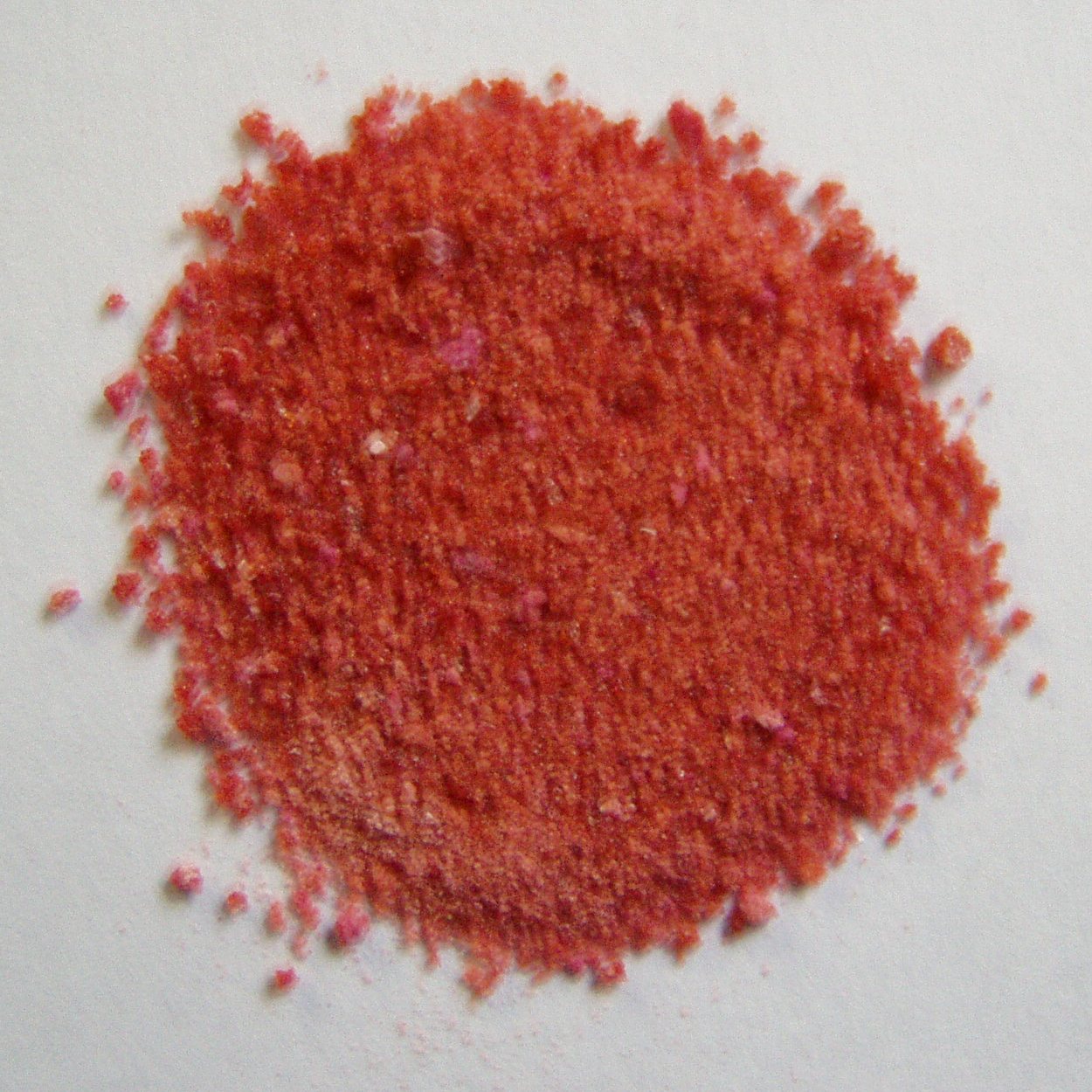


Structure and properties
In hydrated solids the cobalt(II) ion is typically six‑coordinate and adopts an octahedral environment with water molecules and sulfate oxygen atoms filling the coordination sphere. The Co2+ ion is paramagnetic and forms labile coordination complexes in aqueous solution, often producing pink to red solutions depending on concentration and hydration. The salt is readily soluble in water, and heating causes stepwise loss of water to give lower hydrates or the anhydrous material. The general chemistry reflects typical divalent transition‑metal sulfate behavior; for background on the metal and its oxidation states see cobalt and oxidation state +2.
Preparation and common forms
Cobalt(II) sulfate is most often prepared by treating cobalt metal, oxides, hydroxides or carbonates with dilute sulfuric acid followed by crystallization from the resulting solution. Industrially the product is isolated as the heptahydrate under ambient conditions; controlled drying yields lower hydrates or the anhydrous salt. Purification typically uses recrystallization, and care is taken to avoid oxidation to higher cobalt states. The chemistry of the sulfate anion and its behavior in solution is summarized at sulfate chemistry.
Uses and applications
- Industrial precursor: used to produce other cobalt salts, pigments and catalyst precursors, and as a feedstock in the preparation of certain battery materials.
- Electroplating and surface treatment: used in some electroplating baths to deposit cobalt or to condition surfaces before further processing.
- Agricultural and veterinary: small, controlled amounts of cobalt salts are used as micronutrient supplements for ruminants in regions with cobalt‑deficient soils.
- Laboratory reagent: a convenient source of Co2+ for synthesis, coordination chemistry experiments and materials research.
Safety and environmental considerations
Cobalt(II) sulfate is harmful if ingested or inhaled in sufficient quantity and can cause skin and eye irritation or sensitization in some individuals. Chronic or high occupational exposures to some cobalt compounds have been associated with respiratory and cardiac effects; handling should follow institutional safety data sheets and regulatory guidance. Environmentally, cobalt salts are mobile in aqueous systems under some conditions and may affect aquatic organisms; disposal and emissions are governed by local regulations. Appropriate protective equipment, dust control, and waste management reduce exposure and environmental release.
Analytical notes and handling
Analytical determination of cobalt in materials and environmental samples commonly uses spectroscopic methods (atomic absorption, ICP techniques) after appropriate sample preparation. Solid cobalt(II) sulfate should be stored in tightly closed containers, protected from strong oxidants and moisture if the anhydrous form is required, and labelled to prevent accidental misuse.
History and context
Cobalt compounds have a long cultural history as blue pigments in glass and ceramics; the element name derives from the German word "kobold" used by miners. Modern cobalt(II) sulfate is principally important as a soluble, manageable source of cobalt(II) for industrial, laboratory and veterinary uses.
Related articles
Author
AlegsaOnline.com Cobalt(II) sulfate (cobaltous sulfate) Leandro Alegsa
URL: https://en.alegsaonline.com/art/21288