
Group 11 elements — copper, silver, gold and roentgenium (coinage metals)
Group 11 comprises the coinage transition metals copper, silver and gold plus the synthetic element roentgenium. This article covers their properties, uses, history and notable distinctions.
Overview
Group 11 is a column of the periodic table that contains the traditional coinage metals and a synthetic transactinide. In chemical notation the group is commonly indexed as Group 11 (IUPAC) and appears in standard depictions of the periodic table. The familiar, naturally occurring members are copper (Cu), silver (Ag) and gold (Au). These three are often called the coinage metals because of their long use in money, though the historical practice of minting coins has also employed many other metals and alloys.
Image gallery
4 Images


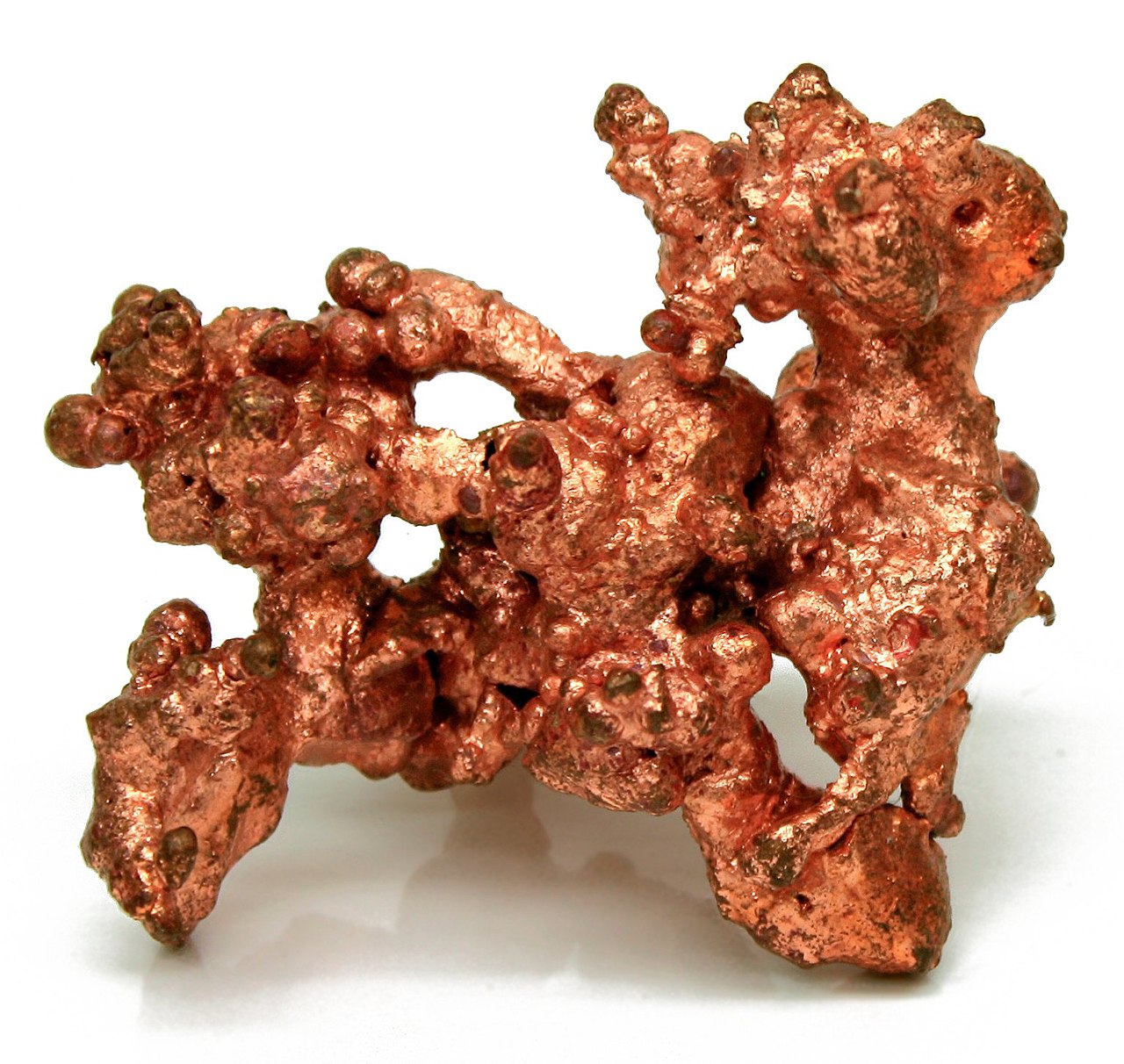
Characteristics and electronic structure
Group 11 elements are transition metals with related electronic configurations that produce characteristic metallic behavior. Their valence electronic arrangements give rise to a single s-electron outside a filled d-subshell in the common formal descriptions; more detailed accounts focus on relativistic and correlation effects that shape their chemistry (electronic configuration). Broad physical properties include high electrical and thermal conductivity, ductility, and resistance to corrosion for silver and gold. Copper is also a good conductor but oxidizes to form characteristic green patinas.
Common properties and oxidation states
- Electrical and thermal conductivity: copper and silver rank among the best conductors in the periodic table.
- Typical oxidation states: +1 is common for Group 11, with +2 also occurring for copper and less frequently for silver; gold shows a range of oxidation states in coordination chemistry.
- Nobility and corrosion resistance: gold is the least reactive of the three, followed by silver (which tarnishes) and copper (which oxidizes readily).
History, uses and cultural importance
The copper–silver–gold triad has been central to human technology and culture for millennia. Copper was one of the first metals worked by humans, enabling Bronze Age metallurgy when alloyed with tin. Silver and gold have long been prized for ornaments, coinage and a store of value. In modern times these metals persist in jewellery and monetary contexts but have also gained extensive industrial roles: copper in electrical wiring and construction, silver in electronics and optics, and gold in electronics and medical devices where corrosion resistance and conductivity are essential.
Although called "coinage metals," many countries have used other materials for coins when economics or durability demanded alternatives — for example aluminium, lead, nickel, stainless steel and zinc. These substitutions reflect changing metal prices, manufacturing methods and the functional requirements of circulating money.
Roentgenium and the synthetic member
The heaviest member attributed to Group 11 on the basis of predicted electronic structure is roentgenium (Rg), a synthetic transactinide. Roentgenium has been created in laboratory nuclear reactions and exists only as extremely short-lived atoms detected for fleeting instants; reported lifetimes are on the order of seconds in some isotopes (half-life data). Because of its fleeting existence, Rg has no practical applications and is studied to test and extend theoretical models of heavy-element electronic structure and chemistry.
Distinctions and notable facts
Group 11 elements illustrate trends across the periodic table: progressive increases in atomic number affect metallic bonding, relativistic effects and chemical behaviour. They are classified among the transition metals and their similarities are tied to their outer-electron patterns (see electronic configuration). Economically and culturally, copper, silver and gold retain special status: copper for infrastructure and electronics, silver for technical and artistic uses, and gold as a durable store of value. Roentgenium remains of interest principally for basic research.
For introductions to the group and its members, review general periodic table resources and element-specific monographs; for historical coinage practices see materials on monetary history and metallurgy (Group 11 overview).
Questions and answers
Q: What elements make up Group 11?
A: Group 11 consists of the transition metals copper (Cu), silver (Ag), and gold (Au). Roentgenium (Rg) also belongs to this group based on its electronic configuration.
Q: What is the name commonly used to refer to these elements?
A: The name "coinage metals" is often used in casual speech to refer to these elements.
Q: Are there any other metals that have been used in coinage besides those in Group 11?
A: Yes, various cultures have used many other metals in coinage including aluminium, lead, nickel, stainless steel, and zinc.
Q: How long does roentgenium last for?
A: Roentgenium has a short half-life of 22.8 seconds and can only be observed under laboratory conditions.
Q: Is roentgenium part of Group 11 due to its physical or chemical properties?
A: Roentgenium belongs to Group 11 based on its electronic configuration.
Q: Are all the elements in Group 11 found naturally occurring or are some artificially created?
A: All the elements in Group 11 are found naturally occurring except for roentgenium which is artificially created and only observed under laboratory conditions.
Q: What type of element is included in Group 11?
A:Group 11 consists of transition metals which are traditionally known as coinage metals.
Tags
Related articles
Author
AlegsaOnline.com Group 11 elements — copper, silver, gold and roentgenium (coinage metals) Leandro Alegsa
URL: https://en.alegsaonline.com/art/21459