
Cobalt(II,III) oxide (Co3O4): properties, structure and applications
Cobalt(II,III) oxide (Co3O4) is a mixed‑valence cobalt oxide with a spinel structure. This black crystalline solid is used as a catalyst, pigment precursor and in battery and sensor research.
Overview
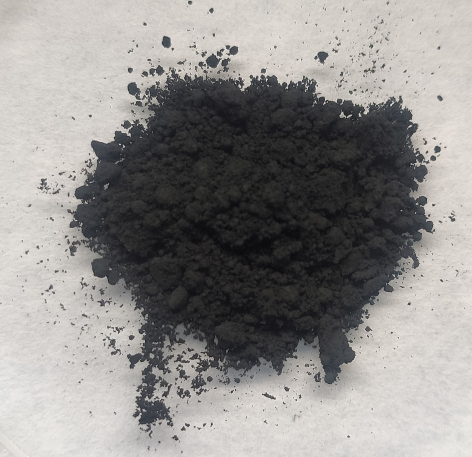
Cobalt(II,III) oxide is a stable inorganic compound with the empirical formula Co3O4. It is a mixed‑valence oxide that contains both Co2+ and Co3+ species in a single lattice and commonly appears as a black or dark brown crystalline powder. For basic reference information see this source.
Image gallery
6 Images



Structure and physical properties
Co3O4 adopts the normal spinel crystal structure: divalent cobalt ions occupy tetrahedral sites while trivalent cobalt ions occupy octahedral sites in an oxide framework. The material is insoluble in water but reacts with mineral acids to give soluble cobalt salts. It is electrically semiconducting and shows magnetic behavior characteristic of mixed‑valence transition metal oxides; further technical details are available at more details.
Synthesis and chemical behavior
The oxide can be prepared by controlled oxidation of cobalt(II) compounds or by thermal treatment of cobalt hydroxides in air. On heating or under reducing conditions it can be converted to other cobalt oxides such as CoO. Chemically it participates in redox reactions and serves as a precursor to many cobalt coordination compounds; synthesis notes are summarized at synthesis reference.
Uses and applications
- Catalysis: employed in oxidation and oxygen‑evolution research and as a heterogeneous catalyst support.
- Energy materials: studied for lithium‑ion or sodium‑ion battery anodes and supercapacitor electrodes.
- Sensors and magnetic materials: used in gas sensing layers and in magnetic devices.
- Pigments and precursors: a feedstock for other cobalt compounds and traditional ceramic colorants.
Applied examples and patents can be consulted via technical summaries such as application overview.
History, occurrence and safety
Cobalt minerals and oxides have been used historically to color glass and ceramics; Co3O4 is one of the common oxide forms encountered in laboratory and industrial settings. Like other cobalt compounds, specimens should be handled with care: dusts and soluble salts can be harmful if inhaled or ingested and appropriate protective measures are recommended. Regulatory and safety guidance can be found at safety information.
Questions and answers
Q: What is cobalt(II,III) oxide?
A: Cobalt(II,III) oxide is a chemical compound containing cobalt and oxide ions, with 1 atom of cobalt in the +2 oxidation state and 2 atoms in the +3 oxidation state. Its chemical formula is Co3O4.
Q: What is the chemical formula of cobalt(II,III) oxide?
A: The chemical formula of cobalt(II,III) oxide is Co3O4.
Q: How many atoms of cobalt are in cobalt(II,III) oxide and what is their oxidation state?
A: Cobalt(II,III) oxide contains 1 atom of cobalt in the +2 oxidation state and 2 atoms of cobalt in the +3 oxidation state.
Q: What type of ions does cobalt(II,III) oxide contain?
A: Cobalt(II,III) oxide contains cobalt and oxide ions.
Q: What is the oxidation state of cobalt in cobalt(II,III) oxide?
A: Cobalt(II,III) oxide contains both cobalt in the +2 oxidation state and cobalt in the +3 oxidation state.
Q: What is the role of cobalt in cobalt(II,III) oxide?
A: Cobalt is an essential component of cobalt(II,III) oxide, as it is present in the compound in the +2 and +3 oxidation states.
Q: What is the significance of cobalt(II,III) oxide?
A: Cobalt(II,III) oxide is noteworthy for its magnetic properties, which make it useful in various applications such as magnetic storage and ferromagnetic resonance.
Related articles
Author
AlegsaOnline.com Cobalt(II,III) oxide (Co3O4): properties, structure and applications Leandro Alegsa
URL: https://en.alegsaonline.com/art/21291