
Flag of Germany
The national flag of Germany: a horizontal black‑red‑gold tricolour. Overview of design, colours, historical development, official variants (civil, state, naval), symbolism and display protocol.
The national flag of Germany is a horizontal tricolour of three equal bands: black at the top, red in the middle and gold at the bottom. In German the basic national banner is commonly called the Bundesflagge. The simple black‑red‑gold tricolour is the ordinary civil flag; other official versions exist for federal authorities and for naval use.
Image gallery
10 Images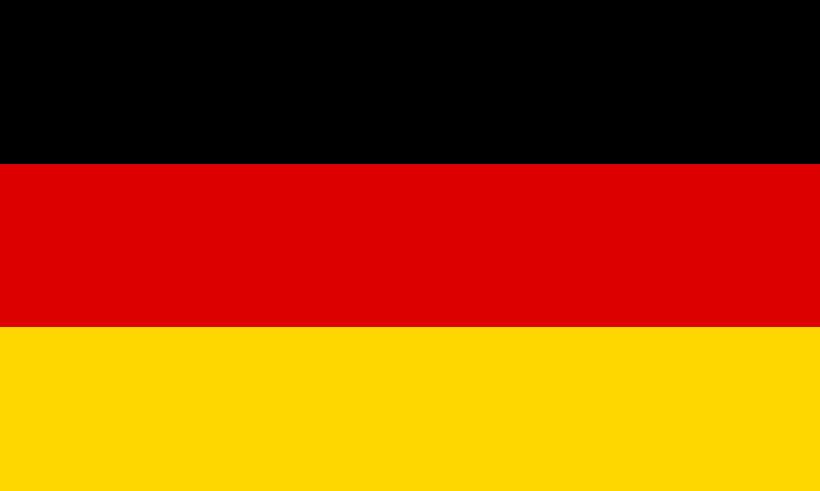




Design and colours
The flag consists of three horizontal stripes of equal height ordered black–red–gold from top to bottom. Official specifications set particular tones and proportions for formal manufacture, while everyday usage often refers simply to the names black, red and gold (sometimes described as yellow). Commonly accepted flag proportions for many official flags are 3:5, though other proportions are also used in practice for different contexts. The term "gold" reflects historic and heraldic tradition rather than a precise metallic finish.
Historical background
The combination of black, red and gold has roots in early 19th‑century German history. It became associated with liberal, national and constitutional movements during the 19th century and was used by participants in the 1848 revolutions who sought national unity and parliamentary government. After the First World War the colours were adopted for the national flag of the Weimar Republic in 1919. During the period of National Socialism other emblems were imposed and the tricolour was not the primary national standard. Following the Second World War the black‑red‑gold flag was reintroduced in the western zones and adopted with the constitution of the Federal Republic in 1949.
In the German Democratic Republic (East Germany) the black‑red‑gold tricolour was used initially without emblem, but from 1959 a state emblem was placed in the flag's centre, distinguishing the East German flag until German reunification in 1990. After reunification the plain tricolour resumed its role as the flag of a united Germany.
Official variants and use
- Civil flag: the plain horizontal tricolour used by citizens, private organisations and at non‑official events.
- State or service flag (Dienstflagge/Bundesdienstflagge): the tricolour bearing the federal coat of arms used by government authorities and state institutions; this version is prescribed for official buildings and certain public offices.
- Naval ensigns and other ensigns: government vessels and naval craft use modified forms of the national colours, which may include swallowtails, distinctive emblems or specific shapes when used at sea.
Symbolism and interpretations
Interpretations of the colours vary and have changed over time. In the 19th century the combination came to symbolise aspirations to unity, freedom and constitutional government. Later, political movements, parties and state authorities attached different associative meanings to the three colours; common modern references speak of national unity, democracy and republican tradition. There is no single universally accepted symbolic explanation and historical scholarship treats the meanings as contested and evolving.
Protocol and public display
There are established rules and long‑standing customs governing the use of the flag. These include guidance on correct orientation of the stripes, respectful handling, where and when official and state versions should be displayed, and conditions for flying the flag at half‑mast on occasions of mourning. Government ministries and public institutions publish protocols and recommendations covering ceremonial use, display alongside other national flags, and conditions for displaying flags on public buildings.
Public presence and cultural role
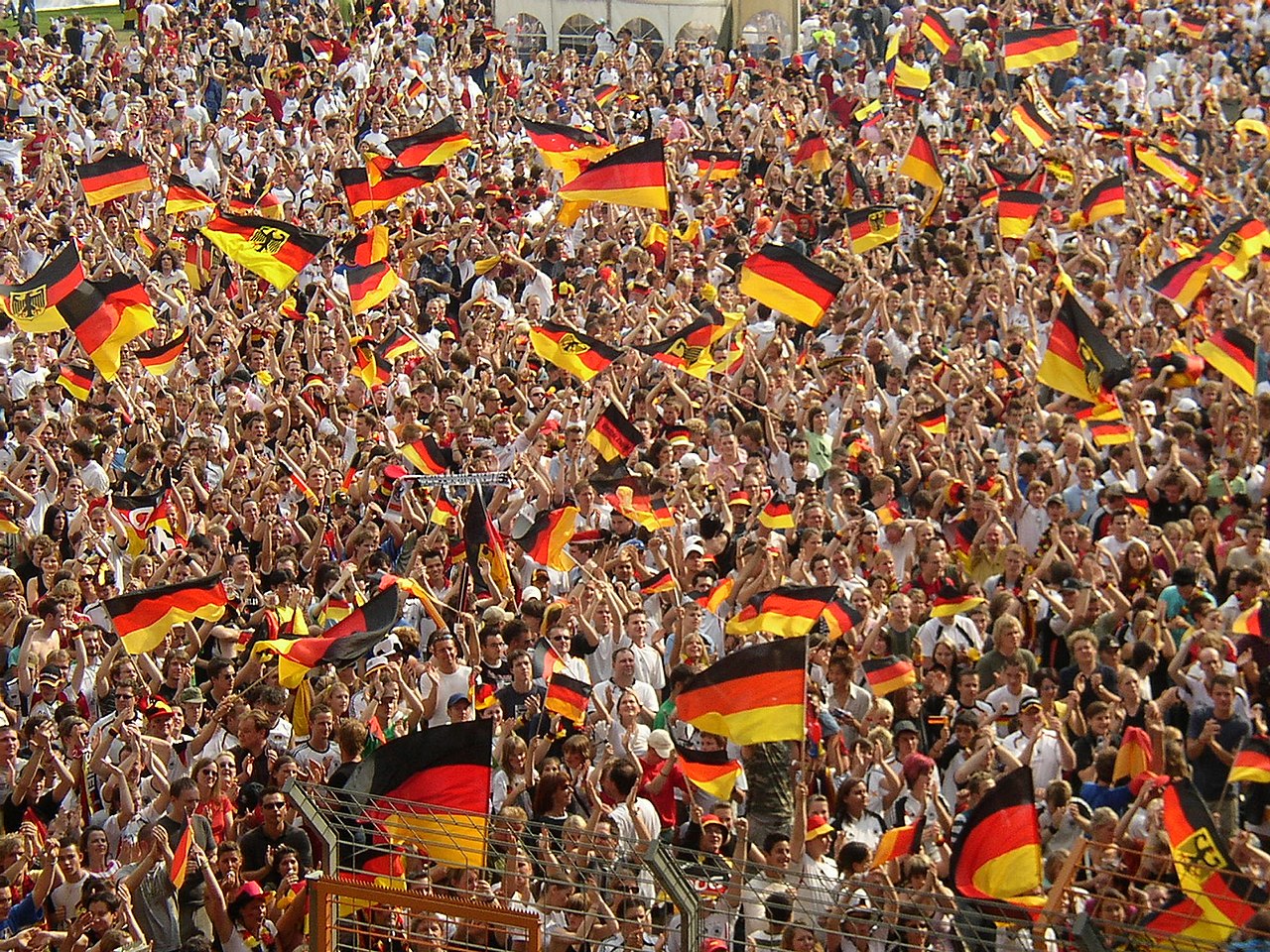
The black‑red‑gold flag is a widely recognisable national symbol used at sporting events, international gatherings, public ceremonies and demonstrations. It appears in cultural and political discourse as a marker of national identity. Regional and state flags within Germany sometimes combine the national colours with local coats of arms or different arrangements to express both federal and regional identities.
Further information
For authoritative details on legal definitions, official colour specifications and the precise status of the various versions of the national flag consult official government publications or specialised reference works. General introductions and summaries are available under entries for each of the colours (black, red, gold) and for the Bundesflagge.
Related articles
Author
AlegsaOnline.com Flag of Germany Leandro Alegsa
URL: https://en.alegsaonline.com/art/34795