
Closed-circuit television (CCTV)
Closed-circuit television (CCTV) uses video cameras to monitor defined locations via dedicated transmission or networks. It serves security, traffic, industrial monitoring and research, evolving from analog to digital/IP systems.
Overview
Closed-circuit television (CCTV) is a system in which video cameras transmit images to a limited set of monitors or recording devices rather than being broadcast publicly. The phrase "closed circuit" emphasizes that the viewing and recording are restricted to authorized recipients. Systems range from single-camera home setups to large networks used by businesses and municipalities. CCTV can record continuously, on a schedule, or be triggered by motion or other sensors.
Image gallery
10 Images


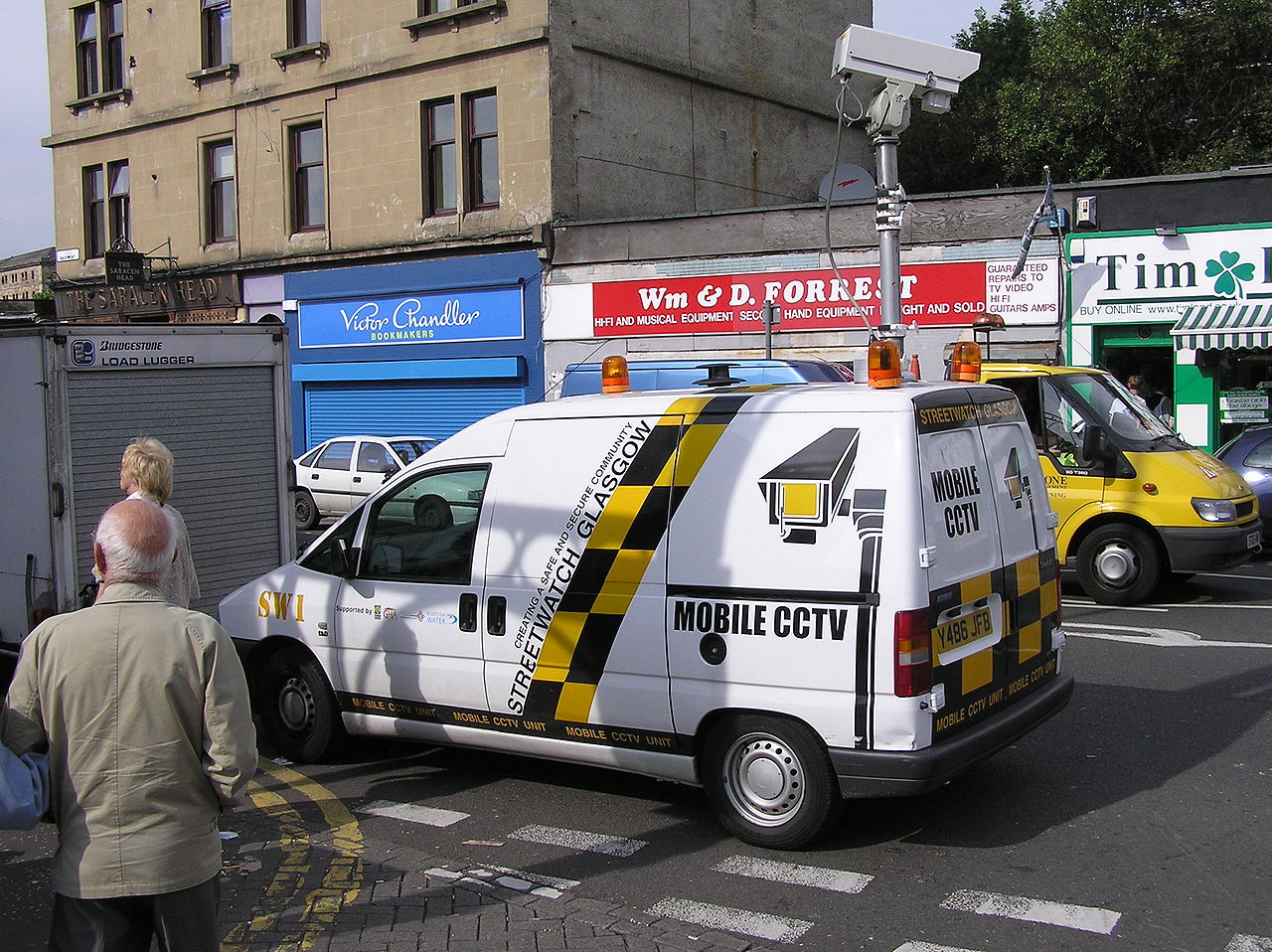


Main components and characteristics
Typical CCTV systems comprise cameras, lenses, protective housings, cabling or wireless links, and devices for viewing or storing footage such as digital video recorders (DVRs) or network video recorders (NVRs). Cameras differ by form factor (bullet, dome, pan-tilt-zoom), image sensor and features such as infrared illumination for low light, wide dynamic range and audio capture. Modern systems often use Power over Ethernet (PoE) and support remote access, encryption and firmware updates.
Technology and evolution
Historically CCTV began with analog monochrome cameras and direct monitoring. Over time it moved to color, then to digital and IP-based cameras that provide higher resolution, improved compression and easier remote management. Video codecs, storage media, networking and video analytics have expanded functionality from simple recording to searchable archives and automated alerts.
Applications
- Physical security for homes, businesses and critical infrastructure
- Public safety and traffic monitoring at intersections and transit hubs
- Retail loss prevention and operational analytics
- Industrial process monitoring and scientific observation
Installation, operation and limitations
Effectiveness depends on camera placement, image quality, lighting and monitoring practices. Systems require reliable power, network capacity and storage planning. CCTV is a tool for deterrence and evidence gathering but cannot prevent all incidents. Ongoing maintenance and periodic audits help sustain performance.
Privacy, law and governance
Use of CCTV raises privacy and legal considerations. Rules on signage, audio recording, retention periods and access to footage vary by jurisdiction. Organizations should adopt clear policies, limit access, secure data and document retention and deletion practices to meet legal and ethical obligations.
Trends
Current trends include cloud storage, on-board and server-side analytics, use of artificial intelligence for object detection and improved imaging sensors. These advances increase capability but also heighten concerns about accuracy, bias and data governance, making transparency and oversight important.
Related articles
Author
AlegsaOnline.com Closed-circuit television (CCTV) Leandro Alegsa
URL: https://en.alegsaonline.com/art/21083