
Citizen Kane — 1941 film by Orson Welles
Orson Welles's 1941 film Citizen Kane is a landmark American drama noted for its storytelling, cinematography (deep focus), editing and lasting influence on world cinema.
Citizen Kane is a 1941 American drama film directed by and starring Orson Welles in his first feature-length movie credit as a filmmaker. The picture chronicles the life and legacy of newspaper magnate Charles Foster Kane, a character whose contours were informed by several real-life figures; commentators and contemporaries have compared aspects of the role to William Randolph Hearst (Hearst), Howard Hughes (Hughes) and Samuel Insull (Insull), and Welles himself said Kane was drawn from more than one source (Kane).
Image gallery
10 Images


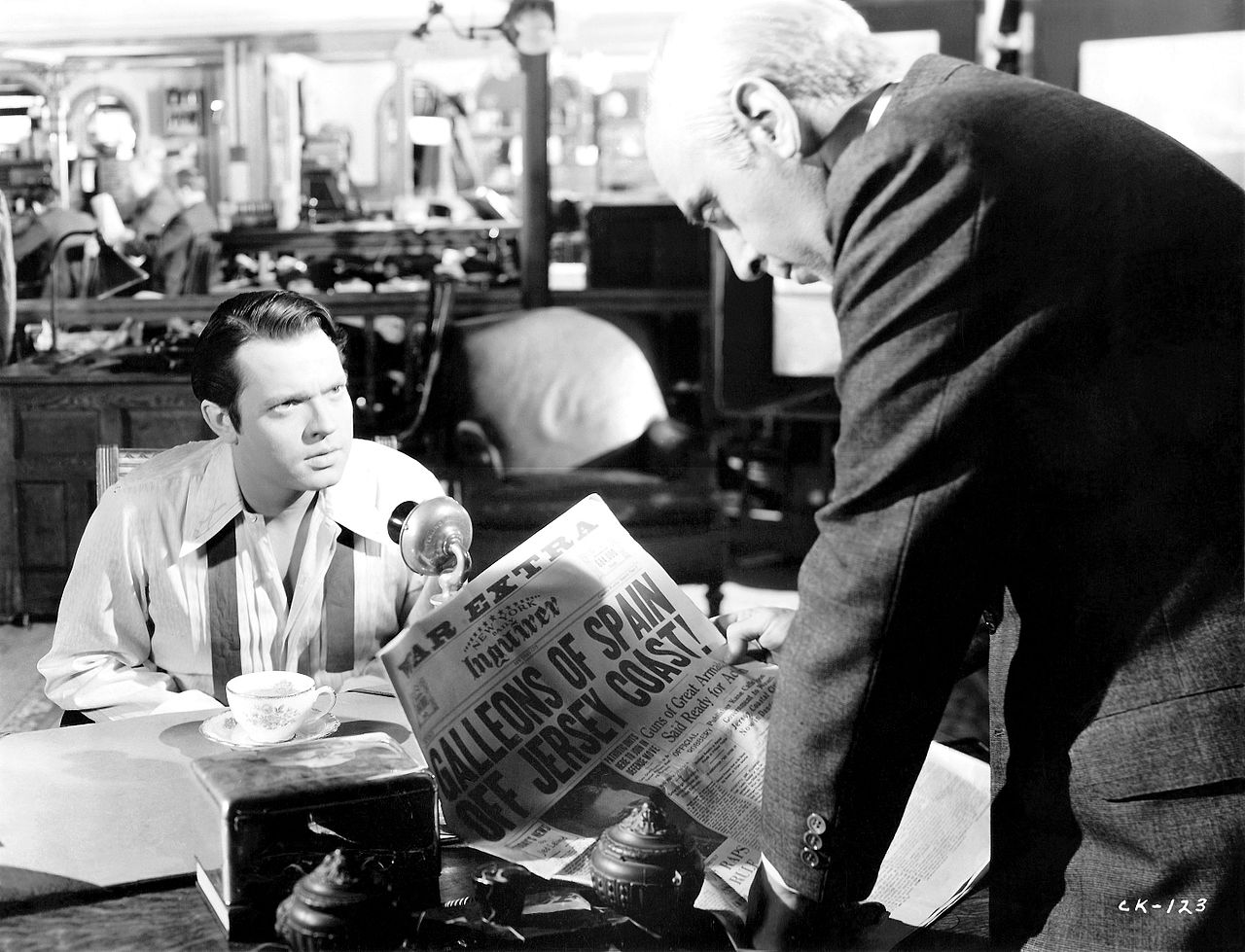


Overview and narrative
The film opens with the death of Kane, whose final word—"Rosebud"—becomes the impetus for a reporter to reconstruct his life through interviews and flashbacks. That fragmented, investigative structure and the use of a faux newsreel to frame the story give Citizen Kane an episodic, non-linear quality that was unusual for mainstream American cinema at the time. Themes include ambition, the concentration of wealth and influence, the compromises of public life, and the private loneliness that can accompany great power.
Production, style and technical innovation
Welles collaborated closely with cinematographer Gregg Toland to explore a visual approach now often called "deep focus," in which foreground, middle ground and background remain sharply defined in the same shot. The team also employed low-angle compositions that exposed ceilings, long takes, complex lighting, optical printing, and inventive set design. Editor Robert Wise, later known for directing The Sound of Music, assembled the film's brisk and effective cuts, while composer Bernard Herrmann created a memorable score that heightened the emotional arc.
Cast and crew
- Orson Welles — Charles Foster Kane (director, co-writer, star)
- Joseph Cotten — Jedediah Leland
- Dorothy Comingore — Susan Alexander Kane
- Agnes Moorehead, Ruth Warrick and others in key supporting roles
Release, controversy and reception
Released by RKO Pictures under the working title "RKO 281," the film encountered political and commercial resistance because of perceived resemblances between Kane and powerful media figures. That controversy limited its initial distribution and publicity, yet critical response recognized its daring techniques and ambition. Over subsequent decades, Citizen Kane has been widely reevaluated and championed by critics, filmmakers and scholars; the American Film Institute placed it at the top of its 100-year list in a major ranking (AFI, 100 Years...100 Movies).
Legacy and influence
Citizen Kane is often cited as a turning point in cinematic storytelling and craft. Its innovations in cinematography, narrative form and production design have influenced generations of directors and film schools. Filmmakers study its interplay of image and theme, its economy of performance and its willingness to blend popular entertainment with formal experimentation. Scholars also compare the film to earlier works that used unconventional chronology—such as The Power and the Glory (1933)—to trace a lineage of narrative experimentation in cinema.
Notable facts
The production is remembered by film historians for its artistic ambition and the careers it helped launch. Gregg Toland's photographic techniques and Robert Wise's early editing work are frequently discussed in technical histories, and Welles's combination of theatrical experience and radio fame informed his distinctive directing style. In later years, restorations and re-releases reinforced the film's standing, and it remains a central work in surveys of twentieth-century film.
For further reading on individual participants and aspects of the production, consult archival sources and film scholarship available through major library and museum collections (related film histories).
Related articles
Author
AlegsaOnline.com Citizen Kane — 1941 film by Orson Welles Leandro Alegsa
URL: https://en.alegsaonline.com/art/20500