
Clash by Night (1952 film)
Clash by Night is a 1952 American drama with noir elements directed by Fritz Lang, adapted from a play by Clifford Odets and noted for performances by Barbara Stanwyck and Marilyn Monroe.
Overview
Clash by Night is a 1952 American drama with strong film‑noir influences, directed by Fritz Lang. The screenplay is adapted from a stage play by Clifford Odets and the film was distributed by RKO Radio Pictures. Rather than relying on crime‑drama conventions, the picture focuses on emotional conflict, moral ambiguity, and troubled personal relationships set against a working‑class coastal community.
Image gallery
2 Images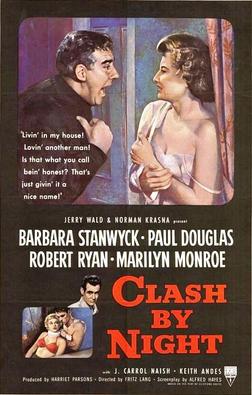

Plot and themes
The story centers on entangled romantic relationships and the psychological consequences of longing, betrayal, and resilience. It explores how pride, jealousy, and unmet expectations shape the characters' choices. The film is often discussed for its realistic, sometimes bleak portrayal of domestic life and for translating a theatrical, character‑driven piece into a cinematic study of mood and tension.
Production and adaptation
The film is an adaptation of Odets's play, reworked for the screen to emphasize visual atmosphere and cinematic pacing. Director Fritz Lang, known for his earlier expressionist and noir work, brought a disciplined sense of composition and shadow to the material. Studio involvement and the shift from stage to film led to changes in structure and emphasis, a common occurrence when adapting plays for cinema in the mid‑20th century.
Cast and performances
- Barbara Stanwyck delivers a central, psychologically complex performance that anchors the film.
- Marilyn Monroe appears in an important supporting role that helped increase her visibility as an emerging screen presence.
- Robert Ryan and Keith Andes round out the principal cast, contributing to the film's tense interpersonal dynamics.
Style, reception, and legacy
Stylistically, the picture borrows from noir—high‑contrast lighting, tight framing, and an insistence on mood—while remaining focused on character drama rather than crime. Contemporary reviews highlighted the performances and Lang's direction, and modern commentators regard the film as a notable example of postwar American melodrama with noir overtones. It is often cited for its portrayal of complicated women and for its place in the careers of both Stanwyck and Monroe.
Notable facts
- The movie represents a meeting of a prominent playwright's material with a director famous for visual storytelling.
- It was released by a major studio at a time when Hollywood frequently adapted stage works for the screen.
- The film remains of interest to scholars studying gender, adaptation, and mid‑century American cinema.
Tags
Related articles
Author
AlegsaOnline.com Clash by Night (1952 film) Leandro Alegsa
URL: https://en.alegsaonline.com/art/20750