
Circle line (London Underground)
Central London loop line on the Underground, shown yellow on the Tube map; a busy sub-surface route that circles the city centre and shares tracks with other lines.
The Circle line is a sub-surface route of the London Underground that runs in a roughly circular path around central London on the north side of the River Thames. Shown in yellow on Tube maps, it serves many central business and interchange stations and is one of the system's busier lines. Historically run as a continuous circuit, the service pattern and infrastructure have evolved to improve reliability and passenger capacity.
Image gallery
6 Images



Characteristics
The line is classed as a sub-surface railway and shares sections of track with other Underground routes. Key points include:
- Route form: a ring through central London, linking major hubs and providing orbital connections between radial routes.
- Platform lengths: platforms on the southern side of the route are generally about 120 metres long, while platforms on the section shared with the Metropolitan line are around 130 metres long.
- Interchange: the line connects with many national rail termini and other Underground lines, making it important for transfers and short central journeys.
History and development
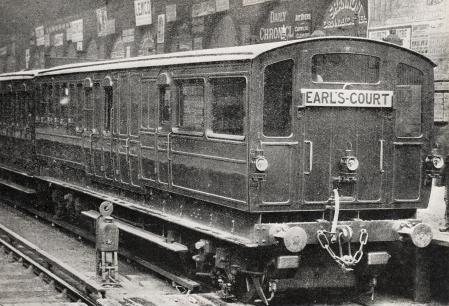
The Circle line's route is the product of 19th- and early 20th-century railway construction. The first underground sections in London were built in the mid-1800s, and successive connections between those early railways produced a circular service around the city centre. Over time the services that operated the loop were consolidated under the single identity of the Circle line. To address operational difficulties caused by a continuous loop—where delays could propagate without a natural terminus—Transport for London adjusted the service pattern in the 21st century so that trains originate and terminate beyond the historic loop, improving punctuality.
Operations and importance
The Circle line provides frequent metro-style services and is important for short cross-city trips, access to business districts and tourist sites, and connections between long-distance rail services. It links major interchanges such as King's Cross St Pancras, Paddington, Liverpool Street and others, enabling transfers across the network. Because parts of the route are shared, coordination with the Metropolitan, Hammersmith & City and District lines is integral to timetable planning and platform management.
Notable facts and distinctions
Although popularly thought of as a simple closed loop, the line's modern service pattern departs from that notion for operational reasons. Its yellow identity on maps makes it one of the more instantly recognisable lines on the network. For visitors and commuters alike it performs a specialist role: providing convenient orbital links around the central area rather than serving long suburban branches. The Circle line's role and infrastructure reflect both London's Victorian railway origins and contemporary demands on a busy urban transit system north of the River Thames.
Related articles
Author
AlegsaOnline.com Circle line (London Underground) Leandro Alegsa
URL: https://en.alegsaonline.com/art/20438
Sources
- tfl.gov.uk : "Performance: LU Performance Data Almanac"
- webarchive.org.uk : Line facts
- homepage.ntlworld.com : "1949 tube map"
- tfl.gov.uk : "PPP Performance Report"
- news.bbc.co.uk : "7 July Bombings: Edgware Road"
- news.bbc.co.uk : "7 July Bombings: Aldgate"
- news.bbc.co.uk : "Tube drinks party sparks mayhem"
- news.bbc.co.uk : "Circle Line extended to the west"
- londonreconnections.com : "In Pictures: The S7 Stock In Passenger Service"
- globalrailnews.com : "S Stock trains take to Circle line"
- tfl.gov.uk : "Commissioner's Report" · web.archive.org